Best Rotary Cutter for Quilting (2026): 6 Cutters Plus 3 Upgrades That Replace Hand Cutting
The best rotary cutter for most quilters is the Olfa RTY-2/DX 45mm, about $20. Its squeeze handle exposes the blade only while you grip it, then retracts automatically, and it ships with a long-life Endurance blade. For cutting 12 layers of strips, choose the Olfa RTY-3/DX 60mm; for hands with arthritis, the Martelli ergonomic cutter.
A rotary cutter is a round blade on a handle that rolls through fabric against a ruler on a self-healing mat. It is the single tool that made modern patchwork fast. For most quilters, the Olfa RTY-2/DX 45mm is the right one: 45mm is the all-purpose size, and the squeeze trigger means the blade is never left open on the table.
If you cut a lot, the bigger question is whether to keep cutting by hand at all. Die cutters like the AccuQuilt GO! Big cut up to 6 layers of precise shapes with one button. We cover both below.
Rotary cutters at a glance
| Product | Price | Blade | Handle | Capacity or feature | Buy |
|---|---|---|---|---|---|
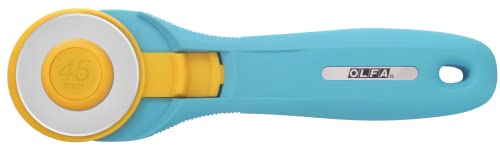 Olfa RTY-2/C 45mm Olfa RTY-2/C 45mm | $14.28 | 45mm tungsten steel | Straight, manual cover | Up to 8 layers of cotton | Price |
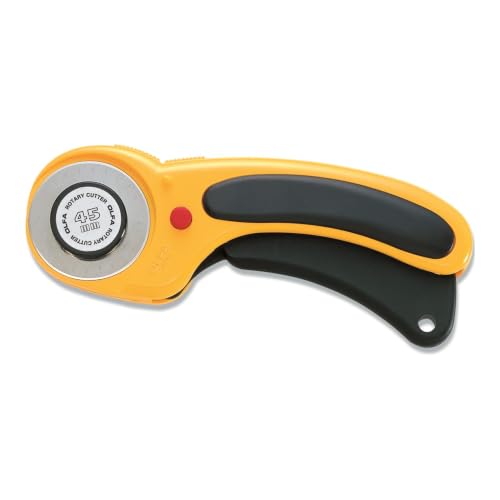 Olfa RTY-2/DX 45mm Olfa RTY-2/DX 45mm | $19.69 | 45mm Endurance | Squeeze trigger, self-retracting | Dual-action lock | Price |
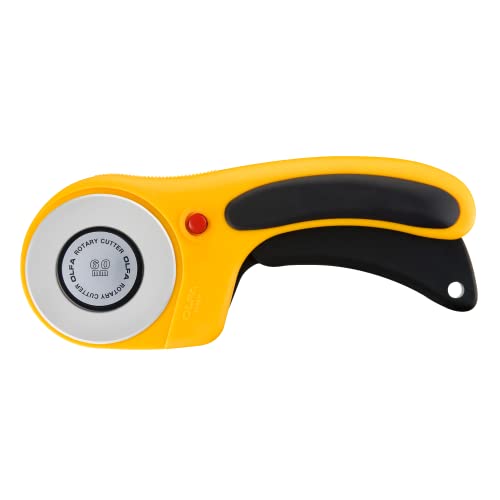 Olfa RTY-3/DX 60mm Olfa RTY-3/DX 60mm | $26.49 | 60mm Endurance | Squeeze trigger, self-retracting | Up to 12 layers of cotton | Price |
 Fiskars 45mm Loop Titanium Fiskars 45mm Loop Titanium | $26.99 | 45mm titanium-coated | Loop, SoftGrip | 7 mm blade exposure | Price |
 Martelli 45mm Ergo Martelli 45mm Ergo | $28.99 | 45mm tungsten steel | Ergonomic, right handed | Spring-loaded guard | Price |
 Olfa RB45 10-Pack Olfa RB45 10-Pack | $39.99 | 10 x 45mm blades | Replacement | Tungsten tool steel | Price |
 AccuQuilt GO! Big AccuQuilt GO! Big | $699.99 | Die cutter | Electric, one button | Up to 6 layers | Price |
Beginner
Beginner picks: a reliable 45mm cutter and spare blades, under $40
Every new quilter needs one 45mm cutter and a supply of blades. A dull blade is the most common cause of skipped threads, ragged edges and pushing too hard, which is how slips happen.
Olfa 45mm Ergonomic Squeeze-Handle Rotary Cutter RTY-2/DX
$19.69Squeeze to cut, release to retract, with a preloaded Endurance blade and dual-action lock. Accepts Olfa pinking, scallop and wave blades too.
Best for: Most quilters
Check price Olfa 45mm Quick-Change Rotary Cutter RTY-2/C
$14.28The classic straight-handle Olfa with a quick-change blade system, rated for up to 8 layers of cotton. The blade cover must be closed by hand, so build the habit.
Best for: The lowest-cost dependable cutter
Check price Olfa 45mm Rotary Replacement Blades RB45-10 (10 Pack)
$39.99Ten 45mm tungsten tool steel blades. Change the blade as soon as it skips threads; ten blades last most hobby quilters a long time.
Best for: Keeping cuts clean and safe
Check pricePrices change often, so confirm on Amazon. As an Amazon Associate we earn from qualifying purchases.
Intermediate
Intermediate picks: ergonomic and heavy-duty cutters, $26 to $29
These solve specific problems: hand fatigue, grip strength, and cutting many layers at once. Owners with arthritis frequently mention handle shape as the reason they switched.
Martelli Ergonomic 45mm Rotary Cutter (Right Handed)
$28.99A shaped handle that keeps the wrist straighter, with a spring-loaded blade guard. This model is right handed, so lefties should look for the left-hand version.
Best for: Arthritis and wrist strain
Check price Fiskars 45mm Loop Titanium SoftGrip Rotary Cutter
$26.99A loop handle and titanium-coated blade with 7 mm exposure. The recessed retract button helps prevent accidental opening in a sewing basket.
Best for: A loop-grip alternative
Check price Olfa 60mm Ergonomic Squeeze-Handle Rotary Cutter RTY-3/DX
$26.49A 60mm blade rated for up to 12 layers of cotton, with a self-retracting squeeze handle. Ideal for strip sets and batting trimming.
Best for: Cutting many layers and long strips
Check pricePrices change often, so confirm on Amazon. As an Amazon Associate we earn from qualifying purchases.
Expert
Expert picks: die cutters that replace most rotary cutting, $330 to $700
Who should NOT buy this tier: quilters who make a few quilts a year, love scrappy improvisational piecing, or cut mostly irregular shapes. Die cutters shine when you cut many identical strips, squares and triangles, or when hand and shoulder strain make long rotary cutting sessions painful.

AccuQuilt GO! Fabric Cutter Starter Set
$329.99A folding manual crank cutter rated for up to 6 layers of cotton, with a value die for 4.5 in squares, 2.5 in squares and half-square triangles.
Best for: Precise shapes without electricity
Check price
AccuQuilt GO! Bolt Electric Fabric Cutter Starter Set
$399.99An electric cutter that uses the GO! dies and mats, removing the cranking effort entirely.
Best for: Reducing hand effort
Check price AccuQuilt GO! Big Electric Fabric Cutter Starter Set
$699.99Electric, one-button operation, up to 6 layers, and compatibility with all GO! dies including the 14 x 16 in GO! Big dies.
Best for: High-volume quilters
Check pricePrices change often, so confirm on Amazon. As an Amazon Associate we earn from qualifying purchases.
What size rotary cutter is best for quilting?
A 45mm cutter is the best all-purpose size for quilting and the one to buy first. It handles strips, squares and trimming blocks, and it cuts through several layers of cotton. Add a 60mm cutter if you cut many layers or long strip sets, and consider a smaller cutter for curves and tiny pieces.
| Blade size | Best for | Layers of quilting cotton | Example |
|---|---|---|---|
| 28mm | Curves, small templates, applique shapes | About 2 to 4 | Small Olfa or Fiskars cutters |
| 45mm | Everyday strips, squares, trimming blocks | Up to 8 (Olfa rating) | Olfa RTY-2/DX 45mm |
| 60mm | Strip sets, multiple layers, batting, fleece | Up to 12 (Olfa rating) | Olfa RTY-3/DX 60mm |
| Die cutter | Repeated identical shapes | Up to 6 per pass | AccuQuilt GO! Big |
Layer counts are best-case ratings for sharp blades and quilting-weight cotton. Folded fabric counts as two layers, and batiks and flannel cut differently. Pair any cutter with a mat that fits your cutting length; our best cutting mats roundup covers sizes.
Olfa vs Fiskars rotary cutter: which is better?
Olfa invented the rotary cutter in 1979 and is the default in most quilt shops. Its strengths are blade quality, easy blade changes and a squeeze-trigger design on the Olfa RTY-2/DX 45mm and Olfa RTY-3/DX 60mm that retracts automatically. Fiskars competes on handle comfort and price, and the Fiskars 45mm Loop Titanium adds a titanium-coated blade and a loop grip.
For most quilters the deciding factor is handle feel. If you have grip or wrist issues, try both shapes or consider the Martelli 45mm Ergo. See the full breakdown in Olfa vs Fiskars rotary cutter.
Which rotary cutter is best for arthritis?
Look for a handle that keeps the wrist in a neutral position and lets you push with the arm rather than squeeze with the fingers. The Martelli 45mm Ergo was designed around that idea. Self-retracting squeeze handles help people who find manual blade covers fiddly, but squeezing can tire weak hands over long sessions.
Two other adjustments matter as much as the cutter: a sharp blade needs far less pressure, and a cutting surface at the right height (roughly hip height when standing) lets body weight do the work. Our crafting with arthritis guide covers more. If rotary cutting is painful no matter what, a die cutter such as the AccuQuilt GO! Bolt may be the kinder choice.
How often should you change a rotary cutter blade?
Change it when it tells you: skipped threads, a line of uncut fibers, a snag or nick, or needing to press harder than before. Some quilters change blades at the start of every large project; others go several quilts. Cutting on anything other than a self-healing mat, running over a pin, or dropping the cutter dulls a blade instantly.
Keep spares like the Olfa RB45 10-Pack ten-pack on hand, and dispose of old blades in a sealed container or a blade disposal case, never loose in the trash.
Rotary cutter safety habits
Close or release the blade after every single cut. Always cut away from your body, keep the hand holding the ruler spread flat and well back from the edge, and consider a cut-resistant glove on that hand. Store cutters out of reach of children.
How we chose
We did not test these cutters in person. We compared manufacturer specifications (blade size, material, layer ratings and safety mechanisms), verified live pricing, and recurring themes in owner reviews about comfort, blade life and safety. We favored designs that close or retract easily, because most rotary cutter injuries happen when a blade is left open.
Buying tips
- Start with 45mm, then add 60mm only if you cut many layers.
- Buy blades with the cutter. A sharp blade is safer than a strong grip.
- Check handedness on ergonomic models.
- Match your mat size to the longest cut you make, typically 24 in for width-of-fabric strips.
- Use a quilting ruler with a lip or grip so it does not slide during the cut.
Frequently asked questions
What is the best rotary cutter for beginners?
A 45mm self-retracting cutter is the best choice for beginners, and the Olfa RTY-2/DX at about $20 is a strong example. The blade is only exposed while you squeeze the handle, so forgetting to close it is not a risk. It uses standard 45mm Olfa blades, which are easy to find, and it cuts cleanly through several layers of quilting cotton.
Is a 45mm or 60mm rotary cutter better?
For most quilting, 45mm is better because it is easier to control and suits everyday strips, squares and trimming. A 60mm cutter, such as the Olfa RTY-3/DX, is rated for up to 12 layers of cotton and is better for strip sets, stacked fabric and batting. Many quilters own both and reach for the 45mm most of the time.
Can you use a rotary cutter without a mat?
No. A rotary blade needs a self-healing cutting mat underneath. Cutting on a table, cardboard or a regular plastic board dulls or nicks the blade immediately, damages the surface, and makes the cutter more likely to skip and slip. A mat that is at least 18 x 24 in is the practical minimum for quilting, and 24 x 36 in is the most versatile size.
Do left handed quilters need a special rotary cutter?
Many cutters are ambidextrous, including straight and squeeze-handle Olfa designs, where the blade can be switched to the other side. Some ergonomic cutters, such as the right handed Martelli 45mm, are made in separate right and left hand versions. Left handed quilters should also check that ruler markings read comfortably from the left side.
Is an AccuQuilt better than a rotary cutter?
They are different tools. An AccuQuilt die cutter is faster and more precise for repeated identical shapes, cutting up to 6 layers of cotton at once, and it is easier on hands and shoulders. A rotary cutter is more flexible, cheaper and needed for trimming, odd sizes and improvisational work. Most quilters who buy an AccuQuilt keep a rotary cutter too.
How we research: we compare manufacturer specifications, owner manuals, published standards and recurring themes in verified owner reviews. We do not test products in person, and this is researched guidance, not professional advice. Follow your machine manual and pattern, and take care with rotary cutters, hot irons and needles. As an Amazon Associate we earn from qualifying purchases.