Best Sewing Machine for Leather (2026): 8 Picks, From Faux Leather to Bag Leather
The best sewing machine for leather is the Juki DU-1181 (about $1,725), a walking foot industrial with top and bottom feed, a 9 mm stitch length and a servo motor. Home machines like the Janome HD3000 can sew thin garment leather and faux leather with a leather needle, but they are not built for thick leather.
Here is the honest answer most leather sewing advice skips: a home sewing machine can sew leather, but only thin leather. Garment lambskin, soft faux leather, suede patches and vinyl are within reach with the right needle, foot and stitch length. Thick belt, holster and saddle leather is not, no matter what a "heavy duty" label says.
For regular leather work on bags, upholstery and accessories, our top pick is the Juki DU-1181, a walking foot industrial with a servo motor and table. For light leather at home, the Janome HD3000 is the best domestic choice, and a Schmetz Leather needles 100/16 card is the first thing to buy either way.
Leather sewing machines by class
| Product | Price | Machine class | Realistic leather range | Feed | Buy |
|---|---|---|---|---|---|
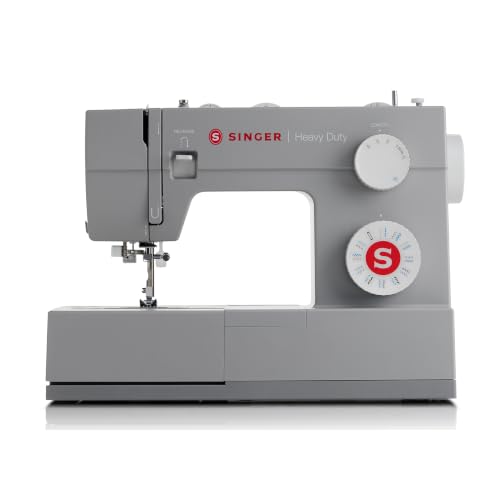 Singer 4423 Singer 4423 | $182.41 | Domestic heavy duty | Thin garment leather, faux leather | Bottom feed dogs | Price |
 Singer 6800C Singer 6800C | $379.99 | Domestic computerized heavy duty | Thin leather, vinyl | Walking foot included | Price |
 Janome HD3000 Janome HD3000 | $529.00 | Domestic | Thin garment leather, suede, faux leather | Adjustable foot pressure | Price |
 Consew CP206RL Consew CP206RL | $524.95 | Portable walking foot | Light leather and vinyl; confirm capacity | Walking foot | Price |
 Janome HD9 Janome HD9 | $1,599.00 | Semi-industrial straight stitch | Faux leather and light leather bags | Up to 5 lb foot pressure, even feed foot | Price |
 Consew 206RB-5 Consew 206RB-5 | $1,661.99 | Industrial walking foot | Upholstery and bag leather | Compound feed | Price |
 Juki DU-1181 Juki DU-1181 | $1,724.62 | Industrial walking foot | Upholstery and bag leather | Top and bottom feed | Price |
Beginner
Beginner picks: thin leather and faux leather at home, $180 to $530
Good for leather patches, lambskin garments, faux leather pouches, vinyl zipper bags and suede trim. Use a leather needle, a longer stitch and slow speed, and do not try thick layers.
Janome HD3000 Heavy Duty Sewing Machine with Hard Case
$529.00Adjustable foot pressure is the key feature: easing it off helps leather feed without the foot marking or sticking. A sturdy build and one-step buttonhole make it the best all-purpose home machine for occasional leather.
Best for: Garment leather and suede at home
Check price Singer Heavy Duty 6800C Computerized Sewing Machine
$379.99It includes a walking foot among its ten presser feet, which helps faux leather and vinyl feed evenly with the layer below. Computerized controls and 586 stitch applications make it versatile beyond leather.
Best for: Faux leather and vinyl bags
Check price Singer Heavy Duty 4423 Sewing Machine
$182.41A metal interior frame and stainless steel bedplate for the lowest price here. It manages a few layers of thin leather or faux leather, but add a walking or non-stick foot for best feeding.
Best for: Trying leather on a budget
Check pricePrices change often, so confirm on Amazon. As an Amazon Associate we earn from qualifying purchases.
Intermediate
Intermediate picks: more force and better feeding, $525 to $1,600
A middle ground for sewists who make bags, accessories and faux leather projects regularly but do not want a full industrial table.
Consew CP206RL Portable Walking Foot Machine
$524.95A portable walking foot machine with a longer arm, reverse stitching and a built-in 110V motor. Walking feed is the right mechanism for leather, and it needs no industrial table. Confirm the leather thickness it is rated for with the seller before buying.
Best for: Walking foot feed without a table
Check price Janome HD9 Professional High-Speed Straight Stitch Machine
$1,599.00A straight-stitch-only machine with presser foot pressure up to 5 lb, an adjustable knee lift, an automatic thread cutter and up to 1,600 stitches per minute, bundled with an even feed foot. Strong control for faux leather bags and light leather topstitching.
Best for: Topstitching faux leather and light leather
Check pricePrices change often, so confirm on Amazon. As an Amazon Associate we earn from qualifying purchases.
Expert
Expert picks: walking foot industrials, $1,660 to $1,730
Who should NOT buy this tier: sewists who sew leather a few times a year, garment sewists working with thin lambskin, and anyone without floor space for an industrial table. And be realistic even here: very thick belt, holster and saddle leather is the domain of dedicated heavy leather stitchers or hand saddle stitching, not general walking foot industrials.
Juki DU-1181 Single Needle Walking Foot Industrial Machine with Stand and Servo Motor
$1,724.62A single-needle walking foot lockstitch with top and bottom feed, a 9 mm maximum stitch length, a 15 mm knee lift and a 3/4 HP servo motor on a 110V table. The servo gives the slow, stitch-by-stitch control leather rewards.
Best for: Bags, upholstery and leather goods
Check price Consew 206RB-5 Walking Foot Industrial Sewing Machine with Table and Servo Motor
$1,661.99A compound feed walking foot industrial with a 10 mm maximum stitch length, a 9/16 inch knee lift, a large bobbin and adjustable walking height, sold with a table and servo motor. Consew lists leather, upholstery, auto and marine work.
Best for: Upholstery and auto interiors
Check pricePrices change often, so confirm on Amazon. As an Amazon Associate we earn from qualifying purchases.
Can a regular sewing machine sew leather?
Yes, if the leather is thin. Leather thickness is measured in ounces, where 1 oz equals about 1/64 inch, or roughly 0.4 mm. Home machines handle lightweight garment leather and a couple of layers comfortably; they struggle as weight climbs, especially where seams overlap.
| Leather weight | Approximate thickness | Typical projects | Machine class |
|---|---|---|---|
| 1 to 2 oz | 0.4 to 0.8 mm | Garment lambskin, linings, suede trim | Home machine, e.g. Janome HD3000 |
| 2 to 3 oz | 0.8 to 1.2 mm | Jackets, soft pouches, patches | Home machine with care, walking foot helps |
| 3 to 5 oz | 1.2 to 2.0 mm | Bags, wallets, upholstery leather | Walking foot machine, e.g. Consew CP206RL or Juki DU-1181 |
| 6 to 8 oz | 2.4 to 3.2 mm | Heavy bags, straps | Industrial walking foot, check its rated capacity |
| 9 oz and up | 3.6 mm and up | Belts, holsters, saddlery | Dedicated heavy leather stitcher or hand stitching |
Counting layers matters more than the single-layer weight. Two layers of 3 oz leather with a folded edge can reach the thickness of a single heavy strap.
What size sewing machine needle do you use for leather?
For real leather on a home machine, use a leather needle: size 80/12 or 90/14 for thin garment leather, and 100/16 for heavier pieces or several layers. Leather needles have a cutting point that slices a small hole instead of pushing fibers apart. The Schmetz Leather needles 100/16 uses an LL cutting point that creates a slightly angled stitch.
Faux leather is different. Schmetz lists its leather needle for stiff faux leather, but for soft vinyl and thin faux leather many sewists prefer a sharp microtex or jeans needle, because a cutting point can perforate the plastic like a tear-off line. Never use a leather needle on woven or knit fabric; it cuts the threads.
Industrial walking foot machines use their own needle systems, so buy leather-point needles made for your machine. Our needle size chart and sewing machine needles hub cover every point type.
Why does leather stick under the presser foot?
Leather and faux leather have grippy surfaces that drag against a standard metal foot, causing uneven or tiny stitches. Fixes, from easiest to most effective:
- Reduce presser foot pressure if your machine allows it, like the Janome HD3000.
- Use a non-stick (Teflon) or roller foot, sold for most snap-on machines.
- Place tissue paper or tape on top of the leather and tear it away after sewing.
- Use a walking foot, such as the one included with the Singer 6800C, which moves the top layer with the feed dogs.
- Move to a walking foot machine like the Juki DU-1181 if you sew leather often.
Holes are permanent
Every needle and pin hole in leather stays forever. Hold layers with Clover Wonder Clips 50 instead of pins, lengthen the stitch to about 3.5 to 4 mm so perforations do not weaken the seam, and tie off thread ends by hand instead of backstitching over the same holes.
What thread weight is best for leather?
Use polyester or bonded nylon thread for leather, never cotton. Tanning chemicals and moisture can weaken cotton thread over time. On a home machine, heavy polyester topstitching thread in the needle with all-purpose polyester in the bobbin is a practical combination for thin leather. Walking foot industrials typically run bonded nylon, with the needle size matched to the thread thickness: heavier thread needs a larger needle eye to avoid shredding.
Thread numbering varies by system and brand, so compare sizes in the thread weight chart before ordering.
Is a walking foot sewing machine good for leather?
Yes, and it is the single most important feature for regular leather work. A walking foot machine has a presser foot that lifts and moves with each stitch, feeding the top layer in step with the feed dogs below. Leather layers cannot shift, the foot does not drag, and stitch length stays consistent across seams and folds.
There are two versions. A walking foot attachment clips onto a domestic machine and helps with thin leather and vinyl. A walking foot machine like the Juki DU-1181 or Consew 206RB-5 builds compound feed into an industrial head, with much more lift and piercing force. See Juki DDL-8700 vs DU-1181 for why a standard industrial straight stitcher is not the leather machine, and our industrial sewing machines for home for setup realities.
How we chose
We did not test these machines in person, and we avoid thickness claims no manufacturer publishes. Picks are based on manufacturer and seller specifications (feed type, stitch length, knee lift, motor, foot pressure), owner manuals, needle manufacturer guidance, established leather sewing technique, and recurring themes in verified owner reviews about leather feeding and needle breakage. Where a machine's leather capacity is not published, we say so.
Buying tips
- Decide the heaviest leather and the most layers you will sew before choosing a machine class.
- Ask the seller to confirm the maximum material thickness for industrial and portable walking foot machines.
- Buy leather needles by the card and replace them often; leather dulls points quickly.
- Get a non-stick or roller foot for any domestic machine you use on leather.
- Practice on scraps of the same hide with the same number of layers before sewing a project.
Frequently asked questions
What is the best sewing machine for leather at home?
For regular leather work, the Juki DU-1181 walking foot industrial is the best choice, with top and bottom feed, a servo motor and a table. For occasional thin leather, suede and faux leather, the Janome HD3000 is the best domestic machine thanks to adjustable foot pressure. The Consew CP206RL portable walking foot is a middle option that needs no industrial table.
Can a Janome sewing machine sew leather?
A Janome home machine like the Janome HD3000 can sew thin garment leather, suede and faux leather with a leather needle, reduced foot pressure, a non-stick or walking foot and a stitch length around 3.5 mm. It is not designed for thick leather or many stacked layers. For heavier leather goods, a walking foot industrial is the right tool.
What is the best sewing machine for vinyl and leather?
For both materials, a machine with walking feed works best, because vinyl and leather both stick and shift under a standard foot. The Singer 6800C includes a walking foot for home projects, and the Juki DU-1181 walking foot industrial handles upholstery-weight vinyl and bag leather. Use a sharp or microtex needle for soft vinyl and a leather needle for real leather.
How thick of leather can a home sewing machine sew?
Most home sewing machines handle leather around 1 to 3 oz, roughly 0.4 to 1.2 mm, in one or two layers. Heavy duty home machines may push a little further, but forcing thicker leather risks broken needles and knocking the machine out of timing. Heavy bags, straps and belts need a walking foot industrial or dedicated leather machine, or hand stitching.
What stitch length should I use for leather?
Use a longer stitch than for fabric, usually 3.5 to 4 mm on a home machine, and longer on walking foot industrials for heavy leather goods. Short stitches place holes close together, which perforates leather and can make seams tear. Test on a scrap of the same leather, since thicker and softer hides look best at different lengths.
How we research: we compare manufacturer specifications, owner manuals, published standards and recurring themes in verified owner reviews. We do not test products in person, and this is researched guidance, not professional advice. Follow your machine manual and pattern, and take care with rotary cutters, hot irons and needles. As an Amazon Associate we earn from qualifying purchases.