Best Blocking Mats (2026): 9 Picks for Knitting and Crochet
The best blocking mats for most knitters and crocheters are the KnitIQ 9-piece set, about $55: nine interlocking foam mats 0.75 inch thick with 100 T-pins and a storage bag. The Knit Picks premium mats, about $51, add a 1 inch printed grid. Add stainless blocking wires for straight shawl edges.
The best all-around choice is the KnitIQ Blocking Mats, about $55. The nine mats are 0.75 inch thick, which holds pins firmly and resists warping when wet, and the set includes 100 T-pins and a storage bag. If you prefer a printed measuring grid, the Knit Picks Blocking Mats cost about $51 and have a 1 inch grid on 0.5 inch mats.
A blocking mat is a pinnable, water resistant foam square that interlocks with others to make a surface the size of your project. You pin damp knitting or crochet to exact measurements and let it dry, which evens stitches, opens lace and squares up edges.
Blocking tools at a glance
| Product | Price | What it is | Key detail | Pins included | Buy |
|---|---|---|---|---|---|
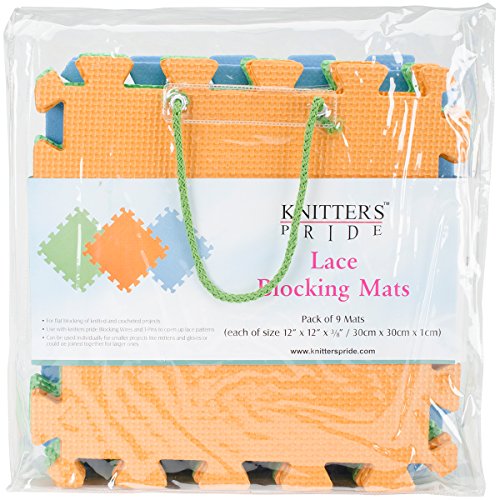 Knitter's Pride Blocking Mats (9) Knitter's Pride Blocking Mats (9) | $40.86 | 9 foam mats | Interlocking, colors vary | No | Price |
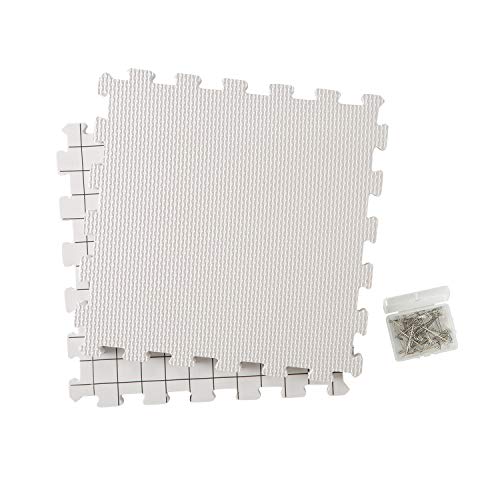 Knit Picks Blocking Mats Knit Picks Blocking Mats | $51.11 | 9 foam mats, 12 x 12 in | 0.5 in thick, 1 in grid | 100 T-pins | Price |
 KnitIQ Blocking Mats KnitIQ Blocking Mats | $54.99 | 9 foam mats | 0.75 in thick, storage bag | 100 T-pins | Price |
 Leslye Solomon Blocking Wires Leslye Solomon Blocking Wires | $26.95 | Blocking wires | 8 x 36 in, 4 x 18 in, 2 flexible | 30 T-pins | Price |
 Knitter's Pride Knit Blockers (20) Knitter's Pride Knit Blockers (20) | $34.04 | Comb blockers | 12 with 8 pins, 8 with 4 pins | Built in | Price |
 NewEle 17 in Blocking Board NewEle 17 in Blocking Board | $38.99 | Peg board, 17 x 17 in | 32 x 32 hole grid, folds | 40 pegs | Price |
 Eucalan No Rinse Wash Eucalan No Rinse Wash | $18.88 | No-rinse wash | 16.9 oz | Not applicable | Price |
Beginner
Beginner picks: a first blocking setup, about $19 to $51
Nine 12 inch mats make a 36 x 36 inch surface, enough for sweater pieces, shawlettes and a small baby blanket. Add a no-rinse wool wash and you can block anything wool.
Knit Picks Premium Blocking Mats, 9 pack with T-pins
$51.11Nine 12 x 12 inch mats, 0.5 inch thick, with a 1 inch grid printed on top and 100 T-pins, for about $51. The grid lets you pin to measurements without a tape measure at every edge.
Best for: Measuring as you pin
Check price Knitter's Pride Lace Blocking Mats, 9 Pack
$40.86A nine-pack of interlocking foam mats for about $41. Pins are not included, so budget a box of T-pins, but it is a reasonable choice if you already own pins.
Best for: Already have pins
Check price Eucalan No Rinse Delicate Wash, Lavender, 16.9 oz
$18.88A 16.9 oz bottle of biodegradable no-rinse wash, about $19. You soak, squeeze and pin without rinsing, which means less handling of delicate knits.
Best for: Wet blocking wool
Check pricePrices change often, so confirm on Amazon. As an Amazon Associate we earn from qualifying purchases.
Intermediate
Intermediate picks: thicker mats and faster pinning, about $27 to $55
These are the upgrades that save the most time: thicker foam, straight wires for long edges, and combs that replace dozens of single pins.
KnitIQ Blocking Mats, 9 piece set with T-pins
$54.99Nine mats at 0.75 inch thick with 100 T-pins and a storage bag, about $55. Thicker foam holds pins upright and angled pins stay put under a tugging lace edge.
Best for: Most knitters
Check price Leslye Solomon's Original Blocking Wires Kit
$26.95Stainless steel wires (eight 36 inch, four 18 inch, two 27 inch flexible) with 30 T-pins and a neon yardstick, about $27. Thread wires through a shawl edge and pin the wire instead of every point.
Best for: Shawls and straight edges
Check price Knitter's Pride Mindful Knit Blockers, Package of 20
$34.04Twenty comb-style blockers with rust resistant stainless pins, about $34. One press pins 4 or 8 points along a straight edge, which is far faster than single T-pins on blanket borders.
Best for: Blanket edges
Check price NewEle 17-Inch Foldable Crochet Blocking Board with 40 Stainless Steel Pegs
$38.99A folding 17 x 17 inch bamboo peg board with a 32 x 32 hole grid and 40 stainless pegs, about $39. Set the pegs once and block granny squares to identical size.
Best for: Granny squares
Check pricePrices change often, so confirm on Amazon. As an Amazon Associate we earn from qualifying purchases.
Expert
Expert picks: steam and a standing-height blocking station
Who should not buy this tier: anyone who blocks a few small wool projects a year. Wool wash and foam mats handle that. These make sense if you block acrylic often, or if kneeling on the floor to pin a blanket is no longer comfortable.

Rowenta Master Steam Station VR8338
$199.99A 1,750 W garment steamer with a removable 1.7 L tank and steam boost up to 320 g per minute, about $200. Steam relaxes acrylic that barely responds to wet blocking, and it refreshes finished items between washes.
Best for: Acrylic and quick refreshes
Check price
Sew Ready Foldable Hobby and Cutting Grid Table
$224.99A 58.75 inch wide folding table that adjusts from 30.25 to 38.75 inches high, with locking casters and mesh drawers, about $225. Lay mats on top and pin at standing height instead of on the floor.
Best for: Blocking without kneeling
Check pricePrices change often, so confirm on Amazon. As an Amazon Associate we earn from qualifying purchases.
How do you use blocking mats?
Wet blocking is the most common method for wool and wool blends. Here is the process most patterns assume:
- Soak the finished piece for 15 to 20 minutes in cool water with a little no-rinse wash.
- Squeeze gently, never wring. Roll the piece in a towel and press to remove more water.
- Lay out the interlocked mats on a flat surface where they can stay undisturbed for a day or two.
- Shape and pin to the pattern measurements, using the mat grid or a ruler. Use wires for long straight edges and blockers for borders.
- Dry completely before unpinning, then check measurements against your gauge.
Wet blocking or steam blocking: which does your yarn need?
Fiber decides the method. Always test on your gauge swatch first, because the swatch shows how a yarn grows or relaxes. Our guide to measuring gauge explains washing a swatch before measuring.
| Fiber | Best method | What to watch |
|---|---|---|
| Wool (not superwash) | Wet block or steam | Very responsive; pins set lace open |
| Superwash wool | Wet block, gently | Can grow noticeably when wet; do not over-stretch |
| Acrylic | Steam, held above the fabric | Wet blocking has little effect; too much heat flattens stitches permanently |
| Cotton and linen | Wet block | Heavy when wet; support the whole piece |
| Mohair and lace yarns | Wet block with wires | Pin firmly to open the pattern |
| Blends | Follow the main fiber | Test a swatch first |
How many blocking mats do I need?
Each standard mat is 12 x 12 inches. Round your project up to the next foot in each direction and multiply. A nine-mat set covers 36 x 36 inches.
| Project | Blocked size | Layout | Mats |
|---|---|---|---|
| Sweater front or back | About 20 x 26 in | 2 x 3 | 6 |
| Scarf | 8 x 60 in | 1 x 5 | 5 |
| Triangle shawl | 60 x 30 in | 5 x 3 | 15 |
| Baby blanket | 30 x 36 in | 3 x 3 | 9 |
| Throw blanket | 50 x 60 in | 5 x 5 | 25 |
| Granny squares | 6 in each | Peg board | 1 board |
For standard blanket dimensions, see the blanket size chart. A throw takes nearly three nine-mat sets, which is why many knitters block large blankets on a bed covered with towels instead.
Why are blocking mats so expensive, and what are the alternatives?
Dedicated blocking mats cost more than children's foam play mats because they are denser, hold pins better, often carry a printed grid and are sold with pins. Common alternatives owners use include clean foam play mats (check that dyes do not transfer when wet), towels on a spare bed, a carpet with a sheet on top, or an ironing board for small pieces. Those work, but they lack a grid and can take longer to dry.
Can you use blocking mats for crochet?
Yes. Blocking mats work the same way for crochet shawls, doilies and garments. For granny square blankets, a peg board like the NewEle 17 in Blocking Board is faster because every square comes out the same size, which makes joining easier. Plan your square count with the granny square blanket calculator.
Steam is hotter than it looks
Hold a steamer above the fabric, never on it, and keep hands out of the steam path when pinning. Acrylic can melt or flatten permanently with direct heat.
How we chose
We did not test these products in person. We compared manufacturer specifications (mat thickness, size, grid, pin count, wire lengths, steamer output), verified listing contents, and recurring themes in verified owner reviews about pin hold, warping, dye transfer and durability. We included tools beyond mats because owner reviews consistently name wires and blockers as the biggest time savers.
Buying tips
- Size the surface to your biggest project, then decide whether a bed or table is easier for blankets.
- Thicker foam holds pins better. 0.75 inch is sturdier than 0.5 inch.
- A printed grid saves measuring time.
- Buy rust resistant pins, since they sit in damp fabric for a day or more.
- Add wires for shawls and comb blockers for long borders.
- Match method to fiber: wet for wool, steam for acrylic.
Frequently asked questions
Do you really need blocking mats?
You do not strictly need them, but they make blocking far easier and more accurate. Mats hold pins firmly, resist water, interlock to fit the project and often have a grid for measuring. Towels on a bed or carpet work for occasional blocking. Knitters who make lace, shawls or fitted sweaters usually find mats worth the roughly $40 to $55 cost.
What is the difference between blocking mats and play mats?
Blocking mats are made of denser foam that grips pins, are usually thicker, and often have a printed measuring grid. Children's foam play mats are cheaper and softer, so pins can lean or pull out, and some colored foam can transfer dye to damp wool. If you use play mats, cover them with a light towel and test a hidden corner first.
How long does blocking take to dry?
Most wet-blocked knits take 24 to 48 hours to dry fully, depending on fiber, thickness and room humidity. Cotton and thick wool take longest. Pressing out water in a towel first shortens the time, and a fan nearby helps. Leave the pins in until the piece is completely dry, or edges can spring back out of shape.
Can you block acrylic yarn?
Acrylic does not respond much to wet blocking, but steam can relax it. Hold a steamer or steam iron above the fabric without touching it, let the fabric soften, then pin and cool it in shape. Too much heat permanently flattens acrylic, sometimes called killing it, which improves drape in lace but ruins texture in cables. Test on a swatch first.
Are blocking wires worth it?
For shawls, lace and anything with long straight edges, owners consistently say yes. Instead of pinning every point, you thread a stainless wire through the edge and pin only the wire, which keeps the line perfectly straight and saves a lot of time. Flexible wires also handle curves. For sweaters and blankets without lace, comb blockers or T-pins may be enough.
How do you block a large blanket without enough mats?
Many knitters block large blankets on a bed or carpet covered with clean towels, pinning into the mattress or carpet pad. Another option is to block half at a time on your mats, letting it dry before moving to the other half. Steaming a blanket on a large table in sections also works for acrylic. Check measurements against a blanket size chart as you go.
How we research: we compare manufacturer specifications, owner manuals, published standards and recurring themes in verified owner reviews. We do not test products in person, and this is researched guidance, not professional advice. Follow your machine manual and pattern, and take care with rotary cutters, hot irons and needles. As an Amazon Associate we earn from qualifying purchases.