Best Cross Stitch Floor Stand (2026): 7 Lap, Seat and Floor Stands Compared
The best cross stitch floor stand for most stitchers is the Lowery Workstand with Side Clamp, about $230. Its UK-made side clamp holds hoops, Q-Snaps and scroll frames beside your chair so both hands are free. On a budget, the Nurge Large Legged Seat Stand, about $73, tucks under your legs instead.
For most stitchers the best cross stitch floor stand is the Lowery Workstand with Side Clamp, at about $230. It sits beside your chair, not in front of it, and its side clamp grips a hoop, a Q-Snap or a scroll frame. You can swing the work away when you stand up and flip it over to finish threads on the back.
A stand is not only for big projects. Once your fabric is held still, you can stitch with both hands: one above the fabric and one below. That is faster, and it is easier on the wrists and shoulders. Below are stands at three budgets, a chart of which frames fit which stand, and a checklist for fitting a stand to the chair you already own.
The stands at a glance
| Product | Price | Type | Holds | Key spec | Buy |
|---|---|---|---|---|---|
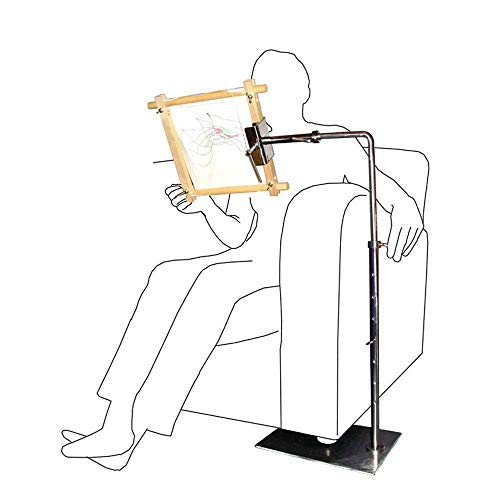 Lowery Workstand Lowery Workstand | $229.97 | Floor, side clamp | Hoops, Q-Snaps, scroll frames | Made in UK | Price |
 Edmunds 5850 Lap Stand Edmunds 5850 Lap Stand | $31.18 | Lap or table | Included scroll frame | Fabric up to 21 in wide | Price |
 Morgan Lap Stand Morgan Lap Stand | $49.74 | Lap | Included 7, 10, 14 in hoops | No-tool assembly | Price |
 Nurge Large Seat Stand Nurge Large Seat Stand | $72.90 | Seat stand | Hoops and frames | 5 joints, 37.79 in max | Price |
 Edmunds Quilters Wonder Edmunds Quilters Wonder | $88.19 | Floor, hoop | 18 in hoop included | 37.5 in max, folds to 16 in | Price |
 Daylight StitchSmart Stand Daylight StitchSmart Stand | $203.99 | Floor, swivel jaw | Frames and hoops | 360 degree rotation | Price |
 EZ Stitch Floor Stand EZ Stitch Floor Stand | $469.00 | Floor, wide frame | EZ Stitch frames and rods | 24 to 48 in wide, red oak | Price |
Beginner
Beginner picks: lap and seat stands under $75
Lap and seat stands are the least expensive way to free both hands. The price is low because the stand uses your body or your seat as the base. They work best for kits up to about 14 inches and for stitchers who mostly sit in one chair.
Nurge Large Legged Embroidery Seat Stand with Classic Head, 38 Inch
$72.90Its large beech base slides under your thighs or seat cushion, and five adjustable joints put the work at a comfortable angle, up to about 38 inches high. It costs a third of a floor stand and still holds larger hoops steady.
Best for: Armchair stitchers on a budget
Check price Morgan Lap Stand with 7, 10 and 14-Inch Hoops
$49.74Comes with 7, 10 and 14 inch hoops, so you have a stand and a hoop for most kit sizes for about $50. It assembles without tools, which helps anyone with stiff hands.
Best for: Kit stitchers who want hoops included
Check price Frank A. Edmunds 5850 Adjustable Lap and Table Stand with Scroll Frame
$31.18About $31 buys a stand plus an 8.5 by 24 inch split rail scroll frame taking fabric up to 21 inches wide. Use it on your lap or on a table, a cheap way to find out whether you like stitching with both hands.
Best for: Trying a stand for the first time
Check pricePrices change often, so confirm on Amazon. As an Amazon Associate we earn from qualifying purchases.
Intermediate
Intermediate picks: freestanding floor stands, $85 to $205
A true floor stand does not need your lap, so you can get up without undoing the setup and move it between chairs. The extra cost buys height adjustment and rotation.
Frank A. Edmunds Quilters Wonder 18-Inch Hoop with Adjustable Stand
$88.19An 18 inch hoop on a base that rises to 37.5 inches, rotates and tilts 360 degrees, and folds to 16 inches for storage. It is made in the USA. The large hoop suits big cross stitch pieces as well as hand quilting.
Best for: Large pieces on a hoop
Check price Daylight Company StitchSmart Embroidery Stand
$203.99From the lamp maker Daylight, a height-adjustable floor stand with a strong jaw that lifts and swivels your frame a full 360 degrees to reach the back. It holds hoops and frames, so you can change project types without changing stands.
Best for: Stitchers who flip work often
Check pricePrices change often, so confirm on Amazon. As an Amazon Associate we earn from qualifying purchases.
Expert
Expert picks: the Lowery and a wide oak frame stand
Skip this tier if you stitch small kits in a hoop a few evenings a month. A seat stand does that job. It is worth the money if you work large charts on scroll frames for hours at a time, or if you want one stand to hold everything you stitch.
Lowery Workstand with Side Clamp
$229.97The side clamp holds hoops, Q-Snaps and scroll frames beside your chair, so you can sit close without a base in front of your knees. It is powder-coated steel made in the UK and built to be adjusted every session for years.
Best for: One stand for every frame
Check price EZ Stitch American Dream Products Needlework Floor Stand
$469.00Solid American red oak, adjustable from 24 to 48 inches wide, built for large needlepoint and cross stitch on EZ Stitch scroll frames, rods and side bars. It is the choice for full-coverage pieces that outgrow a clamp.
Best for: Very large scroll frame projects
Check pricePrices change often, so confirm on Amazon. As an Amazon Associate we earn from qualifying purchases.
What is the best cross stitch floor stand for my chair?
Start with the chair, then choose the stand. A stand that is perfect beside a dining chair can be useless next to a recliner with wide arms. Before you buy, measure these three things:
- Seat height to your eye line. The fabric should sit a little below eye level and tilted toward you, so your neck stays neutral.
- Arm width. Wide armrests push a floor base farther away, and a side clamp stand like the Lowery Workstand reaches past them more easily.
- Space under the seat. Seat stands like the Nurge Large Seat Stand need a flat cushion or a gap to slide the base into; deep sofa cushions can make them wobble.
If you have arthritis or shoulder pain, a stand plays a big part in comfort. Our guide to crafting with arthritis covers grip and posture in more depth.
| Stand type | Where it sits | Best frame | Good chair match | Example |
|---|---|---|---|---|
| Lap stand | On your thighs | Included hoop or small scroll frame | Any chair, bed, travel | Edmunds 5850 Lap Stand |
| Seat stand | Base under your legs or cushion | Hoops up to large sizes | Firm armchairs, dining chairs | Nurge Large Seat Stand |
| Floor hoop stand | Floor in front of you | Its own large hoop | Chairs with open space in front | Edmunds Quilters Wonder |
| Floor stand, swivel jaw | Floor, beside or in front | Hoops and frames | Most chairs | Daylight StitchSmart Stand |
| Floor stand, side clamp | Floor beside the chair | Hoops, Q-Snaps, scroll frames | Recliners, sofas, wide arms | Lowery Workstand |
| Wide frame floor stand | Floor in front | Wide scroll frames 24 to 48 in | Dedicated stitching chair | EZ Stitch Floor Stand |
How do you use a floor standing embroidery frame?
A floor stand changes how you make each stitch. Held in one hand, the fabric is usually stitched with the "sewing" method, scooping the needle in and out in one motion. On a stand you can use the stab method instead. Your dominant hand stays on top and pushes the needle straight down. Your other hand waits underneath and passes it back up.
- Mount the fabric drum tight on a Q-Snap or scroll frame. A loose fabric bounces with every stab.
- Set the height so your top elbow can rest near your side, not lifted.
- Tilt the work 30 to 45 degrees toward you so you see the grid without bending your neck.
- Park your chart at the same distance as the fabric so your eyes do not refocus constantly.
- Flip to finish threads. Rotating stands such as the Daylight StitchSmart Stand and Edmunds Quilters Wonder turn the back toward you in seconds.
Two-handed stitching takes a little practice before it feels natural. If you are choosing the frame to go on the stand, our Q-Snap vs scroll frame comparison explains the tradeoffs.
Which frames fit which cross stitch stand?
Frame compatibility is the most common reason a stand disappoints. A stand built around its own hoop will not hold a scroll frame, and a wide frame stand will not grip a small hoop. Q-Snaps like the Q-Snap 17x17 and split rail frames like the Edmunds Split Rail Scroll Frame suit clamp-style stands best.
| Stand | Hoops | Q-Snaps | Scroll frames | Notes |
|---|---|---|---|---|
| Lowery Workstand | Yes | Yes | Yes | Side clamp grips the frame edge |
| Daylight StitchSmart Stand | Yes | Frames held in jaw | Yes | 360 degree swivel jaw |
| Nurge Large Seat Stand | Yes | Check head fit | Check head fit | Classic head, 5 joints |
| Edmunds Quilters Wonder | Included 18 in hoop | No | No | Rotates and tilts 360 degrees |
| Morgan Lap Stand | 7, 10, 14 in included | No | No | No-tool assembly |
| Edmunds 5850 Lap Stand | No | No | Included 8.5 x 24 in | Fabric up to 21 in wide |
| EZ Stitch Floor Stand | No | No | EZ Stitch frames | 24 to 48 in wide |
To size the frame, add at least 3 inches of fabric margin on every side of the design. The cross stitch fabric calculator gives the cut size, and that tells you which frame and stand you need.
Is a cross stitch floor stand with light and magnifier worth it?
Stands sold with a clip-on light and lens are tempting, but the lights on them are usually small and their color quality is rarely published. You will usually do better with a good stand plus a separate daylight floor magnifier, so each piece does its own job well. A standalone lamp such as the Daylight Magnificent Pro lists 6,000K, CRI 95+ light and a 1.75X glass lens, and you can move it to wherever the stand ends up.
Put the lamp on the side opposite your stitching hand so your hand does not cast a shadow over the fabric. Our best magnifier for cross stitch roundup matches lens strength to fabric count.
Can you make a DIY cross stitch floor stand?
You can, and plenty of stitchers have made one from PVC pipe or a repurposed music stand. A homemade stand costs less, but it rarely matches a commercial one on three things: a clamp that holds without slipping, joints that hold an angle under the pressure of stabbing, and a base heavy enough not to tip. If you are going to spend on materials and time anyway, the Edmunds 5850 Lap Stand at about $31 is a low-risk way to find out whether two-handed stitching suits you before you build or buy a larger stand.
How we chose
We did not test these stands in person. We compared manufacturer descriptions of frame compatibility, height range, adjustment joints, materials and country of manufacture, together with recurring themes in verified owner reviews from cross stitchers and needlepointers. We favored stands that hold more than one frame type, adjust without tools, and suit common living room chairs. Stands sold only as "compatible with" another brand's design were left out because their build quality is hard to verify.
Buying tips
- Know your frame first. Hoop-only stands cannot hold Q-Snaps or scroll frames later.
- Measure your chair arms. Wide recliner arms favor a side clamp stand.
- Check the height range against your seated eye line, especially with tall wingback chairs.
- Look for rotation. Flipping to the back to end threads is constant in cross stitch.
- Tighten fabric well. Any stand feels wobbly if the fabric bounces.
- Plan storage. Folding stands like the Edmunds hoop stand tuck behind a chair.
Frequently asked questions
What is the difference between a seat stand and a floor stand?
A seat stand has a flat base that slides under your legs or seat cushion, so your weight holds it steady. A floor stand has its own base on the floor and stays put when you stand up. Seat stands such as the Nurge Large Legged Seat Stand cost less and travel well. Floor stands such as the Lowery Workstand cost more but move between chairs and leave your lap clear.
Is the Lowery stand worth the money?
For stitchers who work large projects often, it can be, because one stand holds hoops, Q-Snaps and scroll frames and it adjusts beside almost any chair. It is powder-coated steel made in the UK. If you stitch small kits occasionally, a seat or lap stand under $75 will do the same job for a fraction of the price. Our Lowery Workstand review covers the details.
Does a floor stand help with arthritis in the hands?
A stand removes the need to grip a hoop for long periods, which many stitchers with arthritis find more comfortable. It also lets you rest both forearms and use lighter, shorter stitching motions. It is not a treatment, so talk to your doctor or a hand therapist about pain. For practical grip and posture ideas, our guide to crafting with arthritis goes further.
How tall should a cross stitch floor stand be?
Set it so the fabric sits slightly below your eye level and tilted toward you, with your upper elbow relaxed near your side. For most adults in a standard chair that places the frame center somewhere between chest and chin height. Check the maximum height before buying: the Edmunds Quilters Wonder reaches 37.5 inches and the Nurge seat stand about 38 inches.
Can I use a floor stand for needlepoint and embroidery too?
Yes. Clamp-style stands like the Lowery Workstand and the Daylight StitchSmart hold stretcher bars, scroll frames and hoops, so they work for needlepoint, crewel and hand embroidery as well as cross stitch. Hoop-only stands such as the Edmunds Quilters Wonder are limited to their own hoop. For very wide needlepoint canvases, a wide frame stand like the EZ Stitch floor stand is a better fit.
How we research: we compare manufacturer specifications, owner manuals, published standards and recurring themes in verified owner reviews. We do not test products in person, and this is researched guidance, not professional advice. Follow your machine manual and pattern, and take care with rotary cutters, hot irons and needles. As an Amazon Associate we earn from qualifying purchases.