Quilt Batting Size Calculator: Batting to Cut and the Package Size That Fits
Add 2 to 4 inches per side for quilting on a home machine and 4 to 6 inches per side for a longarm, then pick the smallest package that covers it. A 90 x 95 inch queen quilt with 4 inches per side needs 98 x 103 inches of batting, which is a king size package, not a 90 x 108 inch queen.
Batting is the soft middle layer of a quilt, between the pieced top and the backing. Enter the size of your quilt top and how much extra your quilting method needs. The calculator gives the batting size to cut and the smallest standard package that covers it, so you do not pay for a king when a twin will do, or come home with a queen that is too narrow.
Your quilt top
Your results
Batting to cut
71 square feet
Smallest package that fits
| With 2 in per side | King (120 x 120 in) |
|---|---|
| With 6 in per side | King (120 x 120 in) |
| By the yard, 90 in wide | Too narrow |
Machines that handle this quilt comfortably
Baby, crib and wall quilts fit through almost any machine. A good computerized machine with a walking foot and wide table is plenty.
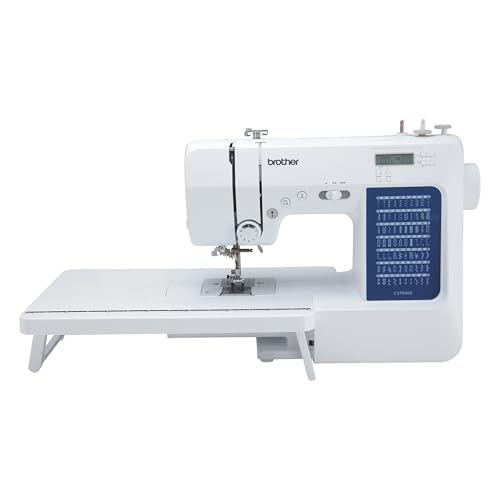
Brother CS7000X Computerized Sewing and Quilting Machine
$279.99Wide extension table, quilt guide and walking-foot friendly, at a beginner price.
Check price
Janome 3160QDC-G Sewing and Quilting Machine
$749.00Janome build quality in a compact computerized machine made with quilters in mind.
Check price
Juki TL-2000Qi Long-Arm Sewing and Quilting Machine
$999.00A straight-stitch workhorse that grows with you into bigger quilts.
Check pricePrices change often, so confirm on Amazon. As an Amazon Associate we earn from qualifying purchases.
Machines with room for throws and lap quilts
At this width a larger harp makes free-motion and straight-line quilting far less of a wrestle.
Janome 3160QDC-G Sewing and Quilting Machine
$749.00Compact and quilter-focused, fine for throws with patient rolling.
Check price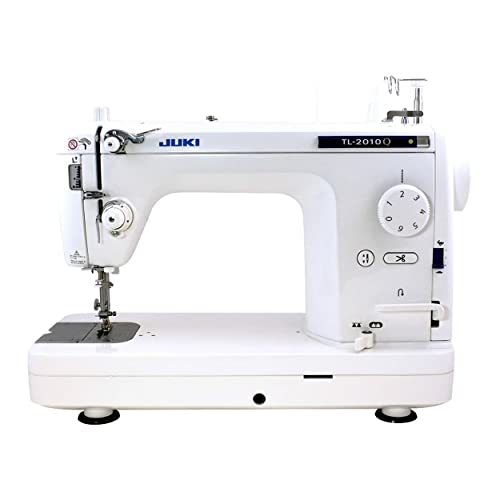
Juki TL-2010Q High-Speed Sewing and Quilting Machine
$1,199.00High-speed straight stitch with a large work area and knee lift.
Check price
Janome HD9 Professional High-Speed Straight Stitch Machine
$1,599.00A professional straight-stitch machine built for long quilting sessions.
Check pricePrices change often, so confirm on Amazon. As an Amazon Associate we earn from qualifying purchases.
Machines built for twin to queen quilts
Twin and queen tops are where an extended arm pays for itself in comfort and time.
Juki TL-2010Q High-Speed Sewing and Quilting Machine
$1,199.00The most popular step up for quilters moving past a standard machine.
Check price
Janome 1600P-QC Straight Stitch Sewing and Quilting Machine
$1,599.00Straight-stitch speed and a heavy frame for big quilts.
Check price
Juki TL-15 Mid-Arm Quilting and Piecing Machine
$1,399.00A midarm with a much bigger throat for queen-size quilting at a table.
Check pricePrices change often, so confirm on Amazon. As an Amazon Associate we earn from qualifying purchases.
Longarms and frames for king-size quilts
King quilts are heavy. A midarm, sit-down longarm or frame system lets the machine do the work instead of your shoulders.

Grace Little Rebel Sewing and Quilting Machine
$2,799.00A midarm with built-in stitch regulation that can sit on a table or a frame.
Check price
Handi Quilter Amara ST 20 Stationary Longarm with Lift Table
$9,495.00A 20 inch sit-down longarm with a lift table: room for king quilts without a frame.
Check price
Grace Qnique 16X Longarm with Q-Zone Queen Frame
$4,849.00A complete longarm and frame system for quilting large tops edge to edge.
Check pricePrices change often, so confirm on Amazon. As an Amazon Associate we earn from qualifying purchases.
How do you calculate what size batting you need?
Batting is cut larger than the quilt top on every side, because the layers shift slightly while quilting and the edges get trimmed square afterward. The math is the same as for backing.
- Choose the extra per side. 2 to 4 inches for a home machine, 4 to 6 inches for a longarm.
- Add it to both sides of each dimension. A 90 x 95 inch queen with 4 inches per side: 90 + 8 = 98 inches wide, 95 + 8 = 103 inches long.
- Find the smallest package that covers it, in either direction. A 90 x 108 inch queen package fails because 90 inches is narrower than 98. Turning it sideways does not help either. The smallest package that fits is the king at 120 x 120 inches.
- If nothing fits, buy by the yard. Batting comes on 90 and 120 inch wide rolls. Buy the longer dimension in yards from a roll wide enough for the shorter one.
The same queen with only 2 inches per side needs 94 x 99 inches, and still does not fit a queen package, so it also calls for a king. That surprises many quilters, but it is simple geometry: a "queen" batting is sized for smaller queen quilts of about 86 inches wide. A 50 x 65 inch throw, on the other hand, needs 54 x 69 inches and fits a twin package.
What are the standard quilt batting sizes?
Package sizes below use the most common published dimensions. Makers differ by a few inches, so the king size from one brand can be 120 x 120 inches and from another 120 x 124. The last two columns show the largest quilt each package covers with domestic and longarm overage.
| Package | Size (in) | Fits quilt, 2 in per side | Fits quilt, 4 in per side |
|---|---|---|---|
| Craft | 34 x 45 | 30 x 41 | 26 x 37 |
| Crib / Baby | 45 x 60 | 41 x 56 | 37 x 52 |
| Throw | 60 x 60 | 56 x 56 | 52 x 52 |
| Twin | 72 x 90 | 68 x 86 | 64 x 82 |
| Full / Double | 81 x 96 | 77 x 92 | 73 x 88 |
| Queen | 90 x 108 | 86 x 104 | 82 x 100 |
| Super Queen | 93 x 121 | 89 x 117 | 85 x 113 |
| King | 120 x 120 | 116 x 116 | 112 x 112 |
For example, the Hobbs Heirloom 80/20 King is 120 x 120 inches, while the Warm & Natural King 4-Pack lists 120 x 124 inches per batt. Always check the current package, since specs change. For the full list by brand, see our batting size chart.
Which batting package fits each quilt size?
Every row is calculated with the same function as the calculator above.
| Quilt | Top (in) | 2 in per side | 4 in per side | 6 in per side |
|---|---|---|---|---|
| Baby | 40 x 40 | Crib / Baby (45 x 60 in) | Throw (60 x 60 in) | Throw (60 x 60 in) |
| Crib | 36 x 52 | Crib / Baby (45 x 60 in) | Crib / Baby (45 x 60 in) | Twin (72 x 90 in) |
| Lap | 45 x 60 | Twin (72 x 90 in) | Twin (72 x 90 in) | Twin (72 x 90 in) |
| Throw | 50 x 65 | Twin (72 x 90 in) | Twin (72 x 90 in) | Twin (72 x 90 in) |
| Twin | 68 x 90 | Full / Double (81 x 96 in) | Queen (90 x 108 in) | Queen (90 x 108 in) |
| Twin XL | 68 x 95 | Queen (90 x 108 in) | Queen (90 x 108 in) | Queen (90 x 108 in) |
| Full / Double | 83 x 90 | Queen (90 x 108 in) | Super Queen (93 x 121 in) | King (120 x 120 in) |
| Queen | 90 x 95 | King (120 x 120 in) | King (120 x 120 in) | King (120 x 120 in) |
| King | 106 x 95 | King (120 x 120 in) | King (120 x 120 in) | King (120 x 120 in) |
| California King | 102 x 99 | King (120 x 120 in) | King (120 x 120 in) | King (120 x 120 in) |
Let batting relax before basting
Batting comes folded tightly in its bag. Unfold it and lay it flat for a day, or tumble it on low heat for a few minutes if the package allows, so creases relax before you baste. Check the package before using steam or heat on polyester.
What type of quilt batting should you use?
Fiber changes warmth, loft, shrinkage and, most importantly for planning, how far apart you can quilt. The maximum quilting distance is the widest spacing between lines of stitching that the maker says will hold the batting together through washing. The figures below are the most widely cited published maximum for a common product of each type, and distances differ a lot between brands of the same fiber.
| Type | Loft | Max quilting distance | Shrinkage | Best for |
|---|---|---|---|---|
| 100% Cotton | Low (thin, flat) | Up to 10 in | About 1 to 5 percent, depending on product and wash temperature | Bed quilts, Hand and machine quilting, Traditional antique look, Placemats and runners |
| 80/20 Cotton/Polyester Blend | Low to medium (Hobbs Heirloom 80/20 about 1/8 in) | Up to 4 in | About 3 to 5 percent (Hobbs Heirloom 80/20) | Everyday bed quilts, Machine quilting, Beginners, Gifts that get washed often |
| 100% Polyester | Low to high depending on product | Up to 12 in | About 0 to 1 percent (Quilters Dream Poly) | Tied quilts, Puffy texture, Charity and kids quilts, Wide quilting spacing |
| Wool | Medium to high (Quilters Dream Wool about 1/3 in) | Up to 8 in | Minimal for washable wool battings (Quilters Dream Wool: none stated) | Show quilts, Feathers and trapunto-style texture, Winter bed quilts, Wall hangings that are folded for storage |
| Bamboo Blend | Low | Up to 8 in | About 3 percent (Quilters Dream Bamboo) | Summer quilts, Baby quilts, Drapey throws |
| Silk | Low | Not confirmed | Not confirmed | Wearable art and garments, Heirloom and silk quilts, Hand quilting |
| Fusible (usually 80/20 or poly) | Low | Up to 4 in | Not confirmed | Pin-free basting, Small quilts and table runners, Bags and placemats |
The quilting distance matters as much as the size. If you plan an edge to edge design with wide open spaces, a batting rated for 4 inches will need more stitching than you intended. If you plan dense custom quilting, any batting will do, and the choice comes down to warmth and drape. The guide to choosing quilt batting goes deeper, and our best quilt batting roundup compares specific products.
Batting in the sizes quilters buy most
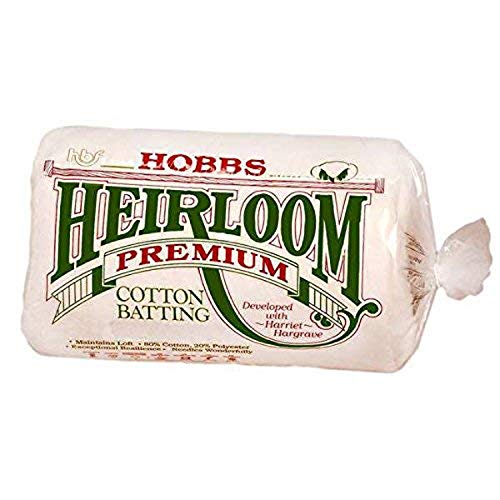
Hobbs Heirloom 80/20 Cotton/Poly Batting, Queen
$28.99A 90 x 108 in 80/20 batt with about 1/8 in loft, a good fit for throws and twins with room to spare.
Check price
Hobbs Heirloom Premium 80/20 Cotton/Poly Batting, King, 120 x 120 in
$44.14The same 80/20 blend at 120 x 120 in, the package most queen quilts actually need.
Check price
Hobbs Tuscany 100% Washable Wool Batting, Queen, 96 x 108 in
$76.22A 96 x 108 in washable wool batt for loft and crisp quilting texture.
Check price
Warm & Natural Cotton Batting, 90 in x 40 yd Roll
$299.99A 90 in x 40 yd roll of needle-punched cotton for quilters who finish many quilts a year.
Check pricePrices change often, so confirm on Amazon. As an Amazon Associate we earn from qualifying purchases.
Is buying batting by the roll worth it?
If you finish more than a handful of bed quilts a year, a roll can make sense. A roll lets you cut exactly the size each quilt needs instead of paying for a king package to cover a queen, and leftover strips from packages add up. The trade-off is storage space and the up-front cost. For one or two quilts a year, packages like the Hobbs Heirloom 80/20 Queen are simpler.
Quilters who reach that volume are often the same ones weighing a longarm or midarm, since quilting several big tops a year on a home machine is slow. The longarm cost calculator compares paying a service with owning a machine, and the quilt backing calculator finishes the quilt sandwich math.
Frequently asked questions
What size batting do I need for a queen quilt?
A 90 x 95 inch queen quilt needs 94 x 99 inches of batting with 2 inches per side, or 98 x 103 inches with the 4 inches per side many longarmers ask for. Packaged queen batting is usually 90 x 108 inches, which is too narrow either way, so buy a king package and trim the extra for a small project.
How much bigger than the quilt top should batting be?
For quilting on a home sewing machine, 2 to 4 inches bigger on every side is plenty, since you baste the layers and they shift very little. Longarm quilters usually want 4 to 6 inches per side because the frame clamps hold the edges. Batting and backing are cut larger than the quilt top. Longarm services set their own requirement.
What is the best batting for machine quilting?
Cotton and 80/20 cotton and polyester blends are the most popular for machine quilting because they grip the fabric, stay flat and do not shift. Choose by how far apart you plan to quilt: many cotton battings allow lines up to 8 or 10 inches apart, while some 80/20 blends call for 4 inches. Wool is loftier and shows quilting texture beautifully.
Can I piece batting together?
Yes. Butt two straight edges together without overlapping and join them with a wide zigzag stitch by machine, or whipstitch by hand. Some quilters use iron-on batting tape. Pieced batting works well for leftover scraps and very large quilts, though a single piece is best for quilts that will be washed often or quilted with widely spaced lines.
How far apart can I quilt?
Every batting package lists a maximum quilting distance, the farthest apart your lines of stitching can be before the batting shifts or bunches in the wash. Published figures range from about 4 inches for some cotton and 80/20 battings to 12 inches for some polyester. Check the package: the Hobbs Heirloom 80/20 King lists up to 4 inches, while needle-punched cotton with scrim is often rated up to 10.
What size batting for a king quilt on a longarm?
A 106 x 95 inch king quilt with 8 inches per side needs 122 x 111 inches of batting. That is wider than a 120 inch king package, so buy 3 1/2 yards of 120 inch wide batting by the yard. Ask your longarmer first, since many will accept 6 inches per side on a king.
How we research: we compare manufacturer specifications, owner manuals, published standards and recurring themes in verified owner reviews. We do not test products in person, and this is researched guidance, not professional advice. Follow your machine manual and pattern, and take care with rotary cutters, hot irons and needles. As an Amazon Associate we earn from qualifying purchases.