Seam Allowance Chart: Quilting, Garment and Serger Seam Allowances
The standard seam allowance is 1/4 inch (0.635 cm, usually rounded to 6 mm) for quilting, 5/8 inch for US commercial garment patterns such as Simplicity and McCall's, and 1 to 1.5 cm for most European patterns. Add twice the seam allowance to a finished size to get the cut size: a 4 inch finished square is cut 4 1/2 inches with 1/4 inch seams.
Seam allowance is the fabric between the stitching line and the raw edge. It disappears into the seam, so every pattern piece is cut larger than its finished size by twice the seam allowance.
What are the standard seam allowances?
The chart lists 6 standard seam allowances with the work each belongs to: 1/4 inch for quilting, 5/8 inch for US commercial garment patterns and 1 to 1.5 cm for most European ones. A serger trims to its own narrower allowance as it sews, and our best sergers roundup compares those machines.
| Seam allowance | Inches | mm | Used for | Notes |
|---|---|---|---|---|
| 1/4 in | 0.25 | 6.35 | Quilt piecing (standard), Doll clothes and small crafts, Curved seams in some patterns | Use a 1/4 in presser foot; a scant 1/4 in helps blocks finish at size. |
| 3/8 in | 0.375 | 9.53 | Many knit and indie patterns, Serger or overlock seams, Bags | Common serger stitch width setting; check the pattern. |
| 1/2 in | 0.5 | 12.7 | Many indie garment patterns, Home decor, Pillows and cushions, Bags | Popular middle ground; easy to press open. |
| 5/8 in | 0.625 | 15.88 | US commercial garment patterns (Simplicity, McCall's, Butterick, Vogue), Fitting room to let out | Standard for major US pattern companies; about the same as 1.5 cm. |
| 1 cm | 0.39 | 10 | Many European and indie patterns, Knits, Children's clothing | Close to 3/8 in. |
| 1.5 cm | 0.59 | 15 | UK and European commercial garment patterns | Close to 5/8 in. Some patterns include no seam allowance at all; read the instructions. |
What size do you cut for a finished size?
Every cut size below is the finished size plus twice the allowance, so a 4 inch finished square is cut 4 1/2 inches with 1/4 inch seams and 5 1/4 inches with 5/8 inch seams. The seam allowance calculator converts in either direction for any size you type in.
| Finished | 1/4 in seams | 3/8 in seams | 1/2 in seams | 5/8 in seams |
|---|---|---|---|---|
| 2 in | 2 1/2 | 2 3/4 | 3 | 3 1/4 |
| 3 in | 3 1/2 | 3 3/4 | 4 | 4 1/4 |
| 4 in | 4 1/2 | 4 3/4 | 5 | 5 1/4 |
| 5 in | 5 1/2 | 5 3/4 | 6 | 6 1/4 |
| 6 in | 6 1/2 | 6 3/4 | 7 | 7 1/4 |
| 10 in | 10 1/2 | 10 3/4 | 11 | 11 1/4 |
| 12 in | 12 1/2 | 12 3/4 | 13 | 13 1/4 |
Tools for accurate seams

Creative Grids 12-1/2 x 24-1/2 Rectangle Quilt Ruler
Under $100Precise ruler markings for cutting pieces with the seam allowance included.
Check price
Juki Pearl Line MO-654DE Serger
Under $1,000A serger that trims and finishes seam allowances in one pass.
Check price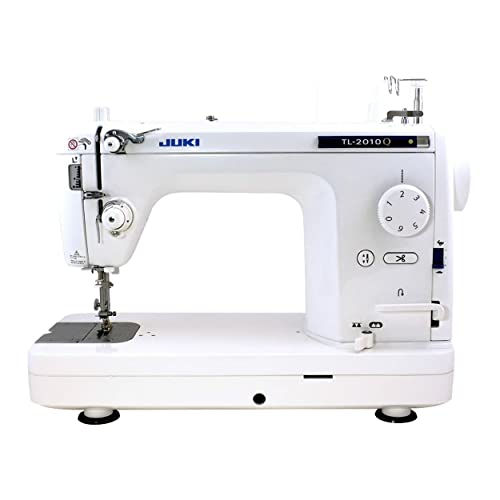
Juki TL-2010Q Sewing and Quilting Machine with Automatic Thread Trimmer
Under $2,500A high-speed single-needle lockstitch machine for quilting and tailoring with an automatic thread trimmer. It stands in for the Juki TL-2000Qi, which is sold out on Amazon.
Check pricePrices change often, so confirm on Amazon. As an Amazon Associate we earn from qualifying purchases.
Frequently asked questions
What is the standard seam allowance for quilting?
Quilting uses a 1/4 inch seam allowance. Use a 1/4 in presser foot; a scant 1/4 in helps blocks finish at size. Because quilt blocks join many seams, even a 1/16 inch error per seam can make a block noticeably too small, so test your seam with three 2 1/2 inch strips: sewn together, they should measure 6 1/2 inches.
What is the seam allowance on commercial sewing patterns?
Standard for major US pattern companies; about the same as 1.5 cm. The generous 5/8 inch allowance leaves room to adjust fit, press seams open and finish edges. Many indie and knit patterns use 3/8 or 1/2 inch instead, so always read the pattern instructions before cutting.
How do I calculate the cut size from a finished size?
Add the seam allowance twice, once for each side. A 6 inch finished piece with 1/4 inch seams is cut 6 1/2 inches; with 1/2 inch seams it is cut 7 inches; with 5/8 inch seams it is cut 7 1/4 inches. The table on this page lists cut sizes for common finished sizes at every standard allowance.
What is a 1/4 inch seam allowance in cm?
A 1/4 inch seam allowance is 0.635 cm, or 6.35 mm, because one inch is defined as exactly 2.54 cm. Metric patterns and presser feet usually round it to 6 mm or 0.6 cm. The difference is small on one seam, but across a quilt block with eight seams it adds up to about 3 mm, so pick one standard and keep it for the whole project.
Is 1.5 cm the same as 5/8 inch?
Nearly. 1.5 cm is about 0.59 inch and 5/8 inch is 0.625 inch, a difference of under 1 mm per seam. For most garments you can use either, but on a garment with many seams the small difference adds up, so stick with the allowance the pattern was drafted with.
What seam allowance does a serger use?
A serger trims and overlocks the edge as it sews, and many patterns designed for sergers use a 3/8 inch seam allowance. If you serge a pattern drafted with 5/8 inch seams, line the fabric edge up so the needle falls on the 5/8 inch line and let the knife trim the extra.
Sources
- NIST: the international inch is exactly 2.54 cm (Specifications, Tolerances and Other Technical Requirements, Handbook 44, Appendix C)
- Pattern instruction sheets from Simplicity, McCall's, Butterick and Vogue (5/8 inch seam allowance unless stated)
- Sewing machine and serger manuals (Janome, Juki, Brother) for 1/4 inch piecing feet and serger seam widths
How we research: we compare manufacturer specifications, owner manuals, published standards and recurring themes in verified owner reviews. We do not test products in person, and this is researched guidance, not professional advice. Follow your machine manual and pattern, and take care with rotary cutters, hot irons and needles. As an Amazon Associate we earn from qualifying purchases.