Arrow Hydraulic Sewing Chair Review: Is This $400 Chair Worth It?
Yes, if your sewing surface sits higher or lower than a standard desk. The Arrow hydraulic sewing chair costs about $400, adjusts from 18 to 22 inches, adds targeted lumbar support, a hidden under-seat storage compartment and a five-star swivel base, and the maker states a 3-year warranty.
Our verdict
Buy the Arrow hydraulic sewing chair if you sew at a cabinet or table whose height does not match an ordinary desk chair, and you want an armless seat that lets your elbows swing freely while you guide fabric. Skip it if you mainly need a general work chair, because the HON Crio (about $294) and the Steelcase Series 1 (about $499) offer far more adjustment for the money, and skip it if your sewing surface is a standard 29 or 30 inch desk you already sit at comfortably.
The maker lists this chair as product HCHAIRP, with a seat height adjustable from 18 to 22 inches, targeted lumbar support, a hidden storage compartment under the seat, a five-star 360 degree swivel base, heavy-duty casters that roll without marking floors, durable upholstery over plush cushions, and eight patterns. It shows a price of about $400 against a regular price of about $530, and states a 3-year warranty.
Two notes on conflicting figures. Our registry records a 1-year warranty and the Amazon listing mentions 11 patterns, while the maker's own page states 3 years and eight patterns. We use the manufacturer figures and flag the difference.
Arrow Hydraulic Sewing Chair specs
| Product number | HCHAIRP (listed as H7013B on the Amazon listing) |
|---|---|
| Seat height | 18 to 22 in, hydraulic adjustment |
| Back support | Targeted lumbar support |
| Arms | Armless |
| Storage | Hidden compartment under the seat |
| Base | Five-star, 360 degree swivel |
| Casters | Heavy duty, non-marking on most floors |
| Upholstery | Durable fabric over plush cushions, 8 patterns per the maker (the listing mentions 11) |
| Weight capacity | Not published by the maker or the listing |
| Warranty | 3 years per the maker; our registry recorded 1 year, so we use the manufacturer figure |
| Price | About $400, against a regular price of about $530 |
Specs above come from the hydraulic sewing chair page published by AccuQuilt, which now sells the Arrow sewing furniture line, plus the manufacturer feature bullets on the Amazon listing.
What makes a sewing chair different from a desk chair?
Three things, and they all come from what your body does at a machine rather than at a keyboard.
No arms. At a sewing machine your elbows move constantly as you feed fabric, turn a quilt and reach for the presser foot lever. Armrests get in the way, and they stop you pulling close to a cabinet. Every purpose-built sewing chair, including this one, is armless.
A different height range. Office chairs are built around desks roughly 29 to 30 inches high. Sewing surfaces vary far more: a cabinet with a lift, a cutting table, a folding table and a dining table are all different, and the right seat height changes with each. This chair covers 18 to 22 inches, which is a higher ceiling than many office chairs reach.
Support where you actually lean. Sewists lean forward toward the needle rather than back into a headrest, so targeted lower-back support does more good here than a tall backrest. This chair has no headrest, and that is the correct design choice for the job.
The under-seat compartment is the small luxury: a place for scissors, a seam ripper and a bobbin box that stays with the chair instead of migrating around the room.
How high should a sewing chair be?
The rule that matters is simple: sit so your forearms are roughly level with the work, with shoulders relaxed and feet flat on the floor. If your shoulders creep up toward your ears, the seat is too low for the surface. If your wrists bend up to reach the bed of the machine, it is too high.
Because a sewing cabinet with a lift sets the machine bed flush with the tabletop, the surface height, not the machine height, is what you match the chair to. Use this as a planning guide, then adjust to how you actually feel after twenty minutes.
| Your sewing surface | Typical height | Where to start in the 18 to 22 in range |
|---|---|---|
| Standard desk or dining table | About 29 to 30 in | Lower end, around 18 to 19 in |
| Sewing cabinet with the lift flat | About 29 to 30 in | Lower to middle, 18 to 20 in |
| Folding or craft table | About 30 in | Middle, around 19 to 20 in |
| Raised or adjustable work table | About 33 to 36 in | Upper end, 21 to 22 in |
| Standing-height cutting table | About 36 in and up | Above this chair, use a drafting stool |
If your cutting table is standing height, this chair will not reach it and a drafting stool with a foot ring such as the ErGear drafting chair (about $130, 8 inches of seat travel and a 19.7 inch foot ring) is the better tool. Our guide to setting up a sewing room covers surface heights for each station.
What is the honest weakness of the Arrow sewing chair?
The price for the adjustment you get. At about $400 you are paying for height, a swivel, lumbar support and storage. General office chairs at half the price often add seat depth adjustment, tilt tension and adjustable lumbar height. If your sewing surface is a normal desk height, that extra adjustability may serve you better.
No published weight capacity. Neither the maker nor the listing states one, which is worth knowing before ordering. Ask the seller if it matters to you.
No footring. At the upper end of its range, with the seat at 21 or 22 inches, shorter sewists can find their feet dangling, and there is nowhere to rest them. A footrest or a drafting stool solves that.
Casters on hard floors. Smooth-rolling casters are a mixed blessing on wood or tile, where the chair can drift as you press the foot pedal. A chair mat or a rug fixes it.
Conflicting details. The listing and the maker disagree on how many upholstery patterns exist, and our registry recorded a shorter warranty than the maker publishes. Confirm the pattern and the warranty terms with your seller at the time of purchase.
Set the chair, then the light
Adjust the seat first so your forearms are level with the work, then position the lamp. Setting the light first almost always means you end up leaning to find it.
What do Arrow sewing chair owners consistently report?
- Praise: going armless makes a real difference when turning a quilt at the machine.
- Praise: the height range suits cabinets that ordinary chairs cannot match.
- Praise: the under-seat compartment is genuinely useful for small notions.
- Praise: the patterned upholstery suits a sewing room better than office black mesh.
- Complaint: firmer cushioning than expected on long sessions.
- Complaint: the price compared with office chairs that adjust more.
- Complaint: the chair rolls away on hard floors while using a foot pedal.
Comfort is personal and body-dependent, so treat every seat comment as one person's fit rather than a specification. A chair is a comfort aid, not a medical device: if you have ongoing back, neck or hip pain, a doctor or an occupational therapist can advise on seating and working position far better than any review.
Sewing chair or office chair: which should you buy?
Be honest about your surface height and how long you sit. If you sew at a normal desk for an hour at a time, a good office chair will probably serve you better. If you sew at a cabinet, a raised table or for whole afternoons, the purpose-built shape wins.
| Chair | Price | Height adjustment | Arms | Notable features | Best reason to choose it |
|---|---|---|---|---|---|
| Arrow Hydraulic Sewing Chair | about $400 | 18 to 22 in seat | Armless | Lumbar support, under-seat storage | Built for a sewing cabinet |
| ErGear Drafting Chair | about $130 | 8 in of seat travel | Armless | 19.7 in foot ring, 300 lb capacity | Standing-height cutting tables |
| HON Crio | about $294 | Adjustable | Adjustable arms | High-back mesh, lumbar and tilt, 250 lb capacity | Most adjustment per dollar |
| Steelcase Series 1 | about $499 | Adjustable | Optional 4D arms | Weight-activated controls, no tools to assemble | All-day comfort and durability |
See the wider field in best sewing chairs. If hand, wrist or shoulder pain is what limits your sewing time, our crafting with arthritis guide covers tools and session habits that help.
What warranty and support come with the Arrow sewing chair?
The maker's page states a 3-year warranty. Our product registry recorded one year, and where a registry entry and the manufacturer disagree we use the manufacturer figure and say so, which is what we have done here. Keep the receipt and buy from an authorized seller, since a gas lift is the part most likely to need attention years down the line.
We found no recall notice in the manufacturer or listing information we reviewed, and the CPSC recall search by company is the place to check for any future notice. Practical care is simple: do not stand on the chair, keep the casters free of thread and pins, and lower the seat fully before moving it.
What else does a comfortable sewing station need?
A chair only works as well as the surface it faces. The single biggest upgrade for most sewists is a cabinet with a lift that drops the machine bed flush with the tabletop, such as the Kangaroo Bandicoot (about $1,000), covered in our Kangaroo Bandicoot review. For quilters with bigger machines, the Kangaroo Melbourne (about $2,000) raises the machine weight limit to 65 pounds and adds a rear quilt leaf.
Then light the work without stealing surface space: the Daylight Slimline 4 table lamp (about $225) clamps to the edge and publishes 3,200 lux at 12 inches. Our intermediate sewing room setup shows the chair, cabinet, lighting and storage as one working room, and best lamps for sewing covers machine-side lighting.
Who it suits
- Sewists working at a cabinet or table that a desk chair cannot match
- Anyone who wants an armless chair for free elbow movement at the machine
- Quilters who sit for long sessions and want lumbar support
- Crafters who like notions stored under the seat and a chair that suits the room
Who should skip it
- Sewists at standard desk height who own a good office chair already
- Anyone at a standing-height cutting table; the ErGear Drafting Chair reaches higher
- Buyers who want maximum adjustment per dollar; see the HON Crio
- Anyone who needs a published weight capacity before ordering
Alternatives to the Arrow Hydraulic Sewing Chair
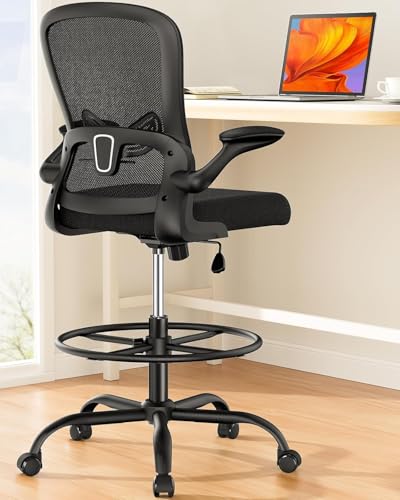
ErGear Drafting Chair with Footrest Ring and Flip-Up Arms
$129.99About $130 for a drafting-height stool with 8 inches of seat travel, a 19.7 inch adjustable foot ring and a 300 pound capacity, for taller cutting tables.
Check price
HON Crio Ergonomic Mesh Office Chair
$294.32About $294 for a high-back mesh chair with adjustable arm height, lumbar and tilt, if you want office-grade adjustability at the machine.
Check price
Steelcase Series 1 Ergonomic Office Chair
$499.00About $499 for weight-activated controls, optional 4D arms and tool-free assembly, built for full days of sitting.
Check pricePrices change often, so confirm on Amazon. As an Amazon Associate we earn from qualifying purchases.
This review is compiled from manufacturer specifications, the owner manual, warranty terms and recurring themes in verified owner reviews. We did not test this machine in person.
Frequently asked questions
Is the Arrow hydraulic sewing chair worth it?
It is worth it if your sewing surface is not standard desk height. The Arrow hydraulic sewing chair costs about $400 and adjusts from 18 to 22 inches, with lumbar support, an armless design, a five-star swivel base and under-seat storage. If you sew at an ordinary desk, an office chair with more adjustment can be the better value.
What height should a sewing chair be?
Set it so your forearms are roughly level with the work, shoulders relaxed and feet flat on the floor. For a surface around 29 or 30 inches, most sewists land near the lower end of this chair range, around 18 to 20 inches. For a raised work table nearer 33 to 36 inches, use the upper end. Adjust after sitting for twenty minutes rather than guessing.
Why are sewing chairs armless?
Because your elbows move constantly at a machine. You feed fabric, rotate quilts, reach for the presser foot lever and pull in close to a cabinet, and armrests block all of that. Armless chairs also tuck further under a sewing cabinet. It is the main reason a purpose-built sewing chair can beat a more expensive office chair at the machine.
What warranty does the Arrow sewing chair have?
The maker states a 3-year warranty on its hydraulic sewing chair page. Our product registry recorded one year, and where a registry entry conflicts with the manufacturer we use the manufacturer figure, as we have here. Keep your receipt and buy from an authorized seller, since the gas lift is the component most likely to need warranty attention.
Does this chair help with back pain while sewing?
Lumbar support and a correct seat height can make sewing more comfortable and reduce the slouching that long sessions encourage. That is a comfort aid, not a treatment. If you have ongoing back, neck or hip pain, see a doctor or an occupational therapist, who can assess your working position and recommend seating suited to you specifically.
What cabinet goes with this chair?
Any cabinet with a lift that sets the machine bed flush with the tabletop, since that is what makes the seat height worth adjusting. The Kangaroo Bandicoot at about $1,000 is the common pairing, and the Arrow Harriet adds drawers for about $300 more. See our best sewing cabinets roundup.
Sources
- Hydraulic sewing chair product page, product HCHAIRP (AccuQuilt, seller of the Arrow sewing furniture line)
- CPSC recall search by company
- Amazon listing feature bullets and owner reviews (aggregated themes)
How we research: we compare manufacturer specifications, owner manuals, published standards and recurring themes in verified owner reviews. We do not test products in person, and this is researched guidance, not professional advice. Follow your machine manual and pattern, and take care with rotary cutters, hot irons and needles. As an Amazon Associate we earn from qualifying purchases.