Ashford Kiwi 3 Review: Is This Under-$1,000 Beginner Spinning Wheel Worth It?
Yes, for most new spinners who want an affordable, portable first wheel. The Ashford Kiwi 3 costs under $1,000 unfinished, weighs 12 pounds, folds its double treadles for storage, and spins at 5.5, 7.5 and 9.5:1 ratios with three bobbins and a built-in lazy kate. Fine lace yarn needs an optional high speed whorl.
Our verdict
Buy the Ashford Kiwi 3 if you are learning to spin, want to make worsted to sport weight yarn from wool you love, and need a wheel that folds into a closet or travels to a guild meeting. Skip it if you already know you want fine lace yarn or a wheel that stays set up in the living room, because the Ashford Traveller 3 (sold out; in-stock alternative: Ashford Traditional) adds a 14:1 ratio in an upright frame for more.
The listing describes folding double treadles on polyurethane hinges, a timber-veneered MDF drive wheel on ball bearings, a snap-in front flyer bearing for quick bobbin changes, a built-in lazy kate, three 90 mm bobbins holding about 4.5 oz, a 3-speed whorl with 5.5, 7.5 and 9.5:1 ratios, and a weight of 12 lb (5.5 kg), in unfinished New Zealand beech that needs assembly. A detailed Wool Hall review adds Scotch tension, a 45 cm (17.5 in) drive wheel, a 10 mm orifice at 69 cm (27.25 in) high, and a lacquered version at under $1,000.
For a spinner who will also knit or weave the yarn, the Kiwi is the first big purchase in a lifelong craft, and it grows with you through Ashford's add-on whorl and flyer kits.
Ashford Kiwi 3 specs
| Drive and tension | Single drive, Scotch tension (Wool Hall) |
|---|---|
| Flyer ratios | 5.5, 7.5 and 9.5:1 with a 3-speed whorl |
| Drive wheel | 45 cm (17.5 in), timber-veneered MDF on ball bearings |
| Treadles | Double, folding, on polyurethane hinges |
| Bobbins | 3 x 90 mm, about 4.5 oz each (listing); 130 g per Wool Hall |
| Orifice | 10 mm (3/8 in), at 69 cm (27.25 in) high (Wool Hall) |
| Lazy kate | Built in |
| Weight | 12 lb (5.5 kg) |
| Finish | Unfinished New Zealand beech; assembly required |
| Optional upgrades | High Speed Whorl for 7.5, 10 and 15:1; Kiwi Super Flyer Kit with 27 mm orifice and 500 g bobbins (Wool Hall) |
| Price | under $1,000 unfinished; under $1,000 lacquered (Wool Hall) |
Specs above come from Ashford's manufacturer feature bullets on the Amazon listing and the published specifications in Wool Hall's Kiwi 3 review (Ashford's own site blocked our requests).
Is the Ashford Kiwi 3 a good spinning wheel for beginners?
It is one of the most commonly recommended first wheels, and the reasons are practical. Scotch tension means a single drive band turns the flyer while a separate brake band on the bobbin controls how fast yarn winds on. You adjust one knob to change how hard the wheel pulls, which is easy to understand while you are also learning to draft fiber.
The ratios suit learning. A ratio is how many times the flyer turns for one turn of the drive wheel, so at this wheel's top ratio of 9.5:1 the flyer spins nine and a half times for every single revolution of the drive wheel. At 5.5, 7.5 and 9.5:1, the Kiwi 3 adds twist at a relaxed pace, which gives new hands time to draft and suits the medium and thicker yarns most people spin first.
It is also light and foldable. At 12 pounds with folding treadles, it tucks into a closet, rides in a car to classes, and moves easily between rooms. The ball-bearing wheel and double treadles make treadling smooth, and many new spinners find double treadles steadier than single.
| Ratio | Typical yarn | On a standard Kiwi 3? |
|---|---|---|
| 5.5:1 | Bulky and thick-and-thin yarn | Yes |
| 7.5:1 | Aran and worsted weight | Yes |
| 9.5:1 | DK and sport weight | Yes |
| 10:1 and 15:1 | Fingering and lace weight | Only with the optional High Speed Whorl |
The ratio table above comes down to one ceiling: the standard wheel stops at 9.5:1, which covers bulky yarn down through DK and sport, and only the optional High Speed Whorl reaches the 15:1 that lace weight singles want. Compare yarn weights with the yarn weight chart, and use the yarn yardage calculator to estimate how much handspun a project needs.
What is the honest weakness of the Ashford Kiwi 3?
It tops out at 9.5:1. Spinning fine fingering or lace yarn at that ratio means a lot of treadling for each length of yarn. Wool Hall notes the Kiwi cannot give the double-drive control many spinners prefer for consistent lace. Ashford's High Speed Whorl (about $48 per Wool Hall) adds 7.5, 10 and 15:1, which helps, but a spinner set on fine yarn may be happier with a different wheel from the start.
The orifice and bobbins are modest. A 10 mm orifice limits very thick art yarns, and bobbins of about 4.5 oz fill quickly with bulky singles. The Kiwi Super Flyer Kit (about $380 per Wool Hall) adds a 27 mm orifice and 500 g bobbins, but that is a large extra cost.
It arrives as a kit. The unfinished beech needs assembly, and many owners seal the wood before use. Wool Hall estimates 15 to 30 minutes to assemble; finishing adds drying time. A drive band that shifts or needs retensioning is a common early adjustment.
It is a MDF drive wheel. The wheel is timber-veneered MDF rather than solid wood, which keeps the price down but gives a less traditional look than a solid wood wheel.
What do Ashford Kiwi 3 owners consistently report?
- Praise: easy to learn on, with forgiving Scotch tension.
- Praise: folding treadles make storage and travel simple.
- Praise: smooth, quiet treadling from the ball-bearing wheel.
- Praise: the built-in lazy kate saves buying a separate plying stand.
- Complaint: assembly and finishing take time before the first spin.
- Complaint: the drive band can slip or need adjusting.
- Complaint: spinners who move to fine yarn outgrow the standard ratios.
The consensus is that the Kiwi 3 does exactly what a first wheel should, and that the spinners who outgrow it are the ones who fall in love with lace. Many keep it as a travel wheel after buying a second.
Ashford Kiwi vs Traveller: which spinning wheel should you buy?
Our Ashford Kiwi vs Traveller comparison walks through the differences. The Kiwi folds and costs less; the Traveller stays upright and spins finer. The table below spans wheels from under $1,000 to under $2,500 and the number that separates them is the top ratio: this wheel stops at 9.5:1, while the under-$1,000 Traveller 3 reaches 14:1 and the under-$1,000 Traditional reaches 17:1.
| Wheel | Price | Style | Ratios | Weight or wheel | Best reason to choose it |
|---|---|---|---|---|---|
| Ashford Kiwi 3 | Under $1,000 | Folding, double treadle | 5.5, 7.5, 9.5:1 | 12 lb | Portable first wheel |
| Ashford Traveller 3 (sold out; in-stock alternative: Ashford Traditional) | Under $1,000 | Upright castle | 5, 7, 9, 14:1 | 18 in wheel | Finer yarn, small footprint |
| Ashford Traditional | Under $1,000 | Saxony | 7, 9, 12, 17:1 | 22 in wheel, 17.5 lb | Classic look, higher ratios |
| Ashford e-Spinner 3 (sold out; in-stock alternative: Ashford E-Spinner Super Jumbo) | Under $1,000 | Electric | Motor driven | 12V DC, 70 W | No treadling for knees or hips |
| Schacht Sidekick | Under $2,500 | Folding | Not listed in the specs we verified | Scotch tension | Shares Schacht Matchless parts |
See our best spinning wheels roundup for more options. If treadling is hard on your knees or hips, the electric Ashford e-Spinner 3 (sold out; in-stock alternative: Ashford E-Spinner Super Jumbo) with its foot controller is worth a look, and our crafting with arthritis guide covers other comfort tips.
How much space and setup does a Kiwi 3 need?
Plan a clear spot in front of a chair where your feet reach both treadles comfortably and the 27.25 inch orifice height lines up with your hands. Sit on a chair without arms so your elbows move freely; many spinners prefer a seat around standard dining chair height.
Before the first spin, assemble the wheel, seal the beech if you want to protect it, and oil the moving parts as the instructions direct. Then gather the basics:
- Prepared fiber such as wool top or roving.
- An Ashford Niddy Noddy (under $50) to wind 60 inch skeins for washing and measuring yardage.
- Ashford Wool Hand Carders (under $100) if you plan to prepare fleece yourself.
- A Schacht Hi-Lo 4" (under $50) for practicing drafting away from the wheel.
If you process raw fleece in quantity, the Ashford Wild Carder (under $1,000) is the next big step. Handspun often ends up on a loom too; see our best rigid heddle looms.
What warranty and support come with the Ashford Kiwi 3?
The listing does not state warranty terms, and Ashford's own website blocked our requests during research, so ask your dealer what warranty applies and keep your receipt. Buying from a spinning shop that sells Ashford usually gets you help with assembly, drive band adjustment and replacement parts such as bobbins and brake bands. We found no recall notice in the manufacturer or listing information we reviewed; CPSC's recall search by company is the place to check.
Who it suits
- New spinners who want a proven, forgiving first wheel
- Anyone who needs a wheel that folds into a closet or car
- Spinners making worsted to sport weight yarn for knitting
- Guild members who carry a wheel to meetings and classes
Who should skip it
- Lace spinners; the Ashford Traveller 3 (sold out; in-stock alternative: Ashford Traditional) reaches 14:1
- Anyone who finds treadling painful; consider the electric Ashford e-Spinner 3 (sold out; in-stock alternative: Ashford E-Spinner Super Jumbo)
- Art yarn spinners who want a large orifice and jumbo bobbins without buying kits
- Buyers who want a finished wheel out of the box; order the lacquered version
Alternatives to the Ashford Kiwi 3
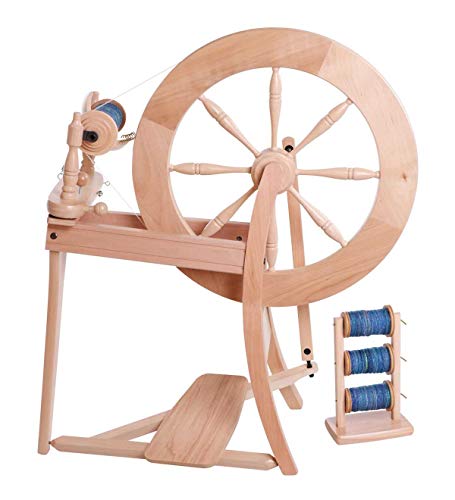
Ashford Traditional Spinning Wheel, Single Drive, Unfinished
Under $1,000The classic single-treadle Ashford wheel with a 22 inch drive wheel, four bobbins and a lazy kate, popular with spinners for 70 years. It stands in for the Ashford Traveller 3, which is sold out on Amazon.
Check price
Ashford E-Spinner Super Jumbo
Under $2,500Ashford's larger electric spinner, built for bulky art yarns. It stands in for the e-Spinner 3, which is sold out on Amazon.
Check price
Schacht Hi-Lo Drop Spindle, 4 inch
Under $50A 4 in maple drop spindle for under $50, the cheapest way to learn drafting before committing to a wheel.
Check pricePrices change often, so confirm on Amazon. As an Amazon Associate we earn from qualifying purchases.
This review is compiled from manufacturer specifications, the owner manual, warranty terms and recurring themes in verified owner reviews. We did not test this machine in person.
Frequently asked questions
Is the Ashford Kiwi 3 good for beginners?
Yes. The Ashford Kiwi 3 is one of the most recommended first wheels because it uses easy Scotch tension, spins at relaxed 5.5, 7.5 and 9.5:1 ratios, folds its double treadles and weighs 12 pounds. It includes three bobbins and a built-in lazy kate. Expect to assemble it, and consider finishing the unfinished beech before your first spin.
Ashford Kiwi 3 vs Traveller 3: which should I buy?
Choose the Kiwi 3 for the lower price of under $1,000, folding treadles and portability. Choose the Traveller 3 (sold out; in-stock alternative: Ashford Traditional) for under $1,000 if you want an upright wheel that stays set up, an 18 inch drive wheel and a 14:1 ratio for finer yarn. Our Kiwi vs Traveller comparison covers every spec.
Can you spin lace weight yarn on an Ashford Kiwi 3?
It is possible but slow at the standard top ratio of 9.5:1, because fine yarn needs a lot of twist per inch. Ashford offers a High Speed Whorl, under $50 according to Wool Hall, that adds 7.5, 10 and 15:1 ratios. If fine yarn is your main goal from the start, a wheel with higher built-in ratios such as the Traveller 3 may suit you better.
Does the Ashford Kiwi 3 have a lazy kate?
Yes. Ashford's listing describes a built-in lazy kate, a holder for full bobbins while you ply two or more singles together. With the three included bobbins you can spin two singles and ply them onto the third without buying a separate plying stand. Wool Hall's specifications also list the built-in lazy kate alongside the folding double treadles.
How hard is the Ashford Kiwi 3 to assemble?
It arrives as unfinished beech parts with instructions. Wool Hall estimates 15 to 30 minutes to put together, and TextileTuts suggests 30 to 45. Many spinners seal or oil the wood first, which adds drying time. Expect to adjust the drive band and brake band during your first sessions; a local spinning shop or guild can help if something feels wrong.
Is a spinning wheel worth it if I already knit?
For many knitters it is a joyful next step. Spinning lets you choose fiber, color and thickness, and handspun makes unique hats, shawls and woven scarves. The Kiwi 3 is a sensible first wheel at under $1,000. If you want to try the craft cheaply first, learn drafting on a Schacht Hi-Lo drop spindle.
Sources
- Ashford Kiwi 3 review: specifications, strengths and limitations (Wool Hall)
- Ashford Kiwi 3 spinning wheel review (TextileTuts)
- CPSC recall search by company
- Ashford Kiwi 3 Amazon listing feature bullets and owner reviews (aggregated themes)
How we research: we compare manufacturer specifications, owner manuals, published standards and recurring themes in verified owner reviews. We do not test products in person, and this is researched guidance, not professional advice. Follow your machine manual and pattern, and take care with rotary cutters, hot irons and needles. As an Amazon Associate we earn from qualifying purchases.