Best Quilting Thread (2026): 8 Threads for Piecing, Quilting and Longarms by Weight
The best quilting thread for piecing is Aurifil 50wt cotton, about $18 for 1,422 yards: fine, strong long staple Egyptian cotton that keeps seams flat. For visible machine quilting, step up to Superior King Tut 40wt, and for longarms, Glide 40wt trilobal polyester on a 5,000 meter spool.
Quilters use different threads for different jobs. Piecing needs a fine, strong thread that does not add bulk to seams; quilting often uses a heavier thread that shows the stitching; bobbins and applique use very fine thread that disappears. For piecing, Aurifil 50wt White is the long-standing favorite for good reason: fine 50wt mercerized cotton that is smooth and low lint.
Thread weight numbers work backward: the higher the number, the finer the thread. So 60wt is finer than 50wt, which is finer than 40wt. The chart below matches each weight to its use and needle size.
Quilting threads at a glance
| Product | Price | Weight | Fiber | Length | Best for | Buy |
|---|---|---|---|---|---|---|
 Glide 40wt 5,000 m Glide 40wt 5,000 m | $14.91 | 40wt | Trilobal polyester | 5,000 m | Longarm quilting | Price |
 Superior Bottom Line 60wt Superior Bottom Line 60wt | $15.06 | 60wt, 2-ply | Polyester | 3,000 yd | Bobbins, applique | Price |
 Superior So Fine #50 Superior So Fine #50 | $17.94 | 50wt, 3-ply | Polyester | 3,280 yd | Piecing and quilting | Price |
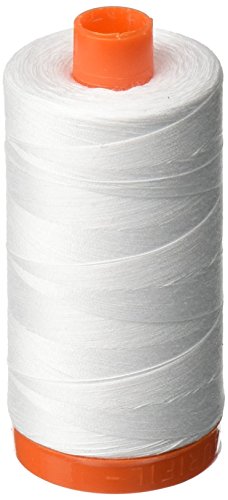 Aurifil 50wt White Aurifil 50wt White | $17.99 | 50wt | Egyptian cotton | 1,422 yd | Piecing | Price |
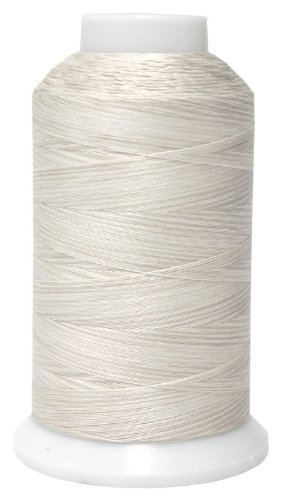 Superior King Tut 40wt Superior King Tut 40wt | $29.55 | 40wt, 3-ply | Egyptian cotton | 2,000 yd | Visible quilting | Price |
 Aurifil Pat Sloan Neutrals Aurifil Pat Sloan Neutrals | $136.99 | 50wt | Cotton | 12 x 1,422 yd | A neutral palette | Price |
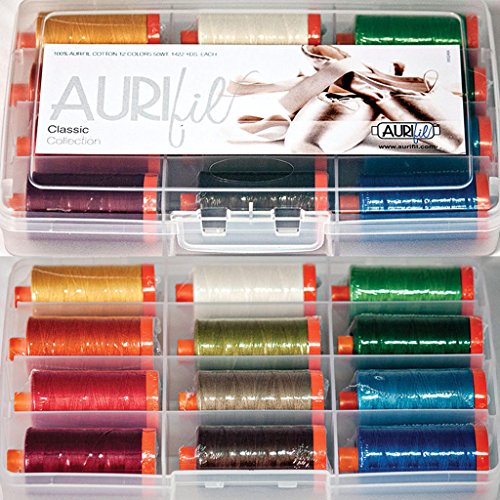 Aurifil Classic Set Aurifil Classic Set | $189.86 | 50wt | 100% cotton | 12 x 1,422 yd | Stocking a studio | Price |
Beginner
Beginner picks: piecing and bobbin thread under $20
One neutral 50wt for piecing and one fine bobbin thread will carry most beginners through their first quilts. Light grey, beige or white blend into most fabrics.
Aurifil 50wt Mako Cotton Thread, 1,422 Yard Large Spool, White
$17.99Long staple mercerized Egyptian cotton in 50wt on a 1,422 yd spool, made in Italy. Fine enough for flat seams, strong enough for daily piecing.
Best for: Piecing
Check price Superior Threads So Fine #50 Polyester Thread, #401 Snow, 3,280 Yard Cone
$17.94A smooth, lint-free 3-ply 50wt polyester on a 3,280 yd cone, used for piecing, quilting, bobbins and sergers, in 134 colors. Superior suggests a size 80/12 topstitch needle on home machines.
Best for: A polyester all-rounder
Check price Superior Threads Bottom Line 60wt Polyester Thread, #624 Natural White, 3,000 Yard Cone
$15.06A 2-ply 60wt polyester on a 3,000 yd cone that nearly disappears in fabric. The go-to bobbin thread, and excellent for applique and binding.
Best for: Bobbins and invisible stitches
Check pricePrices change often, so confirm on Amazon. As an Amazon Associate we earn from qualifying purchases.
Intermediate
Intermediate picks: quilting thread that shows, $15 to $45
A heavier 40wt thread makes quilting stitches visible and textured. Cones and big spools cut the cost per yard, which adds up fast on large quilts and longarms.
Superior Threads King Tut 40wt Quilting Thread, #997 Alabaster, 2,000 Yard Cone
$29.55A 3-ply 40wt extra-long staple Egyptian cotton on a 2,000 yd cone, low lint. Superior recommends a size 90 needle on home machines and 18 on longarms.
Best for: Visible cotton quilting
Check price Glide Trilobal Polyester No. 40 Thread, 5,000 Meter Spool, 10000 White
$14.9140wt trilobal polyester with a soft sheen on a 5,000 m (about 5,500 yd) spool for under $15. A longarm staple for its low cost per yard.
Best for: Longarm quilting
Check price
Threadart 120 Spool Wood Thread Rack
$44.99Holds 120 spools on 1.5 in pegs in a 15 x 24 in rack that stands freely or mounts on a wall. Keeps colors visible and dust off the spools.
Best for: Organizing a growing thread stash
Check pricePrices change often, so confirm on Amazon. As an Amazon Associate we earn from qualifying purchases.
Expert
Expert picks: full thread collections, $137 to $190
Who should NOT buy this tier: new quilters who have not yet found their palette, and anyone who mainly pieces with one neutral. Collections pay off for quilters who match thread to fabric for visible quilting, applique and binding across many projects.
Aurifil Classic Collection 50wt Thread Set
$189.86Twelve large 1,422 yd spools of 50wt 100% cotton across a classic range of colors, a ready-made studio library.
Best for: Stocking a sewing room
Check price Aurifil Perfect Box of Neutrals by Pat Sloan, 50wt
$136.99Twelve large 1,422 yd spools of 50wt cotton in browns, tans, cream, grey and black, the colors that disappear in most quilts.
Best for: Neutral piecing for years
Check pricePrices change often, so confirm on Amazon. As an Amazon Associate we earn from qualifying purchases.
What weight is machine quilting thread?
Machine quilting thread is most often 40wt when you want stitches to show, and 50wt when you want them to blend. Piecing is typically done in 50wt, and 60wt or finer is used in the bobbin and for applique. The weight number in this system roughly describes length per weight, which is why finer threads have bigger numbers. Ply (how many strands are twisted together) also affects thickness, so two 50wt threads with different ply can feel different.
| Weight | Thickness | Common quilting use | Typical needle | Example |
|---|---|---|---|---|
| 100wt | Very fine | Invisible applique, micro-quilting | 60/8 to 70/10 | Fine silk or polyester |
| 60wt | Fine | Bobbins, applique, binding, micro-stippling | 70/10 to 75/11 | Superior Bottom Line 60wt |
| 50wt | Medium fine | Piecing, blending machine quilting | 80/12 | Aurifil 50wt White |
| 40wt | Medium | Visible machine and longarm quilting | 90/14 (home), 18 (longarm) | Superior King Tut 40wt |
| 28wt | Heavy | Bold quilting, big-stitch look | 90/14 to 100/16 | Heavy cotton threads |
| 12wt | Very heavy | Hand-look big stitch, topstitching | 100/16 or larger | Heavy topstitching threads |
Needle sizes are common starting points; always follow the thread maker's recommendation. See the full thread weight chart, the sewing machine needle size chart, and individual weights on the thread weights pages.
Is cotton or polyester thread better for quilting?
Both work well; the old rule that polyester thread cuts cotton fabric dates from older, harsher polyesters. Cotton, like Aurifil 50wt White, presses flat with high heat, has a matte look and matches the fabric's shrinkage. Modern polyester, like Superior So Fine #50, is stronger, lower lint and more consistent, and trilobal polyester such as Glide 40wt 5,000 m adds sheen.
A practical approach many quilters follow: cotton or fine polyester for piecing, whichever look you prefer for quilting, and a fine polyester like Superior Bottom Line 60wt in the bobbin to reduce bobbin changes. Use lower iron heat when pressing over polyester thread.
What is the best longarm quilting thread?
Longarm quilters favor strong, low-lint threads on large cones, because a king quilt uses a lot of thread and lint builds up quickly at high speed. The Glide 40wt 5,000 m is a popular polyester choice for its sheen and cost per yard, while Superior King Tut 40wt is a cotton option that Superior lists for longarms with a size 18 needle. Pair a 40wt top with a finer bobbin thread and adjust tension on a practice sandwich first.
Choosing or upgrading a longarm? See longarm quilting machines for home.
Why does my sewing machine thread keep breaking when quilting?
- Needle too small or dull. Heavier thread needs a larger needle eye; replace needles every quilt or after roughly 8 hours of sewing.
- Top tension too tight. Loosen gradually and test on a scrap sandwich.
- Thread path problems. Re-thread with the presser foot up so the thread seats in the tension discs.
- Spool orientation. Cross-wound spools and cones often feed better from a vertical pin or a thread stand.
- Old or low-quality thread. Brittle, linty thread breaks and sheds.
- Moving too fast in free-motion. Jerky hand movement snaps thread; smooth, steady movement helps.
Our sewing machine maintenance guide covers cleaning lint from the bobbin area, which is a frequent hidden cause.
Match the bobbin to the top
Using the same weight or one step finer in the bobbin keeps tension balanced. Very fine bobbin thread under very heavy top thread often needs tension adjustment.
How we chose
We did not test these threads in person. We compared manufacturer specifications for weight, ply, fiber, yardage and needle recommendations, verified live pricing, and recurring themes in owner reviews from quilters about lint, breakage, sheen and color matching. Needle sizes in our chart are common starting points; we defer to each thread maker's published guidance.
Buying tips
- Buy neutrals first: grey, beige and white blend into most quilts.
- Compare cost per yard, not per spool; cones are often far cheaper.
- Use a thread stand for cones on home machines.
- Test on a practice sandwich when changing thread weight.
- Store thread away from sunlight and dust to keep it strong.
Frequently asked questions
What is the best thread for piecing a quilt?
A fine, strong 50wt thread is the standard for piecing, because it keeps seams flat and accurate. Aurifil 50wt cotton is a long-time favorite, and Superior So Fine #50 is a smooth, low-lint polyester alternative on a large cone. Choose a neutral grey, beige or white that blends with most fabrics in the quilt.
Can I use regular sewing thread for quilting?
Yes, good quality all-purpose thread works for piecing and basic machine quilting. Quilting threads are optimized for lower lint, smoother feeding and specific weights, which matters most on large quilts and at high speed. Avoid very cheap thread, which tends to shed lint and break. Hand quilting thread is different; it is often waxed or glazed and should not be used in machines.
What color thread should I use to quilt?
To hide quilting, choose a thread that matches the dominant color of the quilt top, or a neutral mid-tone such as light grey or beige. To show quilting as a design element, choose a contrasting color and a heavier 40wt thread. For the bobbin, match the backing fabric so small tension imperfections are less visible from the back.
Is Aurifil thread worth the price?
Many quilters think so, especially for piecing, because Aurifil 50wt is fine, strong and produces little lint, which keeps seams flat and machines cleaner. A large 1,422 yd spool goes a long way. Budget-conscious quilters can compare cost per yard with polyester cones like Superior So Fine, which offer more than 3,000 yards for a similar price.
What needle should I use with 40 weight thread?
For 40wt thread on a home sewing machine, a size 90/14 needle, often a topstitch or quilting needle with a larger eye, is a common starting point. Superior Threads recommends a size 90 needle for King Tut 40wt on home machines and a size 18 on longarms. If thread shreds or breaks, try the next needle size up.
How we research: we compare manufacturer specifications, owner manuals, published standards and recurring themes in verified owner reviews. We do not test products in person, and this is researched guidance, not professional advice. Follow your machine manual and pattern, and take care with rotary cutters, hot irons and needles. As an Amazon Associate we earn from qualifying purchases.