Best Embroidery Thread for Machines (2026): 5 Kits and Cone Sets Compared
The best machine embroidery thread for most people is 40 wt polyester. Isacord is the premium standard, and the Isacord 35-cone set (about $190) gives 1,000 m per cone. On a budget, the New brothread 63-color kit (about $40) is matched to Brother color numbers and is plenty for a first machine.
For machine embroidery, 40 wt polyester is the thread to buy. It is strong, keeps its color through bleach and hot washes, and runs smoothly at speed. Our top pick is the Isacord 35 Cones at about $190: 35 best-selling colors on 1,000 m cones from a thread brand embroiderers widely trust.
You do not need premium thread to start. The New brothread 63-Color Kit (about $40) and Simthread 120 Colors (about $72) are popular with home embroiderers and cover a wide palette. The honest truth about thread is that your machine, needle and stabilizer matter more to stitch quality than the brand on the spool, which is why this page ends with the machines worth pairing it with.
Embroidery thread sets at a glance
| Product | Price | Spools or cones | Length each | Fiber | Buy |
|---|---|---|---|---|---|
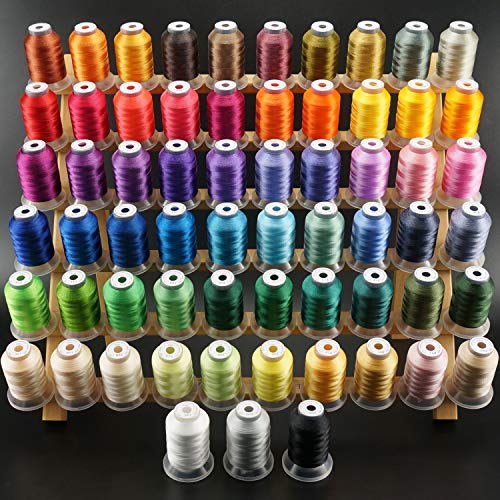 New brothread 63-Color Kit New brothread 63-Color Kit | $39.59 | 63 spools | 500 m (550 yd) | 100% polyester, 40 wt | Price |
 Madeira Polyneon 40 (18 spools) Madeira Polyneon 40 (18 spools) | $69.41 | 18 spools | 200 m (220 yd) | Polyneon polyester, 40 wt | Price |
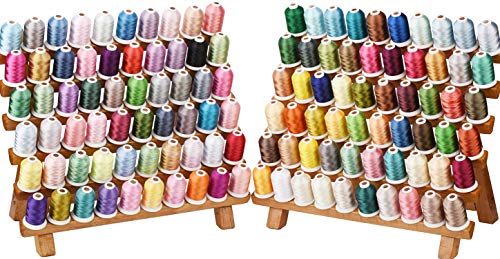 Simthread 120 Colors Simthread 120 Colors | $71.99 | 120 spools (13 variegated) | Not listed | Trilobal polyester | Price |
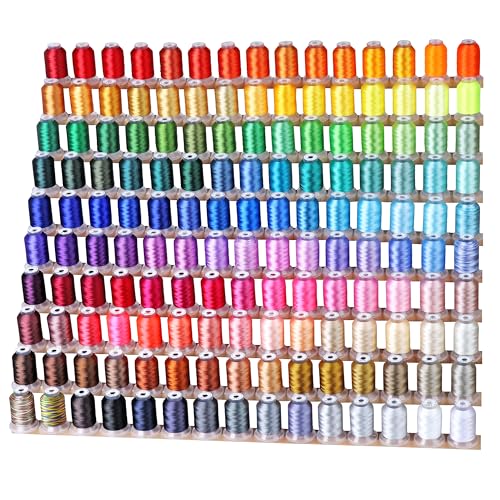 New brothread 150 Colors New brothread 150 Colors | $79.98 | 150 spools | 500 m (550 yd) | 100% polyester, 40 wt | Price |
 Isacord 35 Cones Isacord 35 Cones | $189.99 | 35 cones | 1,000 m | Polyester | Price |
Beginner
Beginner: a starter thread kit and the backing to go with it, under $70
Everything a first machine needs to stitch towels, shirts and gifts. Stabilizer is included here on purpose: most "thread problems" beginners report are actually backing problems.
New brothread 63 Colors Polyester Embroidery Machine Thread Kit
$39.5963 spools of 40 wt polyester at 500 m each, with a chart cross-referenced to Brother color numbers so on-screen colors translate directly to spools.
Best for: First machine owners
Check price
HBI Cut Away Embroidery Stabilizer Roll, 12 in x 50 yd
$29.87A 50 yd roll of medium cut away backing, the safest all-purpose choice for knits, sweatshirts and anything that stretches.
Best for: The other half of good stitch-outs
Check pricePrices change often, so confirm on Amazon. As an Amazon Associate we earn from qualifying purchases.
Intermediate
Intermediate: big palettes for color-rich designs, about $70 to $80
Once you buy designs from shops, you will want more shades. These kits add depth without paying premium-brand prices.
Simthread 120 Color Polyester Embroidery Thread Kit
$71.99120 trilobal polyester spools with 107 solids and 13 variegated colors, matched to Madeira shades. The variegated spools make simple designs look richer.
Best for: Widest palette
Check price New brothread 150 Color Embroidery Thread Mega Kit
$79.98150 colors of 40 wt polyester at 500 m per spool, matched to both Brother and Janome color charts. Good for owners of either brand.
Best for: Brother and Janome owners
Check pricePrices change often, so confirm on Amazon. As an Amazon Associate we earn from qualifying purchases.
Expert
Expert: brand-name thread for frequent stitchers, about $70 to $190
Premium thread earns its price when you stitch often, sell your work or run a multi-needle machine where cones last longer. If you embroider a few gifts a year, skip this tier; a budget kit will not hold you back.
Isacord Embroidery Thread Set, 35 Cones
$189.9935 best-selling colors on 1,000 m cones. Cones fit thread stands on multi-needle machines and cost less per meter than small spools.
Best for: Frequent and business stitching
Check price Madeira Polyneon 40 Clear Box Astro 18-Spool Thread Set
$69.41Madeira Polyneon is made to withstand chlorine and heavy laundering, which suits towels, uniforms, sportswear and table linens. 18 spools at 200 m each.
Best for: Towels and workwear
Check pricePrices change often, so confirm on Amazon. As an Amazon Associate we earn from qualifying purchases.
What is the best thread for machine embroidery?
Polyester is the best all-round choice, rayon is the choice for maximum sheen on items that will not see bleach, and cotton is a specialty option for a matte, hand-stitched look. Metallic thread is for accents and needs a slower speed and a metallic needle.
| Fiber | Look | Strength and washing | Best for | Example |
|---|---|---|---|---|
| Polyester | Bright sheen | Strong, colorfast, bleach resistant | Nearly everything, especially kids wear and towels | Isacord 35 Cones, Madeira Polyneon 40 (18 spools) |
| Trilobal polyester | Higher sheen, rayon-like | Strong and colorfast | Decorative designs that still get washed | Simthread 120 Colors |
| Rayon | Soft, high sheen | Weaker; less bleach tolerant | Heirloom and decor items | Buy by brand in rayon |
| Cotton | Matte, natural | Lints more; can break at speed | Quilts and vintage-style designs | Specialty spools |
| Metallic | Shiny accent | Breaks easily; slow down | Holiday and accent details | Specialty spools |
What weight thread is used for machine embroidery?
Thread weight is a length-per-mass measure, so a higher number means a finer thread. Machine embroidery designs are digitized for 40 wt thread, which is what every kit on this page uses. A 30 wt thread covers faster but can look heavy on small details, while 60 wt is used for very small lettering and fine detail. Bobbin thread is usually lighter still, commonly 60 wt or 90 wt, so it stays hidden on the back. Our thread weight chart and thread weights guide convert between weight, tex and denier.
Can I use cotton thread in my embroidery machine?
You can, but it is rarely the best choice for machine embroidery. Cotton thread is weaker than polyester at high stitch speeds, sheds more lint into the bobbin area and can break on dense fill. Some quilters choose 50 wt cotton for a soft, matte look on quilt blocks, slowing the machine and using a fresh needle. Regular sewing thread, whether cotton or all-purpose polyester, is thicker and duller than embroidery thread and makes designs look coarse. For quilt piecing thread, see our best quilting thread page.
Why does my embroidery thread keep breaking?
Owner reviews for every thread brand mention breakage, and it is usually not the thread. Work through these in order.
| Cause | What you notice | Fix |
|---|---|---|
| Worn or wrong needle | Fraying, breaks after a few minutes | Fresh embroidery needle, commonly 75/11; see the needle size chart |
| Threading missed a guide | Breaks at the start, loops on top | Rethread with the presser foot up |
| Tension too tight | Shredding, bobbin thread showing on top | Adjust top tension per the manual |
| Old or dry thread | Snaps easily, fuzzy | Replace; store away from sunlight and heat |
| Spool catching | Jerky feed, breaks at the spool | Use a spool cap or thread stand |
| Dense design at high speed | Breaks in fill areas | Slow the machine; check the design density |
How do you match embroidery thread colors to your machine?
Designs list colors by a thread brand's numbers, and machines show a color name or number on screen. Kits that cross-reference those charts save guesswork: the New brothread 63-Color Kit maps to Brother numbers, the New brothread 150 Colors maps to Brother and Janome, and the Simthread 120 Colors matches Madeira shades. When a design uses a brand you do not own, pick the closest shade by eye in daylight. A wall rack like the Threadart 120 Spool Rack keeps a large palette visible and out of the dust.
How we chose
We did not test these threads in person. Picks are based on manufacturer and seller specifications (fiber, weight, length, color matching), current Amazon pricing, and recurring themes in verified owner reviews about breakage, sheen, lint and color accuracy. We prioritized 40 wt polyester because it suits the widest range of machines, designs and washing conditions.
Buying tips
- Buy 40 wt polyester unless you have a specific reason not to.
- Get bobbin thread separately; it is finer and cheaper than top thread.
- Choose a kit matched to your machine brand's color numbers.
- Move to cones once you stitch weekly or own a multi-needle machine.
- Store thread away from sunlight, which fades and weakens it.
- Hand embroidery uses stranded floss, not machine thread; see best embroidery floss.
Frequently asked questions
Is polyester or rayon embroidery thread better?
Polyester is better for most machine embroidery because it is stronger, holds color through bleach and hot washing, and breaks less at high speeds. Rayon has a softer, slightly richer sheen that some embroiderers prefer for heirloom and decorative pieces that will be washed gently. Trilobal polyester, like the Simthread 120-color kit, aims to combine polyester strength with a rayon-like shine.
What thread do you use in the bobbin for machine embroidery?
Use dedicated bobbin thread, which is finer than top thread, commonly 60 wt or 90 wt, and usually white or black. It keeps the back of the design flat and lets more bobbin fit on each wind. Some embroiderers use prewound bobbins for convenience. For designs where both sides show, such as freestanding lace, match the bobbin thread to the top thread instead.
Is Isacord thread worth the money?
For frequent stitchers, many embroiderers find it worthwhile. Isacord is a widely used polyester thread known for consistent quality, and the 1,000 m cones lower the cost per meter compared with small spools. If you embroider occasionally on a home machine, budget kits like New brothread or Simthread work well and let you build a larger color range for the same money.
How many thread colors do I need to start machine embroidery?
A 40 to 63 color kit covers most beginner projects, including monograms, names and built-in designs. Once you buy designs from shops with realistic shading, a 120 to 150 color palette avoids constant substitutions. Keep extra spools of black, white and your most-used colors, because those run out first, and add specialty threads such as metallic only when a project needs them.
Can you use embroidery thread for regular sewing?
It is not recommended for seams. Machine embroidery thread is designed to lie smoothly in decorative stitches and has a sheen that looks great on the surface, but it is not made to hold seams under stress the way all-purpose sewing thread is. Use it for topstitching accents and decorative stitches on a sewing machine if you like the look, and sewing thread for construction.
Does embroidery thread go bad?
Thread can weaken and fade over time, especially when stored in sunlight, heat or dry air. Old thread that snaps easily or looks fuzzy is a common cause of breaks. Polyester holds up better in storage than rayon or cotton. Keep spools covered or in a closed cabinet, and test an old spool by pulling a length firmly; if it snaps with little effort, replace it.
How we research: we compare manufacturer specifications, owner manuals, published standards and recurring themes in verified owner reviews. We do not test products in person, and this is researched guidance, not professional advice. Follow your machine manual and pattern, and take care with rotary cutters, hot irons and needles. As an Amazon Associate we earn from qualifying purchases.