Handmade Pricing Calculator: Price Quilts, Crochet and Embroidery
Price handmade items from cost: materials plus your hours times a wage, plus overhead. A throw quilt with $120 of materials and 25 hours at $18 an hour costs $627 to make. After 10 percent fees, charge at least $697, about $906 cost-plus 30 percent, or $2,508 by the wholesale x 2 rule.
Pick a preset or enter your own numbers. The calculator shows three honest prices side by side: the floor that pays your wage after fees, a cost-plus price, and the wholesale and retail prices from the classic multiplier rule, with a breakdown of where every dollar goes.
Your item
Your results
Wholesale
Retail
| Floor: pays your wage after fees | $696.67 |
|---|---|
| Cost-plus price after fees | $905.67 |
| Materials | $120.00 |
|---|---|
| Labor | $450.00 |
| Overhead | $57.00 |
| Fees at retail | $250.80 |
| Profit beyond your wage | $1,630.20 |
| You earn per hour at retail | $83.21 |
| Per hour at cost-plus | $25.52 |
Selling quilts? Machines that cut the hours
Labor is most of a quilt's cost. Quilting a top on a longarm or midarm instead of a home machine is the biggest time saver in a quilt business.

Juki TL-15 Mid-Arm Quilting and Piecing Machine
$1,399.00A midarm for quilting at a table, a big step up from a domestic harp.
Check price
Grace Little Rebel Sewing and Quilting Machine
$2,799.00A midarm with stitch regulation that works on a table or a frame.
Check price
Handi Quilter Amara ST 20 Stationary Longarm with Lift Table
$9,495.00A 20 inch sit-down longarm with a lift table for edge-to-edge quilting.
Check pricePrices change often, so confirm on Amazon. As an Amazon Associate we earn from qualifying purchases.
Selling embroidery? Multi-needle machines
Embroidered goods earn on volume. More needles mean fewer manual color changes and more shirts per hour.
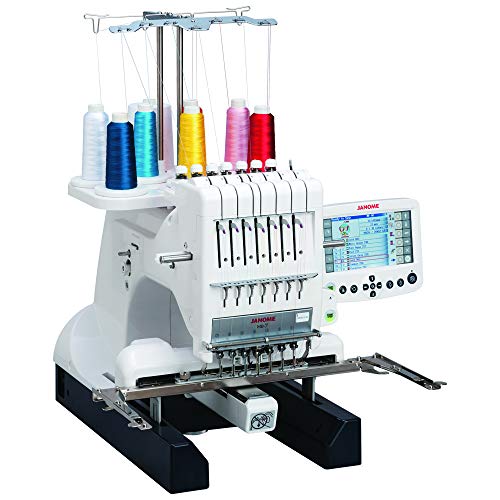
Janome MB-7 Seven-Needle Embroidery Machine
$5,999.00Seven needles with automatic color changes.
Check price
Ricoma EM-1010 10-Needle Embroidery Machine
$4,499.00A 10-needle machine aimed at home embroidery businesses.
Check price
Brother Persona PRS100 Single-Needle Embroidery Machine
$4,499.99A single-needle machine with a free-arm design for caps and sleeves.
Check pricePrices change often, so confirm on Amazon. As an Amazon Associate we earn from qualifying purchases.
Selling sewn goods? Faster seams and cutting
Bags, aprons and clothing sell in batches. A serger and a cutting table shave minutes off every item.

Juki Pearl Line MO-654DE Serger
$599.00A serger that sews and finishes a seam in one pass.
Check price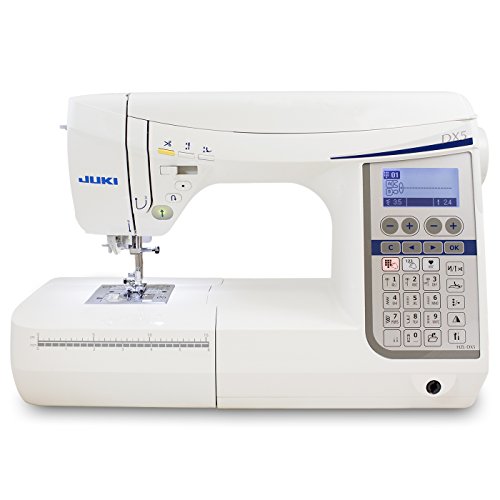
Juki HZL-DX5 Computerized Sewing Machine
$1,099.00A reliable garment machine with adjustable foot pressure.
Check price
Sew Ready Fabric Cutting Standing Table with Craft Organizers
$369.99A standing cutting table for cutting stacks of pieces.
Check pricePrices change often, so confirm on Amazon. As an Amazon Associate we earn from qualifying purchases.
Selling crochet? Comfort for long hours
A blanket is dozens of hours of work. Good light, a supportive chair and a fast way to wind yarn keep you making.

Daylight Company Slimline 4 LED Floor Lamp
$224.99A daylight floor lamp that reaches over a chair for dark yarns.
Check price
Arrow H7013B Adjustable Height Hydraulic Sewing Chair
$399.99An adjustable-height chair with under-seat storage.
Check price
Stanwood Needlecraft 10 oz Metal Ball Winder and Amish Style Swift Bundle
$121.95A metal ball winder and swift for winding hanks quickly.
Check pricePrices change often, so confirm on Amazon. As an Amazon Associate we earn from qualifying purchases.
How do you price handmade items?
Every handmade pricing method starts in the same place: what it really costs you to make the item. Most underpricing happens here, because makers count the fabric or yarn and forget their time, the thread and needles that are used up, the electricity and the wear on a machine that cost hundreds or thousands of dollars.
The calculator builds cost in three parts:
- Materials: everything that goes into the item, at what you paid. Fabric, batting, thread, yarn, stabilizer, zippers, labels and packaging.
- Labor: hours times an hourly wage. Include cutting, pressing, finishing, photographing and listing, not just stitching. If you are unsure of your hours, use the craft project time calculator.
- Overhead: a percentage for the costs that are hard to assign to one item: needles, rotary blades, machine servicing, electricity, software, a booth fee or a website. Five to fifteen percent is a common starting point.
From that cost, the calculator works out three prices, each suited to a different kind of sale.
How is the handmade price calculated?
Here is the math for the default throw quilt, computed by the same function as the calculator:
- Labor: 25 hours x $18 = $450.00.
- Overhead: ($120 + $450.00) x 10 percent = $57.00.
- Cost: $120 + $450.00 + $57.00 = $627.00.
- Floor price (hourly method): cost divided by the share you keep after fees. $627.00 / 0.90 = $696.67. At this price you earn exactly your wage and nothing more.
- Cost-plus: cost x (1 + 30 percent), divided by 0.90 for fees = $905.67. That leaves $25.52 per hour after materials, overhead and fees.
- Wholesale and retail multipliers: cost x 2 = $1,254.00 wholesale, and wholesale x 2 = $2,508.00 retail. Selling direct at retail, fees take $250.80 and you earn $83.21 per hour.
The wholesale price is what a shop would pay you, and the retail price is what the shop charges its customer. The second doubling pays the shop's rent and staff. If you sell only direct, you can price anywhere between the floor and retail, and the gap between them is your room for sales, shipping promotions and the occasional mistake.
Which pricing method is right for quilts, crochet and embroidery?
The right method depends on the share of the cost that is labor. The table runs every preset through all three methods at 2x wholesale and 2x retail.
| Item | Materials | Hours | Cost | Floor after fees | Cost-plus | Wholesale | Retail |
|---|---|---|---|---|---|---|---|
| Throw quilt, pieced and machine quilted | $120 | 25 | $627 | $697 | $906 (+30%) | $1,254 | $2,508 |
| Queen quilt, pieced and machine quilted | $220 | 45 | $1,133 | $1,259 | $1,637 (+30%) | $2,266 | $4,532 |
| Crochet throw blanket, worsted yarn | $60 | 30 | $536 | $595 | $774 (+30%) | $1,071 | $2,142 |
| Machine embroidered shirt, left chest | $14 | 0.5 | $28 | $31 | $46 (+50%) | $55 | $110 |
| Lined tote bag | $15 | 2 | $56 | $62 | $87 (+40%) | $112 | $224 |
Look at the difference between the quilt and the shirt. The embroidered shirt costs $27.60 and is mostly the blank garment, so the multiplier gives a retail price of $110.40, and the cost-plus figure of $46.00 is often closer to what local customers pay. The throw quilt is mostly labor, which is why doubling twice lands at $2,508. Neither number is wrong. The multiplier tells you what the quilt would need to sell for through a shop that pays you fairly, and the floor tells you the least you can accept without working for free.
The practical rule many makers settle on: use multipliers for quick, materials-heavy items sold in quantity, such as the tote bag at a $112 wholesale price, and use cost-plus or a clear hourly floor for labor-heavy, one-of-a-kind items such as quilts and blankets. The guide to pricing handmade items covers market research and presentation in more depth.
How much should I pay myself per hour?
Wage is the most sensitive number in any handmade price. The table keeps the throw quilt's materials and hours and changes only the wage.
| Wage | Labor | Cost | Floor after fees | Cost-plus | Retail at 2x 2x |
|---|---|---|---|---|---|
| $12/hr | $300 | $462 | $513 | $667 | $1,848 |
| $15/hr | $375 | $545 | $605 | $787 | $2,178 |
| $18/hr | $450 | $627 | $697 | $906 | $2,508 |
| $20/hr | $500 | $682 | $758 | $985 | $2,728 |
| $25/hr | $625 | $820 | $911 | $1,184 | $3,278 |
| $30/hr | $750 | $957 | $1,063 | $1,382 | $3,828 |
Every extra $5 an hour on a 25 hour quilt changes the cost by more than $130. That is why speed, not just price, drives handmade income: cutting the hours on each item raises your real hourly earnings at any price.
How do marketplace fees change handmade prices?
Percentage fees are charged on the whole sale price, including the part that pays you back for materials. To keep your earnings the same, divide by the share you keep rather than adding the fee percentage on top. Adding 10 percent to a $100 price gives $110, but a 10 percent fee on $110 is $11, which leaves $99. Dividing $100 by 0.9 gives $111.11, which leaves exactly $100 after the fee.
| Fees | Throw quilt floor | Embroidered shirt floor |
|---|---|---|
| 0% | $627.00 | $27.60 |
| 5% | $660.00 | $29.05 |
| 10% | $696.67 | $30.67 |
| 15% | $737.65 | $32.47 |
| 20% | $783.75 | $34.50 |
Marketplaces such as Etsy charge listing, transaction and payment processing fees, and craft fairs often charge a booth fee instead. Enter your total as a percentage of sales, and put fixed costs such as booth fees into overhead.
A starting point, not financial advice
Local markets, competition and your reputation all shape what an item will sell for. Use the floor to protect your time, research comparable sold items, and talk to an accountant about sales tax and income tax where you live.
Which equipment actually raises handmade profit?
Once your prices cover your wage, the next lever is hours. On a quilt, quilting the top is often a third or more of the total time, and a midarm or sit-down longarm such as the Handi Quilter Amara ST 20 or the more affordable Juki TL-15 changes how much of a queen top you can quilt in an afternoon. For embroidery, a multi-needle machine like the Janome MB-7 removes manual thread changes, so each shirt takes less of your attention. For sewn goods, a serger such as the Juki MO-654DE sews and finishes seams in one pass. Before buying, the longarm cost calculator shows how many quilts it takes to pay a machine back.
Frequently asked questions
What is the formula for pricing handmade items?
A widely used formula is materials plus labor plus overhead equals cost, cost times 2 equals wholesale, and wholesale times 2 equals retail. For a quick sale price, many makers use cost plus a markup instead. Either way, pay yourself an hourly wage in the cost, add overhead for thread, needles, electricity and wear on your machine, and account for marketplace fees before you settle on a price.
Why does the wholesale times 2 formula make my quilt so expensive?
Because the multiplier doubles your labor twice. The rule was built for products where materials are a big share of the cost. On a throw quilt, 25 hours at $18 is $450 of labor, so retail reaches $2,508. Many quilters and crocheters price commissions cost-plus instead, which here is $906, and save the multiplier for items made in batches.
How much should I charge per hour for crafts?
Start with a wage you would accept for skilled work in your area, then check what the market pays. Many makers begin somewhere in the $15 to $25 range and raise it as speed and reputation grow. The calculator shows your effective hourly earnings at each price after materials, overhead and fees, so you can see whether a price you are considering actually pays your wage.
How do you price a crochet blanket?
Count the yarn cost, time yourself for an hour to estimate total hours, and pick a wage. A throw blanket with $60 of yarn and 30 hours at $15 costs $536 with 5 percent overhead. After 10 percent fees, charging $595 pays your wage, and cost-plus 30 percent is $774. Blankets are labor heavy, so many crocheters take them on commission.
How should I price embroidered shirts?
Embroidered shirts are materials heavy and fast, so multipliers work well. A blank shirt, stabilizer and thread at $14.00 plus 30 minutes at $20 an hour and 15 percent overhead cost $27.60. Wholesale at 2x is $55.20 and cost-plus 50 percent is $46.00 after fees. Many shops also charge a setup or digitizing fee and price larger designs per 1,000 stitches.
Should I include marketplace fees in my price?
Yes. Marketplaces and payment processors take a percentage of every sale, and sometimes a fixed amount per order, so a price that covers your costs before fees will not cover them after. Divide your target price by one minus the fee rate. At 10 percent fees, a $627 cost becomes a $697 floor. Check your platform's current fee page, since rates change.
How we research: we compare manufacturer specifications, owner manuals, published standards and recurring themes in verified owner reviews. We do not test products in person, and this is researched guidance, not professional advice. Follow your machine manual and pattern, and take care with rotary cutters, hot irons and needles. As an Amazon Associate we earn from qualifying purchases.