Best Embroidery Machine for Small Business (2026): 9 Picks and the Real Math
The best embroidery machine to start a small business is the Ricoma EM-1010, about $4,499, a 10-needle machine with automatic color changes, trimming and a 220 degree cap system. If you are testing demand first, a Brother PE900 (about $1,180) handles personalized one-off orders, but single-needle rethreading caps your volume.
For a real embroidery business, the Ricoma EM-1010 at about $4,499 is the best starting point. Ten needles mean most logos stitch start to finish without you touching the machine, it trims and changes colors on its own, and its 220 degree cap system covers hats, the most requested custom item. Ricoma is also one of the most common brands in small shops, which helps when you need parts, training videos or advice.
That said, many successful embroidery businesses started on a single-needle machine selling personalized towels, baby gifts and patches. If you are still testing whether anyone will buy, a Brother PE900 or Brother NQ1700E is a lower-risk start. This page is about knowing when to make that jump.
Small business embroidery machines at a glance
| Product | Price | Needles | Embroidery field | Max speed | Cap system | Buy |
|---|---|---|---|---|---|---|
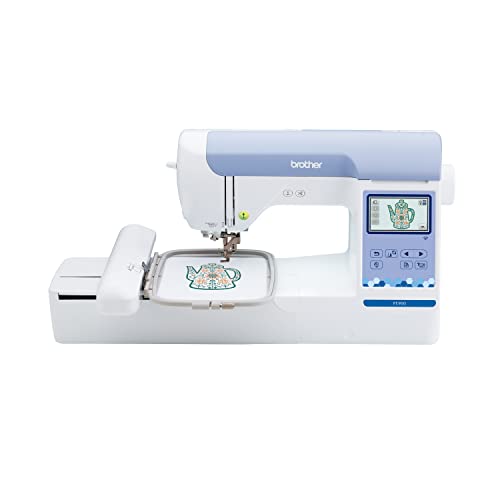 Brother PE900 Brother PE900 | $1,179.99 | 1 | 5 x 7 in | Not listed | None (flatbed) | Price |
 Brother NQ1700E Brother NQ1700E | $2,399.99 | 1 | 6 x 10 in | Not listed | None (flatbed) | Price |
 Brother PR1X Brother PR1X | $6,999.98 | 1 | 8 x 12 in | Not listed | Free arm | Price |
 Poolin EOM Poolin EOM | $3,994.00 | 15 | 14.2 x 9.5 in | 1,200 spm flat, 850 spm caps | 270 degree | Price |
 Ricoma EM-1010 Ricoma EM-1010 | $4,499.00 | 10 | 12.2 x 8.3 in | Not listed | 220 degree | Price |
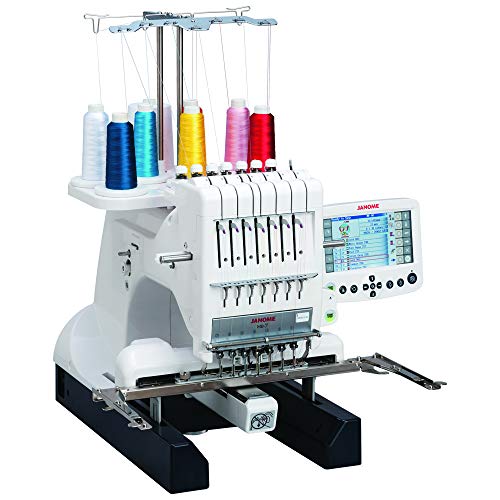 Janome MB-7 Janome MB-7 | $5,999.00 | 7 | 9.4 x 7.9 in | Not listed | Not listed | Price |
 Ricoma Swift 1501 Ricoma Swift 1501 | $6,499.00 | 15 | 20.5 x 13.8 in | 1,200 spm | 270 degree | Price |
 Brother PR680W Brother PR680W | $12,999.99 | 6 | 30 x 20 cm | 1,000 spm | Cap kit included | Price |
Beginner
Side-hustle start: single-needle machines, about $1,200 to $2,400
Right for personalization shops, craft fairs and online listings where each order is a name, monogram or small design on one or two items. Every color change is a manual rethread, so volume is limited by your time.
Brother PE900 Embroidery Machine
$1,179.99A 5 x 7 in field, jump stitch trimming and color sort reduce babysitting on towel, bib and tote orders. PES is the most widely sold home design format, so commercial-use designs are easy to find.
Best for: Testing demand
Check price Brother Innov-is NQ1700E Embroidery Machine with BES Blue Software
$2,399.99Steps up to 6 x 10 in with 8.3 in of arm space and BES Blue software for editing names and layouts, useful when every order is slightly different.
Best for: Custom one-off orders
Check price
Poolin EOC06 Large Hoop Embroidery Machine
$1,399.99An 11 x 7.9 in maximum field for about $1,400, and it reads DST, the same format commercial machines use, which eases a later move to multi-needle.
Best for: Large designs on a budget
Check pricePrices change often, so confirm on Amazon. As an Amazon Associate we earn from qualifying purchases.
Intermediate
First real production machine: multi-needle, about $4,000 to $6,000
This is the jump most growing shops make. Automatic color change turns a five-color logo from five interruptions into zero, so you can hoop the next shirt while the current one stitches.
Ricoma EM-1010 10-Needle Embroidery Machine
$4,499.0010 needles, 12.2 x 8.3 in area, 220 degree cap system, automatic color change and trimming, a 10.1 in touchscreen and a year of Chroma Inspire software. Budget separately for the stand.
Best for: Most new embroidery businesses
Check price Poolin EOM 15-Needle Embroidery Machine
$3,994.0015 needles, 1,200 spm flat and 850 spm on caps, a 270 degree cap system and laser positioning for about $500 less than the Ricoma. A newer brand in commercial embroidery, so weigh support.
Best for: Most needles per dollar
Check price Janome MB-7 Seven-Needle Embroidery Machine
$5,999.00Seven needles, a 9.4 x 7.9 in field, a jumbo bobbin that means fewer bobbin changes and support for Tajima industry hoops, backed by Janome dealers and sized for a home studio.
Best for: Home studios
Check pricePrices change often, so confirm on Amazon. As an Amazon Associate we earn from qualifying purchases.
Expert
Scaling up: high-volume and dealer-supported machines, $6,500 and up
Buy this tier when one machine is already running most of the day, or when downtime costs you orders. It is not for shops still finding customers: an unused $13,000 machine is a loan payment, not an asset.
Ricoma Swift 1501 15-Needle Embroidery Machine
$6,499.0015 needles, a 20.5 x 13.8 in area for jacket backs, 1,200 spm and a 270 degree cap system. Built for shops running hats and large flats on one head.
Best for: Busy shops
Check price Brother Entrepreneur PR680W 6-Needle Embroidery Machine
$12,999.99Six needles, up to 1,000 spm, a 10.1 in touchscreen, Wi-Fi and a complete cap kit, sold through Brother with a large dealer network for service.
Best for: Dealer support
Check price Brother Entrepreneur One PR1X Single-Needle Embroidery Machine
$6,999.98A single-needle free-arm machine with a crosshair laser, for boutiques doing precise one-off placement on finished garments, caps and bags rather than batches.
Best for: Boutique personalization
Check pricePrices change often, so confirm on Amazon. As an Amazon Associate we earn from qualifying purchases.
What is the best embroidery machine to start a business?
It depends on what you will sell. Personalized one-offs such as names on towels, baby blankets and stockings run fine on a single-needle machine because each item has few colors and you are selling customization, not speed. Logo orders for teams, churches and businesses, typically 12 to 50 identical shirts or caps, need a multi-needle machine because color changes and hooping dominate the time. Our guide to starting a machine embroidery business walks through choosing a niche first.
| Business model | Typical order | Machine type | Example |
|---|---|---|---|
| Personalized gifts online | 1 to 3 items, 1 to 2 colors | Single needle 5 x 7 in | Brother PE900 |
| Craft fairs, custom names on site | Quick 1-color names | Single needle, larger field | Brother NQ1700E |
| Team and club orders | 12 to 50 shirts, 3 to 6 colors | Multi-needle, 10 or more needles | Ricoma EM-1010 |
| Hats in volume | Dozens of structured caps | Multi-needle, 270 degree cap system | Poolin EOM |
| Corporate and jacket backs | Large logos, repeat clients | Multi-needle, large field | Ricoma Swift 1501 |
How many stitches per hour can an embroidery machine really do?
Be skeptical of multiplying the maximum speed by 60. A machine rated at 1,200 stitches per minute does not deliver 72,000 stitches an hour of finished work. Dense fill areas, small lettering and caps run slower, and real output also includes hooping, color changes, trims, thread breaks and unhooping. Owners commonly report average running speeds well below the maximum on detailed designs.
The illustration below uses assumed round numbers, not measured results, for a 7,000-stitch, five-color left-chest logo. Put your own design into the embroidery stitch count calculator and your own timing into the project time calculator.
| Step | Single needle (assumed 650 spm average) | Multi-needle (assumed 850 spm average) |
|---|---|---|
| Stitching | About 11 minutes | About 8 minutes |
| Color changes | 4 manual rethreads, about 1 minute each | Automatic, seconds each |
| Hooping and unhooping | About 2 to 3 minutes | About 2 to 3 minutes, often done while the machine runs |
| Trimming jump threads | Some by hand, depending on model | Automatic |
| Rough total per shirt | About 17 to 20 minutes, operator busy throughout | About 10 to 12 minutes, operator free during stitching |
The real difference is not the stitching speed; it is that a multi-needle machine frees you to hoop, trim, fold and pack while it works. That is where small shops find their profit.
Are multi-needle embroidery machines worth it for a small business?
A multi-needle machine is worth it once you have steady repeat orders with several colors. A simple way to think about it: divide the machine price, plus stand, frames and software, by the profit you make per item after blanks, thread and backing. If a $4,500 setup earns $6 of profit per shirt, you need about 750 shirts to pay it off. If your realistic pipeline is 50 shirts a month, that is over a year. If it is 300, it is a few months.
Work out your own per-item profit with the craft pricing calculator and our guide on how to price handmade items before financing a machine.
How do embroidery businesses price by stitch count?
Many shops quote embroidery by stitch count, usually as a rate per 1,000 stitches with a minimum charge per item, plus a one-time digitizing fee for custom logos and a separate charge for the garment. Rates vary widely by region and order size, so we do not quote a going rate. Instead, build your price from your costs: blank, thread, backing, machine time, labor and overhead, then check it against local competitors. Stitch count matters because it drives machine time and thread use; the stitch count calculator estimates it from design size and density.
What else do you need for an embroidery business besides the machine?
- Thread on cones. Production shops buy cones rather than small spools; the Isacord 35 Cones gives 1,000 m per cone in best-selling colors.
- Backing in bulk. A 50 yd roll such as the HBI Cut Away 12 x 50 covers polos and sweatshirts.
- Digitizing or editing software, or a budget for outsourced digitizing.
- A stand or sturdy table, since multi-needle machines vibrate and are heavy.
- Good task lighting for threading 10 to 15 needles; see daylight lamps for crafts.
- Extra frames and a cap driver in the sizes your customers order most.
How we chose
We did not test these machines in person. Picks are based on manufacturer specifications (needle count, field, speed, cap systems), owner manuals and warranty terms, current Amazon pricing and recurring themes in verified owner reviews about reliability and support. The throughput table uses stated assumptions for illustration, not measured output, and should be replaced with your own numbers.
Buying tips
- Choose your niche (gifts, teams, hats, corporate) before choosing needle count.
- Ask what a stand, cap driver and extra frames cost; they are not always included.
- Check where service and parts come from, and how long you would be down if the machine fails.
- Confirm file formats; commercial machines commonly use DST.
- Check that the designs and fonts you plan to sell come with a commercial-use license.
Frequently asked questions
What is the best embroidery machine for a home business?
For a home business doing logo and team orders, the Ricoma EM-1010 is a strong starting machine with 10 needles, a 220 degree cap system and automatic color change and trimming for about $4,499. For a quieter home studio with Janome dealer support, the seven-needle Janome MB-7 is a good fit. For personalized gifts, a single-needle Brother PE900 or NQ1700E is enough to start.
Can you start an embroidery business with a single-needle machine?
Yes, and many people do. Single-needle machines work well for personalized, low-color items such as names on towels, baby blankets and stockings, where customers pay for customization. The limit is time: every color change means stopping to rethread, and only one item runs at a time. Once you regularly take multi-color logo orders in dozens, a multi-needle machine usually pays for itself.
How much does it cost to start an embroidery business?
A lean single-needle start can be under $2,000 including a machine like the Brother PE900, thread, backing, blanks and a few designs. A multi-needle start is more commonly $5,000 to $8,000 once you add a stand, cap driver, extra frames, thread cones, backing, software and inventory. Business registration, insurance and sales tax setup vary by location and add to that.
How many needles do I need for an embroidery business?
Many small shops find 10 to 15 needles is the practical range, because it covers most logos without rethreading and leaves room to keep common colors like black, white and navy loaded permanently. Six or seven needles work for simpler designs and home studios. Fewer than that means frequent rethreading on multi-color work, which cuts into the time savings that justify a multi-needle machine.
Is Ricoma or Brother better for a small embroidery business?
Both are used in small shops. Ricoma machines like the EM-1010 and Swift 1501 offer more needles and larger fields for the price, with a large community of small-business users. Brother Entrepreneur machines like the PR680W cost more per needle but come with an extensive dealer network for in-person service and training. Choose based on the support available where you live.
What sells best for a machine embroidery business?
Commonly requested items include caps, left-chest logos on polos and sweatshirts, team and school apparel, personalized towels, baby items and holiday stockings. Patches are also popular because they can be stitched in batches and sold separately. Choosing a focused niche, such as youth sports teams or wedding gifts, generally makes marketing easier than offering everything to everyone.
How we research: we compare manufacturer specifications, owner manuals, published standards and recurring themes in verified owner reviews. We do not test products in person, and this is researched guidance, not professional advice. Follow your machine manual and pattern, and take care with rotary cutters, hot irons and needles. As an Amazon Associate we earn from qualifying purchases.