Industrial vs Home Sewing Machine: Juki DDL-8700 vs Juki TL-2010Q
Most home sewists and quilters should buy a home straight-stitch machine like the Juki TL-2010Q, about $1,199, with 1,500 SPM, a thread trimmer and knee lifter. Buy a true industrial like the Juki DDL-8700, about $1,099 with a clutch motor, only for long production runs of straight seams on light to medium fabric.
 Juki DDL-8700 Industrial Straight Stitch Sewing Machine $1,099.00 Check price on Amazon
 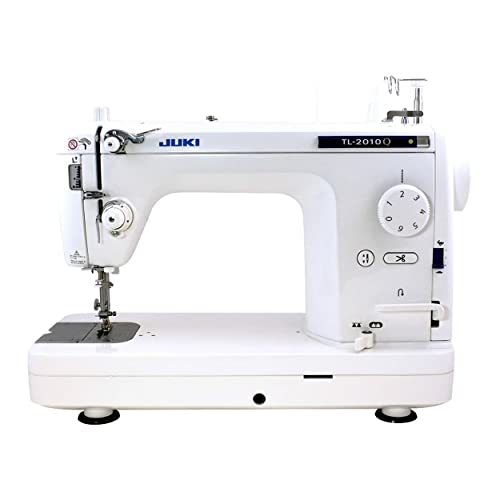 Juki TL-2010Q High-Speed Sewing and Quilting Machine $1,199.00 Check price on Amazon
 The verdict
A home semi-industrial straight-stitch machine is the right choice for almost every home sewist, and a true industrial is the right choice only for production sewing in a dedicated space. The prices are close, which makes the industrial tempting, but the two machines are built for very different days at the table.
The unglamorous truth: an industrial machine rated at 5,500 stitches per minute with a clutch motor is hard to control slowly, hums continuously while switched on, needs its own table and does only one job. Many hobbyists who buy one end up adding a servo motor or selling it. If you want industrial speed for quilting and piecing, the Juki TL-2010Q gets you most of the way without those trade-offs.
Industrial sewing machine vs Home sewing machine: side by side
| Feature | Industrial sewing machine | Home sewing machine |
|---|---|---|
| Representative model | Juki DDL-8700 | Juki TL-2010Q |
| Price | About $1,099 | About $1,199 |
| Max speed | 5,500 SPM | 1,500 SPM |
| Stitch type | Straight stitch | Straight stitch only |
| Max stitch length | 5 mm | Not listed in the specs we verified |
| Motor | 110V clutch motor | Built-in home motor |
| Needle system | DBx1, sizes 9 to 18 | Not listed in the specs we verified |
| Thread trimmer | Not listed in the specs we verified | Automatic |
| Presser foot lift | Knee lift, 1/2 in on the head listing | Knee lifter, up to 12 mm |
| Space | Industrial table on the floor | Sits on a sewing table or cabinet |
What is the difference between an industrial and a home sewing machine?
An industrial machine is a single-purpose head mounted in a table with a separate motor underneath. It is designed to sew the same type of seam for hours a day, every day, at very high speed. The Juki DDL-8700 is the classic example: a high-speed lockstitch straight stitcher rated at 5,500 SPM, used for light to medium fabrics. A home machine has the motor built in, sits on any sturdy table and is designed for varied projects at controllable speeds.
Semi-industrial home machines, like Juki's TL series, sit in between: straight stitch only, fast at 1,500 SPM, with home conveniences like the thread trimmer and knee lifter on the Juki TL-2010Q.
| Feature | Industrial straight stitch | Semi-industrial home | Everyday home machine |
|---|---|---|---|
| Example | Juki DDL-8700 | Juki TL-2010Q | Brother CS7000X |
| Top speed | 5,500 SPM | 1,500 SPM | Moderate |
| Motor | Clutch or servo under the table | Built in | Built in |
| Stitches | Straight only | Straight only | Many, including zigzag and buttonholes |
| Footprint | Dedicated industrial table, roughly desk sized | Sewing table or cabinet | Any table |
| Noise | Clutch motor hums while on | Quiet when stopped | Quiet when stopped |
| Moves between rooms | Heavy, no | Heavy but portable | Yes |
| Best for | Production seams on light to medium fabric | Quilting, piecing, home garment seams | General sewing |
Footprint figures are general; check the published table dimensions of the exact setup before ordering.
Is an industrial sewing machine good for quilting?
For piecing, it is fast and precise, but for quilting through a sandwich it is often a poor fit. Industrial straight stitchers have limited space to the right of the needle, and a clutch motor makes the slow, controlled speed of free-motion quilting difficult. Quilters who search for an industrial machine for quilting are usually better served by the Juki TL-2010Q or Juki TL-2000Qi, or by a midarm like the Juki TL-15 with a 9 x 6.75 in throat.
If you truly need industrial power, it is usually for heavy materials, and that calls for a walking foot machine. The Juki DU-1181 adds a 3/4 HP servo motor, 9 mm maximum stitch length and 15 mm knee lift for canvas, upholstery and leather. See best industrial sewing machines for home and Juki DDL-8700 vs DU-1181.
What is the difference between a clutch motor and a servo motor?
A clutch motor spins continuously whenever it is switched on, and the pedal engages a clutch to drive the machine. It is powerful but jumps quickly to high speed and hums the whole time. A servo motor runs only when you press the pedal, is quiet, and gives far better slow-speed control. For home use, owners overwhelmingly recommend a servo, either built in or fitted as an upgrade. The Juki DDL-8700 (head) sells the head alone, without table or motor, for sewists who want to choose their own.
Choose Industrial sewing machine if
- You sew long runs of straight seams, such as production garments, curtains or bags.
- You sew light to medium fabrics all day.
- You have a dedicated floor space for an industrial table.
- You are comfortable fitting a servo motor if you need slow-speed control.
Choose Home sewing machine if
- You quilt and piece at home.
- You want fast straight stitching with a thread trimmer and knee lifter.
- You need a machine that fits a sewing table or cabinet.
- You want quiet, controllable speed for free-motion work.
Our picks for each type

Juki TL-2000Qi Long-Arm Sewing and Quilting Machine
$999.00Semi-industrial straight stitch at 1,500 SPM for about $999.
Check price Juki TL-2010Q High-Speed Sewing and Quilting Machine
$1,199.00Adds the automatic thread trimmer and 12 mm knee lift that home quilters use on every seam.
Check price Juki DDL-8700 Industrial Straight Stitch Sewing Machine
$1,099.00The industry-standard high-speed straight stitcher, sold with a clutch motor.
Check price
Juki DU-1181 Single Needle Walking Foot Industrial Machine with Stand and Servo Motor
$1,724.62A walking foot industrial with a servo motor for canvas, upholstery and leather.
Check price
Consew 206RB-5 Walking Foot Industrial Sewing Machine with Table and Servo Motor
$1,661.99Another walking foot industrial for heavy materials.
Check pricePrices change often, so confirm on Amazon. As an Amazon Associate we earn from qualifying purchases.
This comparison is drawn from published specifications, owner manuals and the consensus of verified owner reviews, not side-by-side testing.
Frequently asked questions
Can I use an industrial sewing machine at home?
Yes, if you have the space, a suitable outlet and realistic expectations. The Juki DDL-8700 setup runs on a 110V clutch motor, so it plugs into a standard household outlet, but it needs a dedicated table and floor space. Expect a learning curve controlling speed. Many home users fit a servo motor for quieter, slower, safer control.
Is an industrial sewing machine better than a home sewing machine?
It is better at one job: sewing the same seam fast for hours. It is worse at variety, since most industrial machines do only one stitch type, and worse at slow, careful work. For quilting, garment sewing and crafts at home, a home or semi-industrial machine like the Juki TL-2010Q is the better tool for most people.
Can an industrial sewing machine sew leather?
It depends on the machine. A high-speed straight stitcher like the DDL-8700 is built for light to medium fabrics and is not a leather machine. Leather, upholstery and heavy canvas need a walking foot industrial such as the Juki DU-1181, which feeds thick layers from above and below with a longer stitch and higher foot lift.
Are industrial sewing machines loud?
Clutch motors hum continuously while switched on, even when you are not sewing, and the machine is loud at full speed. Servo motors are much quieter and silent when stopped. The sewing head itself makes a steady mechanical sound. If noise matters in a shared home, choose a servo motor and place the table on a rug or mat to absorb vibration.
What needles does an industrial sewing machine use?
Industrial machines use industrial needle systems rather than standard household needles. The Juki DDL-8700 uses DBx1 needles in sizes 9 to 18. Buying the wrong system can damage the machine or cause skipped stitches, so check the manual before ordering. Our sewing machine needle size chart explains sizes by fabric weight.
How we research: we compare manufacturer specifications, owner manuals, published standards and recurring themes in verified owner reviews. We do not test products in person, and this is researched guidance, not professional advice. Follow your machine manual and pattern, and take care with rotary cutters, hot irons and needles. As an Amazon Associate we earn from qualifying purchases.