Juki DDL-8700 Review: Is This $1,099 Industrial Sewing Machine Worth It at Home?
The Juki DDL-8700 is worth about $1,099 for home sewists who sew long straight seams on light to medium fabric in volume. Juki rates it at 5,500 stitches per minute with a 5 mm stitch and 13 mm knee lift. This listing ships with a clutch motor, which is hard to control slowly, so many owners add a servo motor.
Our verdict
Buy the Juki DDL-8700 if you sew straight seams in quantity, such as curtains, alterations, tailoring, bag panels or quilt piecing, and you have floor space for a dedicated industrial table. Skip it if you want zigzag, buttonholes or slow, precise speed control out of the box, or if you sew leather and heavy canvas, which calls for a walking foot machine.
Juki lists the standard DDL-8700 as a 1-needle lockstitch machine for medium-weight materials with a maximum speed of 5,500 stitches per minute, a 5 mm maximum stitch length, a 13 mm presser foot lift by knee and DBx1 needles in sizes 9 to 18. The Amazon listing describes a 110V setup with an industrial clutch motor and unit dimensions of 48 by 20 by 48 inches.
Juki DDL-8700 specs
| Type | 1-needle straight lockstitch, medium-weight materials |
|---|---|
| Max speed | 5,500 stitches per minute |
| Max stitch length | 5 mm |
| Presser foot lift | 13 mm by knee lever |
| Needle | DBx1, #14 standard, sizes 9 to 18 |
| Motor (this listing) | 110V industrial clutch motor |
| Unit dimensions (this listing) | 48 x 20 x 48 in |
| Lubrication | Oil pan filled with Juki New Defrix Oil No. 1, per the instruction manual |
| Stitches | Straight stitch only, with reverse |
Specs above come from Juki's DDL-8700 industrial product page, the DDL-8700 instruction manual and the manufacturer bullets on the Amazon listing.
What does the Juki DDL-8700 do best?
An industrial straight stitcher does one job, and the Juki DDL-8700 does it very fast and for a very long time. Juki designed the head for continuous factory use on woven shirts, trousers, uniforms and light home textiles, with low vibration and a rigid frame. At 5,500 stitches per minute it is several times faster than the 1,500 of a home straight stitch machine like the Juki TL-2010Q.
The payoff for a home sewist is seam quality and stamina. PatternReview owners praise its speed for production sewing such as tailoring, alterations and draperies, call curtains and quilt piecing a breeze, and describe a stitch neat enough that bag makers can topstitch from the inside. One long-term owner reports a single service visit in seven years.
The knee lever lifts the presser foot 13 mm without taking your hands off the work, and the stitch length dial and reverse lever are simple mechanical controls that stay put. Parts, feet and needles are widely stocked because the head is so common in workrooms.
What is the honest weakness of the Juki DDL-8700?
The clutch motor. A clutch motor spins continuously whenever it is switched on, and the pedal engages a clutch to drive the machine. It hums the whole time and jumps quickly to high speed, which makes slow, careful sewing, curves and tight corners difficult for anyone not used to it. Home sewists on sewing forums very commonly replace it with a servo motor, which runs only when you press the pedal and can be set to a lower top speed.
It is also straight stitch only: no zigzag, no buttonholes, no stretch stitches, and a 5 mm maximum stitch length that limits long basting. Juki rates this version for medium-weight fabric, so it is not a leather, upholstery or heavy canvas machine; that is the job of the Juki DU-1181. And industrial space to the right of the needle is modest, so quilting a large quilt sandwich is awkward.
Finally, it is an oiled machine on a full-size table. You fill and check the oil pan, the setup is heavy and roughly 4 feet wide, and warranty terms are set by the seller rather than a long home-machine warranty.
What do Juki DDL-8700 owners consistently report?
- Praise: exceptional speed for production work, curtains and long seams.
- Praise: a beautiful, consistent straight stitch, good enough for visible topstitching.
- Praise: reliability, with owners reporting years of use and minimal servicing.
- Praise: the head itself runs quietly when fitted with a quiet motor.
- Complaint: clutch motors are noisy and hard to control at low speed, prompting servo upgrades.
- Caution: it only sews straight stitch, so owners keep a home machine for everything else.
What warranty and support come with the Juki DDL-8700?
Juki America's familiar 5 year and 2 year terms apply to home machines, not industrial heads. Industrial warranty is set by the selling dealer, and terms vary widely. The Amazon listing for the DDL-8700 head only states a 90 day labor warranty on defects in materials and workmanship; confirm what the seller of the complete setup offers before you buy, and ask who services industrial machines near you.
Juki publishes instruction manuals for the DDL-8700 family, covering oiling, needle and bobbin setup and stitch adjustments. We found no recall for the DDL-8700 in a search of CPSC's sewing machine recall listings.
How does the Juki DDL-8700 compare with the DU-1181 and a home straight stitch machine?
Our Juki DDL-8700 vs DU-1181 comparison covers speed straight stitcher versus walking foot, and industrial vs home sewing machine explains when an industrial makes sense in a house at all.
| Machine | Price | Max speed | Max stitch length | Motor | Best reason to choose it |
|---|---|---|---|---|---|
| Juki DDL-8700 | about $1,099 | 5,500 SPM | 5 mm | Clutch, 110V | Fast straight seams on medium fabric |
| Juki DDL-8700 (head) | about $691 | 5,500 SPM | 5 mm | Not included | Choose your own servo and table |
| Juki DU-1181 | about $1,725 | 2,000 SPM | 9 mm | 3/4 HP servo, 110V | Walking foot for leather and canvas |
| Juki TL-2010Q | about $1,199 | 1,500 SPM | See listing | Built in | Home straight stitch with thread trimmer |
Sibling reviews: Juki DU-1181 review and, for a home straight stitcher, the Juki TL-2010Q review. Our best industrial sewing machines for home roundup ranks the field.
What space and extras does the Juki DDL-8700 need?
Plan a permanent spot about 4 feet wide and 20 inches deep, plus room for your chair and knees under the table, near a standard 110V outlet. Industrial tables are heavy, so choose a spot where the machine can stay. A supportive, height-adjustable chair such as the Arrow Hydraulic Sewing Chair helps with long sessions at a fixed table height.
- Servo motor: the most common upgrade for home use. It is quieter, silent when stopped and allows a lower top speed; fitting one is a belt and bolt job many owners do themselves, or a dealer can do it.
- Oil: fill the oil pan to the HIGH mark with the oil the manual specifies before first use, and check it regularly.
- Needles and bobbins: DBx1 needles in sizes suited to your fabric (not household needles) and spare industrial bobbins.
- Light and thread: a clamp lamp like the Daylight Slimline 4 if the table light is weak, and cone thread on the thread stand.
Plan fabric for curtain runs with the curtain fabric calculator, and see sewing machine maintenance and the expert sewing room setup.
Who it suits
- Home sewists who sew long straight seams in volume: curtains, alterations, bag panels
- Quilters who want very fast, precise piecing on a dedicated table
- Sewists comfortable fitting a servo motor or paying a dealer to do it
- Anyone with a permanent spot for a 4 foot industrial table
Who should skip it
- Sewists who need zigzag, buttonholes or stretch stitches; keep a home machine such as the Juki HZL-G120
- Leather, upholstery and heavy canvas sewists; see the Juki DU-1181
- Anyone wanting quiet, slow control with no upgrades, or with no room for a full table
Alternatives to the Juki DDL-8700

Juki DDL-8700 Industrial Straight Lockstitch Machine, Head Only
$691.11The same 5,500 SPM head without table or motor for about $691, so you can pair it with a quiet servo motor from the start.
Check price
Juki DU-1181 Single Needle Walking Foot Industrial Machine with Stand and Servo Motor
$1,724.62Top and bottom walking foot feed, a 9 mm stitch, 15 mm knee lift and a 3/4 HP servo motor for leather, vinyl and canvas.
Check price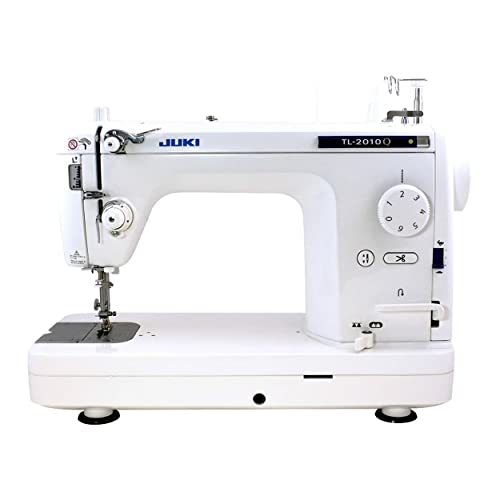
Juki TL-2010Q High-Speed Sewing and Quilting Machine
$1,199.00A home straight stitch machine at 1,500 SPM with automatic thread trimmer and knee lifter, no separate table or motor needed.
Check pricePrices change often, so confirm on Amazon. As an Amazon Associate we earn from qualifying purchases.
This review is compiled from manufacturer specifications, the owner manual, warranty terms and recurring themes in verified owner reviews. We did not test this machine in person.
Frequently asked questions
Is the Juki DDL-8700 good for a home sewist?
It is excellent for a specific home sewist: one who sews a lot of straight seams on light to medium fabric and has room for a dedicated table. The Juki DDL-8700 is fast and durable but sews straight stitch only, and this setup uses a clutch motor that is hard to control slowly. Most home owners add a servo motor and keep a home machine for zigzag and buttonholes.
Juki DDL-8700 vs DU-1181: which should I buy?
Choose the Juki DDL-8700 at about $1,099 for fast straight seams on shirting, curtains, quilting cotton and medium fabrics, at up to 5,500 stitches per minute. Choose the Juki DU-1181 at about $1,725 for leather, vinyl, canvas and thick layers: it has top and bottom walking foot feed, a 9 mm stitch, 15 mm knee lift and a servo motor.
Can the Juki DDL-8700 sew leather or denim?
Juki rates the standard DDL-8700 for medium-weight materials with needles up to size 18, so it handles a few layers of denim and light bag fabrics. It is not a leather machine: thick leather and upholstery need a walking foot industrial that feeds from above and below with heavier needles and thread, such as the Juki DU-1181.
What is the difference between a clutch motor and a servo motor?
A clutch motor runs constantly while switched on and engages the machine through a clutch when you press the pedal, so it hums and accelerates quickly. A servo motor only turns when you press the pedal, is much quieter and can be limited to a slower top speed. For home use on a DDL-8700, owners overwhelmingly prefer a servo.
Does the Juki DDL-8700 need oil?
Yes. The DDL-8700 instruction manual directs you to fill the oil pan to the HIGH mark with the oil Juki specifies before first use, then check the level regularly and adjust hook lubrication as described. Running an industrial head dry can damage it quickly. Keep the oil pan clean and follow the manual for the DDL-8700 whenever it has been moved or stored.
Sources
- Juki DDL-8700 industrial lockstitch product page and specifications (Juki)
- Juki DDL-8700 instruction manual (ManualsLib)
- Juki America FAQ, home machine warranty terms (for contrast with industrial terms)
- CPSC sewing machine recall listings
- PatternReview owner review of the Juki DDL-8700
- PatternReview owner review of the Juki DDL-8700
- Threads Magazine forum discussion: Juki DDL-8700
- Backpacking Light forum: Juki DDL-8700 motor upgrade
- Amazon listing feature bullets for the complete setup and head-only listings
How we research: we compare manufacturer specifications, owner manuals, published standards and recurring themes in verified owner reviews. We do not test products in person, and this is researched guidance, not professional advice. Follow your machine manual and pattern, and take care with rotary cutters, hot irons and needles. As an Amazon Associate we earn from qualifying purchases.