Brother Airflow 3000 Review: Is This $1,199 Air Serger Worth It?
The Brother Airflow 3000 is worth about $1,199 only if you want air threading plus its included gathering, blind stitch and piping feet. Brother lists push-button air looper threading, 1,300 stitches per minute, a 5 to 7.5 mm overlock seam width, 0.7 to 2.0 differential feed and LED lighting. The AIR1800 offers the same threading for about $300 less.
Our verdict
Buy the Brother Airflow 3000 if you want the easiest possible serger threading and you will actually use gathering, blind hem and piping feet, which come included. Skip it if the air threading is the main draw, because the Brother AIR1800 uses the same push-button looper threading and speed for about $300 less.
Brother lists air technology with one-touch looper threading, a maximum speed of 1,300 stitches per minute, flatlock, overlock and rolled hem stitches, an overlock seam width of 5 to 7.5 mm, a differential feed ratio of 0.7 to 2.0, adjustable presser foot pressure, a knife that can be deactivated and LED lighting. Included are a gathering foot, a blind stitch foot, an adjustable zipper or piping foot and a trim trap. It weighs 21.6 lb.
Brother Airflow 3000 specs
| Looper threading | Air, one-touch, via threading ports and tubes |
|---|---|
| Stitches | Overlock, flatlock, rolled hem |
| Max speed | 1,300 stitches per minute |
| Overlock seam width | 5 to 7.5 mm |
| Differential feed | 0.7 to 2.0 ratio |
| Tension / foot pressure | Manual tension; adjustable presser foot pressure |
| Knife | Can be deactivated |
| Included | Gathering foot, blind stitch foot, adjustable zipper or piping foot, trim trap |
| Weight / size | 21.6 lb; 14.4 x 13.9 x 15.9 in |
| Warranty | 1/5/25 year limited serger warranty (Brother USA) |
Specs above come from Brother USA's AIRFLOW3000 product page and the manufacturer bullets on the Amazon listing.
What does the Brother Airflow 3000 do best?
The Brother Airflow 3000 removes the hardest part of serging. A conventional serger's two loopers are threaded by hand through small guides in a set order. Brother's air threading connects a port to the end of each looper with a tube; you seat the thread and press a button, and air carries it through. For sewists with stiff hands or tired eyes, and for anyone who changes thread colors often, that is the whole reason to buy.
Brother adds a generous 5 to 7.5 mm overlock seam width, useful when you want a wider, sturdier finish on heavier knits and sweatshirt fleece, and differential feed from 0.7 to 2.0. Below 1.0 the feed stretches fabric for lettuce edges; above 1.0 it eases knits so seams do not ripple.
The box includes a gathering foot for ruffles, a blind stitch foot for invisible hems on trousers and skirts, an adjustable zipper or piping foot for cushions and pillow edges, and a trim trap that catches scraps. Buying those separately adds up, which narrows the gap to the AIR1800 for sewists who want them.
What is the honest weakness of the Brother Airflow 3000?
It is hard to see what the extra $300 buys over the AIR1800. Brother's published figures for the two machines are very close: the same air threading, 1,300 stitches per minute, overlock, flatlock and rolled hem stitches, a knife switch and a similar 21.5 to 21.6 lb body. The documented differences are mostly the included feet and the seam width Brother lists. If you would not use the specialty feet, the Brother AIR1800 is the better buy.
It is a large serger, about 14 by 14 inches and 16 inches tall, so it needs a deep table. Tension is manual, so air threading does not remove the need to balance threads. In retail owner reviews, a few mention thread breaking after a good start, and one wished for a speed control setting, which it does not list, for foot or nerve issues. The listing also shows limited stock at times.
What do Brother Airflow 3000 owners consistently report?
- Praise: air threading makes both loopers very easy, including for first-time serger owners.
- Praise: good stitch quality straight out of the box.
- Praise: easy to use and learn.
- Complaint: isolated reports of thread breaking after initial success.
- Complaint: no speed limiting control for sewists who struggle with pedal control.
Retail reviews for this model number in the dozens rather than hundreds, so treat these themes as a small sample.
What warranty and support come with the Brother Airflow 3000?
Brother's product page lists a 1/5/25 Year Limited Serger Warranty. Some retail listings describe different terms, so rely on Brother's statement and keep your receipt. Brother's published sewing machine warranty uses the same structure (1 year on the machine, 5 years on circuit boards, 25 years on the chassis) and excludes consumables such as needles and knives, and coverage applies to original purchasers from an authorized Brother reseller in the United States.
Brother's Airflow 3000 support page has manuals, FAQs and downloads. We found no recall for the Airflow 3000 in a search of CPSC's sewing machine recall listings.
How does the Brother Airflow 3000 compare with the AIR1800, Juki MO-1000 and Janome AirThread 2000D?
Our air threading vs regular serger comparison explains when air threading earns its price. For the seams-versus-hems question, read serger vs coverstitch.
| Serger | Price | Looper threading | Max speed | Standout | Best reason to choose it |
|---|---|---|---|---|---|
| Brother Airflow 3000 | about $1,199 | Air, one-touch | 1,300 SPM | 3 specialty feet, 5 to 7.5 mm seam | Most included extras |
| Brother AIR1800 | about $899 | Air, push button | 1,300 SPM | 2, 3 or 4 threads, 1 or 2 needles | Same threading for less |
| Juki MO-1000 | about $1,293 | Jet air, push button | Not listed | Juki build | Juki dealer support |
| Janome AirThread 2000D | about $1,399 | One-push air | Not listed | 8-piece feed dogs, 2 thread converter | Even feeding and Janome dealers |
| Brother 1034D | about $285 | Manual | 1,300 SPM | Huge owner base | Lowest cost |
Sibling reviews: Brother AIR1800 review, Juki MO-654DE review and Brother 1034D review. Our best serger roundup ranks the full field.
What else should you budget for with the Brother Airflow 3000?
Plan a deep, stable spot: a table like the Sew Ready Pro Stitch gives the Airflow 3000 room beside your sewing machine. Brother's LED lighting helps, but a clamp lamp like the Daylight Slimline 4 still makes dark knits easier to guide.
- Thread cones: four cones per color for 4 thread seams, such as Maxi-Lock 4 Cone Pack; smooth, low-lint thread keeps the air tubes clear.
- Needles: the system Brother's manual specifies, in stretch or ballpoint types for knits; replace them at the first skipped stitch.
- Cleaning: a lint brush and a small vacuum attachment for the looper area and threading ports.
- A coverstitch later: for T-shirt hems, add a machine like the Brother 2340CV.
Expect $30 to $70 in thread and needles to start. The how to use a serger guide and expert garment sewing setup cover the rest.
Who it suits
- Sewists with arthritis or low vision who want the easiest serger threading
- Sewists who will use gathering, blind hem and piping feet
- Anyone who changes serger thread colors every project
- Home decor sewists finishing cushions, ruffles and piping
Who should skip it
- Buyers who only want air threading; the Brother AIR1800 is about $300 less
- Sewists happy to thread by hand; the Brother 1034D sews similar seams for about $285
- Anyone short on table depth or who needs speed limiting for pedal control
Alternatives to the Brother Airflow 3000

Brother AIR1800 Air Threading Serger
$899.99The same push-button air looper threading, 2, 3 or 4 thread stitches and 1,300 SPM for about $300 less.
Check price
Janome AirThread 2000D Serger
$1,399.00One-push air threading with an 8-piece feed dog system, lay-in tension and a built-in one-step 2 thread converter.
Check price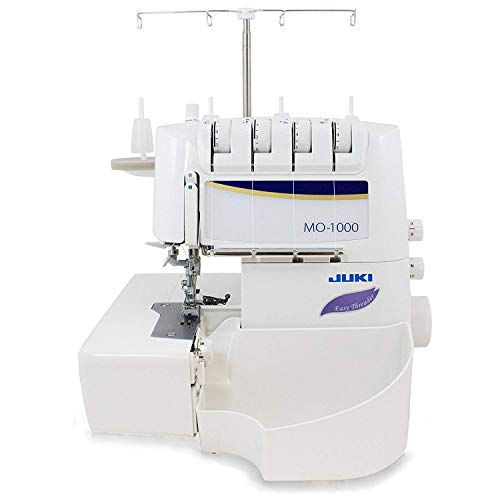
Juki MO-1000 Air Threading Serger
$1,293.37Juki's premium home serger with push-button jet air looper threading, for buyers who prefer a Juki dealer.
Check pricePrices change often, so confirm on Amazon. As an Amazon Associate we earn from qualifying purchases.
This review is compiled from manufacturer specifications, the owner manual, warranty terms and recurring themes in verified owner reviews. We did not test this machine in person.
Frequently asked questions
Brother Airflow 3000 vs AIR1800: what is the difference?
Both have Brother's push-button air looper threading, overlock, flatlock and rolled hem stitches and 1,300 stitches per minute. The Brother Airflow 3000 costs about $1,199, and Brother lists a 5 to 7.5 mm seam width plus gathering, blind stitch and piping feet and a trim trap. The Brother AIR1800 costs about $899. Choose the AIR1800 unless you want those feet.
Is the Brother Airflow 3000 good for beginners?
Yes, in the sense that it removes the step beginners find hardest. The Airflow 3000 threads both loopers with air at a button press and has LED lighting and a knife that can be switched off. Beginners still need to learn tension balancing and differential feed, and a beginner on a budget can learn on a manual serger for far less.
Does the Brother Airflow 3000 do a coverstitch?
No. Brother lists overlock, flatlock and rolled hem stitches for the Airflow 3000, not the cover stitch used on T-shirt hems. For those twin and triple line stretch hems you need a coverstitch machine such as the Brother 2340CV or Janome CoverPro 2000CPX. The blind stitch foot included here makes invisible hems on wovens, which is a different job.
What does the gathering foot on the Airflow 3000 do?
A gathering foot lets a serger gather one layer of fabric while sewing it to a flat layer, which speeds up ruffles, tiered skirts and pillow flounces. Combined with the 0.7 to 2.0 differential feed on the Airflow 3000, you can gather lightweight fabric and finish the seam in a single pass instead of basting and pulling threads.
What warranty does the Brother Airflow 3000 have?
Brother's product page lists a 1/5/25 Year Limited Serger Warranty for the Airflow 3000. Brother's warranty statements follow a pattern of 1 year on the machine, 5 years on circuit boards and 25 years on the chassis, excluding consumables. Some retailer listings quote different terms, so buy from an authorized Brother reseller and check the statement.
Sources
- Brother AIRFLOW3000 product page and specifications (Brother USA)
- Brother AIRFLOW3000 support, manuals and FAQs (Brother USA)
- Brother AIR1800 product page, for comparison figures (Brother USA)
- Brother 25-Year Limited Warranty statement for sewing machines (PDF)
- CPSC sewing machine recall listings
- Walmart customer reviews of the Brother Airflow 3000 (aggregated themes)
- PatternReview discussion: new Brother Airflow 3000 serger
- Amazon listing feature bullets (checked against Brother specifications)
How we research: we compare manufacturer specifications, owner manuals, published standards and recurring themes in verified owner reviews. We do not test products in person, and this is researched guidance, not professional advice. Follow your machine manual and pattern, and take care with rotary cutters, hot irons and needles. As an Amazon Associate we earn from qualifying purchases.