Single-Needle vs Multi-Needle Embroidery Machine: Brother NQ1700E vs Janome MB-7
Hobby embroiderers should buy a single-needle machine: the Brother NQ1700E costs about $2,400 with a 6 x 10 in field and wireless transfer. Buy a multi-needle machine only if you stitch many multicolor orders: the Janome MB-7 holds 7 thread colors and changes them automatically for about $5,999.
 Brother Innov-is NQ1700E Embroidery Machine with BES Blue Software $2,399.99 Check price on Amazon
 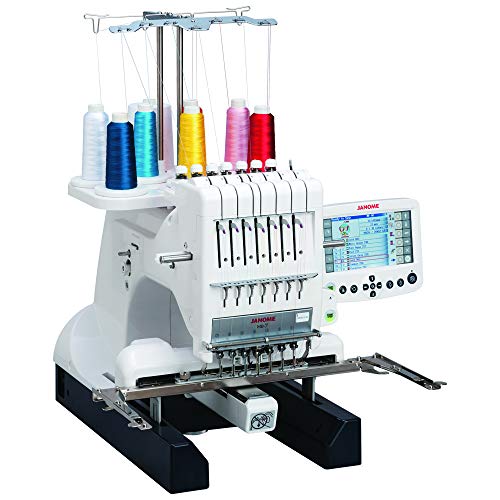 Janome MB-7 Seven-Needle Embroidery Machine $5,999.00 Check price on Amazon
 The verdict
A single-needle machine is the right choice for almost every hobbyist, and a multi-needle machine is the right choice for anyone embroidering for money at volume. The difference is color changes: the Brother NQ1700E stops for you to rethread at every new color, while the Janome MB-7 carries 7 threaded needles and switches between them on its own.
The honest part: the multi-needle machine does not make prettier embroidery. It makes more embroidery per hour with less babysitting, and it costs about $3,600 more for that privilege. If you stitch a few gifts a month, that money buys a lot of thread, stabilizer and designs.
Single-needle machine vs Multi-needle machine: side by side
| Feature | Single-needle machine | Multi-needle machine |
|---|---|---|
| Representative model | Brother NQ1700E | Janome MB-7 |
| Price | About $2,400 | About $5,999 |
| Needles | 1 | 7 |
| Color changes | Manual rethread for each color | Automatic across up to 7 colors |
| Embroidery field | 6 x 10 in | 9.4 x 7.9 in |
| Screen | 4.85 in color touchscreen | 5.7 in remote computer screen |
| Design transfer | Wireless LAN | USB |
| File formats | Brother PES family | JEF+, DST and more |
| Built-in designs | 258 | Not listed in the specs we verified |
| Sews garments | No, embroidery only | No, embroidery only |
What is the difference between a single needle and multi needle embroidery machine?
A single-needle machine uses one needle and one thread color at a time. When the design needs a new color, the machine stops, you rethread and press start. It usually looks like a sewing machine with an embroidery arm and hoops flat items on a flat bed. The Brother NQ1700E adds 8.3 in of needle-to-arm space, which helps when turning large hooped items.
A multi-needle machine carries several needles on a moving head, each threaded with a different color from a thread stand. It changes colors automatically and is built to run long jobs. The Janome MB-7 has 7 needles, so a design with 7 or fewer colors runs start to finish without a stop. In the table below, count how many times you would rethread.
| Model | Needles | Field | Caps | Price | Best for |
|---|---|---|---|---|---|
| Brother PE900 | 1 | 5 x 7 in | No | About $1,180 | Hobby gifts and household items |
| Brother NQ1700E | 1 | 6 x 10 in | No | About $2,400 | Larger hobby designs |
| Brother PRS100 | 1 | 8 x 12 in | Yes, cap frame | About $4,500 | Hats and sleeves in small quantities |
| Poolin EOM | 15 | 14.2 x 9.5 in | Yes, 270 degree | About $3,994 | Budget production |
| Ricoma EM-1010 | 10 | 12.2 x 8.3 in | Yes, 220 degree | About $4,499 | Small shop starter |
| Janome MB-4S | 4 | Check listing | Hat hoop included | About $4,999 | Simple logos and lettering |
| Janome MB-7 | 7 | 9.4 x 7.9 in | Check listing | About $5,999 | Home business with an established brand |
| Brother PR680W | 6 | 30 x 20 cm | Check listing | About $13,000 | Established business |
Are multi needle embroidery machines worth it for home use?
For most home embroiderers, no. A multi-needle machine costs more, needs a sturdy stand and a thread stand, and has a steeper learning curve because tension must be right on every needle. If you stitch a few projects a month, stopping for color changes is a small price, and the Brother NQ1700E gives a generous 6 x 10 in field for well under half the price of the Janome MB-7.
It becomes worth it when time is money. Picture 24 team shirts with a 6-color logo: on a single-needle machine that is 144 stops to rethread. On a 7-needle machine you thread once and spend the run time hooping the next shirt. Price your work with the craft pricing calculator and read starting a machine embroidery business before buying.
What is the best embroidery machine for hats?
Finished structured caps need a free-arm machine with a cap frame, because a cap cannot lie flat in a hoop. Most multi-needle machines are built around a tubular free arm for exactly this reason, and cap systems such as the 270 degree system on the Poolin EOM or the 220 degree system on the Ricoma EM-1010 are listed features. Janome lists a hat hoop with the Janome MB-4S; check what cap accessories come with the Janome MB-7 package you buy.
There is one in-between option. The Brother PRS100 is a single-needle machine built with a tubular free arm and an included cap frame, so it handles hats and sleeves without solving the color-change problem. Flatbed single-needle machines like the Brother NQ1700E can only embroider patches or unassembled cap panels. Our best embroidery machines for hats roundup compares cap systems in depth.
Choose Single-needle machine if
- You embroider as a hobby, for gifts, quilts and household items.
- You want a large field for the money and wireless design transfer.
- You stitch flat items: towels, quilt blocks, tote bags and shirt panels.
- You do not mind stopping for color changes.
Choose Multi-needle machine if
- You fill orders of shirts, team wear or bags with multicolor logos.
- Rethreading for every color is costing you hours each week.
- You want a free-arm machine for garments and, with the right accessories, caps.
- You have room for a sturdy stand, a thread stand and a larger machine.
Our picks from single-needle to multi-needle
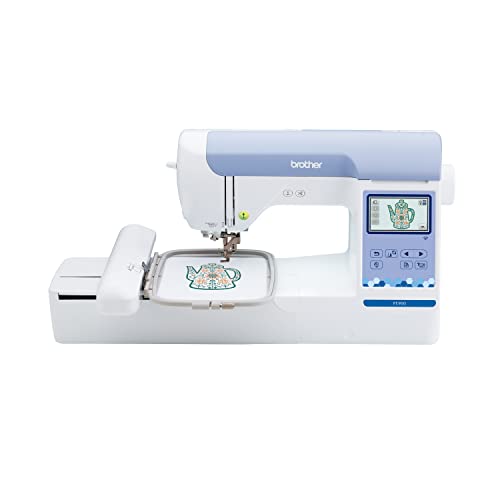
Brother PE900 Embroidery Machine
$1,179.99The 5 x 7 in single-needle standard with wireless transfer for about $1,180.
Check price Brother Innov-is NQ1700E Embroidery Machine with BES Blue Software
$2,399.99A 6 x 10 in field and 8.3 in needle-to-arm space for larger hobby designs.
Check price
Brother Persona PRS100 Single-Needle Embroidery Machine
$4,499.99Single needle with a tubular free arm and cap frame for hats and sleeves in small batches.
Check price
Poolin EOM 15-Needle Embroidery Machine
$3,994.0015 needles and a 270 degree cap system at the lowest multi-needle price here.
Check price Janome MB-7 Seven-Needle Embroidery Machine
$5,999.007 needles and a 9.4 x 7.9 in field from an established sewing brand.
Check price
Ricoma EM-1010 10-Needle Embroidery Machine
$4,499.0010 needles, a 10.1 in touchscreen and a 220 degree cap system.
Check pricePrices change often, so confirm on Amazon. As an Amazon Associate we earn from qualifying purchases.
This comparison is drawn from published specifications, owner manuals and the consensus of verified owner reviews, not side-by-side testing.
Frequently asked questions
Is the Janome MB-7 worth it over a single-needle machine?
It is worth it if you embroider for income or in large batches. The Janome MB-7 holds 7 colors and changes them automatically, which saves a stop for every color in every design. For hobby embroidery, a single-needle machine like the Brother NQ1700E offers a larger 6 x 10 in field for about $3,600 less, and color stops are a minor inconvenience.
How many needles do I need on an embroidery machine?
Count the colors in your typical design. Most logos and monograms use 6 or fewer colors, so a 6 to 7 needle machine like the Janome MB-7 handles them without rethreading. Detailed multicolor designs benefit from 10 to 15 needles, as on the Ricoma EM-1010 or Poolin 15-needle. For hobby work, one needle is fine.
Are multi-needle embroidery machines hard to learn?
They take more learning than single-needle machines. You manage a thread stand with many spools, tension on each needle, the color sequence assigned to each needle, and hooping garments on a free arm. Most owners report the basics click within a few weeks of regular use. Dealer or manufacturer training, and starting with simple two or three color designs, shortens that curve.
Is the Brother Persona a multi-needle machine?
No. The Brother Persona PRS100 is a single-needle embroidery machine, which surprises many buyers because it looks like a commercial machine. It has a tubular free arm, an included cap frame and driver, and four compact frames, so it handles hats and sleeves. You still rethread for each color, so it does not replace a multi-needle machine for high-volume work.
How much space does a multi-needle embroidery machine need?
Plan for a sturdy dedicated table or stand, clearance around the moving hoop, space above for a thread stand, and room to hoop garments. Some listings, like the Ricoma EM-1010, note that the stand is not included. Measure your space against the published dimensions of the exact model and keep the machine at a comfortable working height.
How we research: we compare manufacturer specifications, owner manuals, published standards and recurring themes in verified owner reviews. We do not test products in person, and this is researched guidance, not professional advice. Follow your machine manual and pattern, and take care with rotary cutters, hot irons and needles. As an Amazon Associate we earn from qualifying purchases.