36 Count Linen: Stitches Per Inch, Design Size and Floss Chart
36 count linen stitched over two threads gives 18 stitches per inch. A 100 by 100 stitch design finishes at 5.6 by 5.6 inches (14.1 cm), so cut fabric 12 by 12 inches for a 3 inch margin. Use 1 strands of floss and a size 28 needle.
36 count linen has 36 threads per inch, which gives 18 stitches per inch stitched over two, so a 140 stitch wide design finishes at 7.8 inches across. Fabric count is the number of stitchable squares or threads per inch: on 36 count linen, stitched over two threads, every inch holds 18 cross stitches, which is what decides how big a pattern finishes. Fine linen; over 2 equals 18 count.
Those stitches are plain cross stitches, with outlines added in backstitch once the blocks of color are done. For a bolder or finer version of the same chart, compare 32 count and 40 count.
| Fabric type | Linen (for example Zweigart Edinburgh) |
|---|---|
| Stitches per inch, over one | 36 |
| Stitches per inch, over two | 18 |
| Floss strands, cross stitch | 1 |
| Floss strands, backstitch | 1 |
| Tapestry needle | Size 28 |
| Beginner friendly | Better after a first project |
How big is a cross stitch design on 36 count linen?
Finished size in inches is the stitch count divided by 18. The fabric column adds 3 inches on each side, which leaves room to frame, hoop or finish the piece.
The table below gives the finished size of square designs on 36 count: a 100 by 100 stitch design works out at 5.6 by 5.6 inches, and a 400 stitch square at 22.2 by 22.2 inches.
| Stitches | Finished (in) | Finished (cm) | Fabric to cut (in) |
|---|---|---|---|
| 25 x 25 | 1.4 x 1.4 | 3.5 x 3.5 | 8 x 8 |
| 50 x 50 | 2.8 x 2.8 | 7.1 x 7.1 | 9 x 9 |
| 75 x 75 | 4.2 x 4.2 | 10.6 x 10.6 | 11 x 11 |
| 100 x 100 | 5.6 x 5.6 | 14.1 x 14.1 | 12 x 12 |
| 150 x 150 | 8.3 x 8.3 | 21.2 x 21.2 | 15 x 15 |
| 200 x 200 | 11.1 x 11.1 | 28.2 x 28.2 | 18 x 18 |
| 250 x 250 | 13.9 x 13.9 | 35.3 x 35.3 | 20 x 20 |
| 300 x 300 | 16.7 x 16.7 | 42.3 x 42.3 | 23 x 23 |
| 400 x 400 | 22.2 x 22.2 | 56.4 x 56.4 | 29 x 29 |
What size fabric and hoop do common pattern sizes need?
Rectangular patterns are the norm. Here are typical chart sizes, from a small sampler to a large framed piece, with the smallest hand hoop that clears the design by about 1 1/2 inches. Big designs are easier on a scroll frame or Q-Snap frame than a hoop.
The table below pairs each common chart size with the fabric to cut and the hoop to use: a 150 by 200 stitch chart on 36 count needs 15 by 18 inches of fabric.
| Pattern (stitches) | Finished (in) | Fabric to cut (in) | Hand hoop |
|---|---|---|---|
| 80 x 100 | 4.4 x 5.6 | 11 x 12 | 8 in |
| 120 x 160 | 6.7 x 8.9 | 13 x 15 | 12 in |
| 150 x 200 | 8.3 x 11.1 | 15 x 18 | 14 in |
| 200 x 250 | 11.1 x 13.9 | 18 x 20 | Scroll frame |
| 250 x 350 | 13.9 x 19.4 | 20 x 26 | Scroll frame |
| 300 x 400 | 16.7 x 22.2 | 23 x 29 | Scroll frame |
How many skeins of floss do you need on 36 count?
A standard 8 meter skein of DMC six-strand floss covers roughly 1,000 to 1,500 full cross stitches on 14 count with 2 strands, according to published estimates. Coverage scales with stitch size, so the figures below adjust that range for 18 stitches per inch and 2 strands. Count the stitches of each color on your chart key.
The table below turns a per-color stitch count into skeins: at 18 stitches per inch, one skein covers about 1,587 to 2,976 stitches.
| Stitches of one color | Stitches per skein | Skeins to buy |
|---|---|---|
| 250 | 1,587 to 2,976 | 1 |
| 500 | 1,587 to 2,976 | 1 |
| 1,000 | 1,587 to 2,976 | 1 |
| 2,500 | 1,587 to 2,976 | 1 to 2 |
| 5,000 | 1,587 to 2,976 | 2 to 4 |
| 10,000 | 1,587 to 2,976 | 4 to 7 |
Buy one extra skein of the big colors
Dye lots vary, and a slightly different shade halfway through a sky or background shows. For any color with thousands of stitches, buy the high end of the range. The cross stitch floss calculator works it out per color.
Supplies for stitching on 36 count
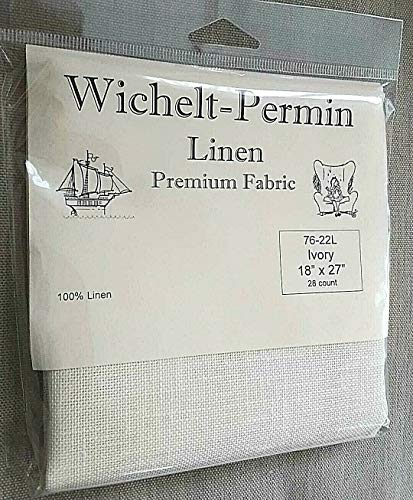
Wichelt Permin Premium Linen, 28 Count, Ivory
Under $5028 count evenweave linen that stitches over two at 14 stitches per inch, the classic heirloom ground.
Check price
DMC Embroidery Floss Assortment, 100 Colors
Under $100One hundred colors of six-strand cotton floss, a deep stash for most patterns.
Check price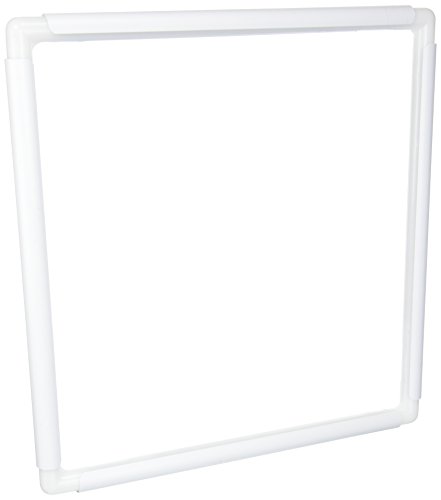
Q-Snap Frame 17 x 17 Inch
Under $50Holds fabric drum tight without hoop marks, and handles bigger designs than a hand hoop.
Check pricePrices change often, so confirm on Amazon. As an Amazon Associate we earn from qualifying purchases.
If you would rather buy a chart, fabric and floss together, the best cross stitch kits are sorted by the count they include. At this size most stitchers want help seeing the holes: compare magnifiers for cross stitch and, to free both hands, a cross stitch floor stand.
How does 36 count compare with other fabric counts?
The table below compares every count in one place: at 18 stitches per inch, 100 stitches on 36 count measures 5.6 inches, against 7.1 inches on 14 count Aida.
| Count | Fabric | Stitches per inch (as usually stitched) | 100 stitches finishes at | Needle |
|---|---|---|---|---|
| 6 count | aida | 6 | 16.7 in | 18 |
| 8 count | aida | 8 | 12.5 in | 20 |
| 11 count | aida | 11 | 9.1 in | 22 or 24 |
| 14 count | aida | 14 | 7.1 in | 24 |
| 16 count | aida | 16 | 6.3 in | 24 or 26 |
| 18 count | aida | 18 | 5.6 in | 26 or 28 |
| 20 count | aida | 20 | 5 in | 28 |
| 22 count | hardanger | 11 | 9.1 in | 24 to 28 |
| 25 count | evenweave | 12.5 | 8 in | 24 |
| 27 count | evenweave | 13.5 | 7.4 in | 24 or 26 |
| 28 count | evenweave | 14 | 7.1 in | 26 |
| 32 count | linen | 16 | 6.3 in | 26 or 28 |
| 36 count | linen | 18 | 5.6 in | 28 |
| 40 count | linen | 20 | 5 in | 28 |
Frequently asked questions
How many stitches per inch is 36 count linen?
36 count linen has 36 threads per inch, which gives 18 stitches per inch stitched over two. Evenweave and linen are counted by threads, and most patterns place each cross over two threads so it is the same size as a stitch on 18 count Aida. Stitched over one instead, 36 count gives 36 stitches per inch and a design half the size.
How big will a cross stitch design be on 36 count?
Divide the stitch count by 18. A 100 x 100 stitch design finishes at 5.6 x 5.6 inches, a 150 x 200 stitch design at 8.3 x 11.1 inches, and a 200 x 200 stitch design at 11.1 x 11.1 inches. The pattern chart lists its stitch count, usually on the key or cover, and the cross stitch fabric calculator does the division for you.
How many strands of floss do you use on 36 count?
Most patterns use 1 strands of six-strand cotton floss for cross stitches on 36 count linen, and 1 for backstitch outlines. Use a size 28 tapestry needle, which has a blunt tip that slides between threads without splitting them. More strands give fuller coverage; fewer look lighter and more delicate.
Is 36 count good for beginners?
It is better as a second or third project. At 18 stitches per inch, and with threads to count rather than blocks, the holes are small and mistakes are harder to spot. Fine linen; over 2 equals 18 count. Many stitchers start on 14 count Aida and move up.
How much fabric do I need for a 36 count cross stitch?
Work out the design size, then add about 3 inches on every side for framing or finishing. For a 150 x 200 stitch pattern on 36 count, the design is 8.3 x 11.1 inches, so cut fabric at least 15 x 18 inches. Small ornaments and cards can use 2 inches per side.
How many skeins of floss will a 36 count project take?
A single 8 meter skein covers roughly 1,587 to 2,976 stitches at 18 stitches per inch with 2 strands. So a color with 1,000 stitches needs 1 skein. Count each color on the chart key, then check totals with the cross stitch floss calculator.
Do I need a magnifier for 36 count?
Many stitchers find 36 count much easier with good light and some magnification, because each stitch is only 0.056 inch across. A daylight lamp with a magnifying lens, or a hands-free magnifier, reduces squinting and eye strain. If your vision has changed, an eye doctor can advise on the right strength.
How we research: we compare manufacturer specifications, owner manuals, published standards and recurring themes in verified owner reviews. We do not test products in person, and this is researched guidance, not professional advice. Follow your machine manual and pattern, and take care with rotary cutters, hot irons and needles. As an Amazon Associate we earn from qualifying purchases.